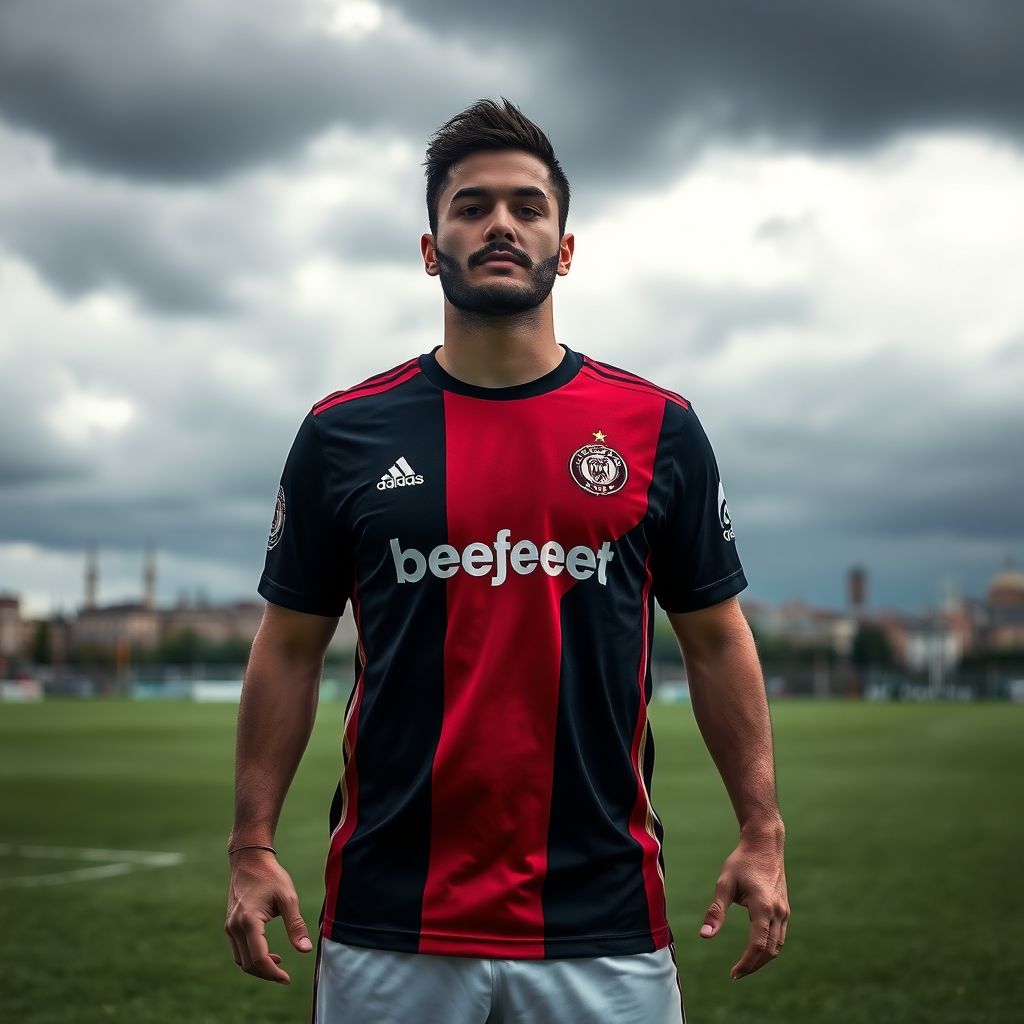
The untold Beşiktaş story: what Jota Silva finally revealed
Jota Silva has just closed one of the most turbulent chapters of his career in a Beşiktaş shirt. Speaking candidly to a Portuguese newspaper, the winger opened up about a season full of emotional swings in Istanbul and, in doing so, revealed a side of his story that, as he put it, “almost nobody in Beşiktaş really knew.”
A stormy season in black and white
From the outside, Jota’s year looked like a familiar script: a talented attacking player arriving with high expectations, flashes of quality on the pitch, but inconsistency, noise around the club, and constant changes derailing his rhythm.
Inside, the reality was harsher. Jota described a season where he struggled to find continuity amid coaching changes, tactical shifts, and the pressure of playing for a club where patience runs thin and criticism is never in short supply.
According to him, there were long stretches where he felt misunderstood: judged primarily by statistics and highlights while the physical and psychological strain behind the scenes went largely unnoticed. Training knocks, minor injuries played through, and the pressure of having to “deliver yesterday” for a demanding fan base combined into a weight that only a few within the dressing room truly saw.
The hidden truth at Beşiktaş
The “unknown truth” he hinted at was not a single dramatic incident, but a combination of factors that quietly shaped his year:
– He played several matches carrying pain that was never publicly disclosed, trying not to lose his place in the team.
– He had difficulty adapting to the chaotic rhythm of a season in which Beşiktaş constantly tried to reinvent itself, both tactically and administratively.
– He often felt pulled between what coaches demanded from him and what the stands expected: direct, risk‑taking football every time he touched the ball.
Jota admitted that, at times, he questioned whether he was being judged fairly. The criticism, he said, “rarely included the context” of how unstable Beşiktaş had become as a sporting project during the season. Despite this, he stressed that he never lost his attachment to the club’s colours and the energy of the stadium, calling playing in front of the home crowd “one of the most intense experiences of my career.”
Rafa Silva, the standard to follow
In the same interview, Jota devoted special praise to his compatriot and national‑team colleague Rafa Silva.
He described Rafa as “a unique player on the pitch,” highlighting his combination of acceleration, ball control under pressure, and intelligence between the lines. For Jota, Rafa embodies what a modern attacking midfielder and second striker should be: unpredictable, technically flawless, but also disciplined and tactically sharp.
He admitted that watching Rafa up close with the national team changed his perception of what top level actually means. The way Rafa prepares mentally before games, his ability to stay calm when others panic, and the consistency of his decision‑making became a reference point that Jota tried to bring back with him to club level, including at Beşiktaş.
Transfer fires burning: a Greek striker targets Beşiktaş
While Jota reflects on a season of turmoil, Beşiktaş are already shaping the next version of their squad.
One of the most striking developments concerns a Greek centre‑forward who, according to reports, is “burning” for a move to the Istanbul giants. The forward has gone as far as explicitly telling club legend and sporting boss Rui Costa that he wants to leave and join Beşiktaş, pushing for a transfer rather than waiting passively for negotiations to unfold.
This kind of direct conversation – “sell me, I want to go” – underlines both the player’s desire and Beşiktaş’s pulling power, even after an unstable year. The club, however, must balance financial constraints, squad needs, and the pressure not to miss out on another striker market.
Vedat Muriqi on the horizon – but patience required
Another name circling the Beşiktaş radar is Vedat Muriqi. The powerful forward, familiar to Turkish fans from his previous spells in the league, is once again being linked with a return.
The expectation is that talks around Muriqi will gain real traction in the coming weeks, but there is a growing acceptance inside the club that the “main striker” signing may not arrive until August. That delay is risky: entering the season without a locked‑in first‑choice number nine leaves the coaching staff improvising in attack, something Beşiktaş know all too well from recent campaigns.
Still, the leadership appears determined not to panic‑buy. The message is that if they must wait for their top target to become available, they will, even if it means more tension among supporters who want immediate solutions.
Galatasaray praised on a European scale
While Beşiktaş wrestle with rebuilding, Galatasaray continue to attract admiration abroad. The Istanbul side has been compared to European giants such as Real Madrid and Bayern Munich in terms of squad structure, intensity, and the way they handle big nights under pressure.
These comparisons are not about historical trophies, but about the club’s recent evolution: aggressive recruitment, confident Champions League performances, and a playing style that combines physicality with technical quality. For domestic rivals, this raises the bar; for Galatasaray fans, it confirms that their club is judged by the standards of the European elite again.
A political shadow over Galatasaray
Yet not all commentary on Galatasaray has been positive. Critics from the left of the political spectrum have accused the club of being used as a tool for political gain.
According to these voices, some recent moves and public appearances around the team have less to do with sports and more with leveraging popularity for political capital. The club, for its part, presents itself as focused on football and success on the pitch, but the intersection between politics and major Turkish football institutions remains impossible to ignore.
Transfer roadblock for Can Uzun
Another hot name in Turkish football circles, Can Uzun, is facing a serious obstacle to a potential move. Reports from abroad emphasise that there are legal, contractual or regulatory complications – not purely financial – that make any transfer far from straightforward.
This “big barrier” around Can is a reminder that modern transfers are rarely simple: mechanisms, clauses, and league regulations can block even deals that both player and buying club are eager to complete.
Why Turkey fell to Australia: Uğurcan Çakır explains
On the international stage, one painful result still stings: Turkey’s defeat to Australia. Goalkeeper Uğurcan Çakır has offered his version of why it happened.
He pointed to a mix of factors: tactical misalignment on the day, loss of concentration in key moments, and perhaps an element of underestimating the opponent’s physical intensity and discipline. For Uğurcan, the match was a warning that no national team, regardless of talent, can afford to be even slightly off their peak against sides that are fully committed and perfectly organised.
Messi, record‑breaker, launches another World Cup charge
Beyond Turkey, world football continues to orbit around Lionel Messi. The Argentine star has added yet more records to an already absurd collection and started the path toward the 2026 World Cup with what has been described as a historic opening chapter.
For Messi, this tournament is more than just another competition: it may define the final stretch of his international career. Each goal and assist now seems to carry an extra layer of significance, as if time itself is being measured in Messi moments.
Osimhen’s Spanish preference revealed live
In another corner of Europe, Victor Osimhen has lifted the veil on one of football’s favourite debates: Barcelona or Real Madrid?
During a live broadcast, he openly shared which Spanish giant he would prefer, fuelling speculation about a future move to La Liga. His answer was as much about playing style and atmosphere as about prestige, underlining how top players consider multiple dimensions before dreaming of a potential transfer.
Haircuts, moustaches, and a sleepless national team
On a lighter, yet telling note, an episode involving hair and moustaches unexpectedly shook the Turkish national team camp. A controversial change in players’ appearance – new haircuts and facial hair styles – sparked so much internal and external reaction that several squad members reportedly struggled to sleep that night.
While humorous on the surface, the story hints at how tightly scrutinised national team players are. Even small personal choices can spiral into talking points, adding yet another layer of pressure to an already intense environment.
Haaland crushes Iraq, Argentina ease past Algeria
Elsewhere, Erling Haaland continued his personal war on scoreboards, scoring twice as Norway ruthlessly swept aside Iraq. His double underscored once again how he can decide matches almost single‑handedly when given even minimal service.
Argentina, meanwhile, showed that “Messi present, no problem” remains a valid rule. With their captain orchestrating play, they comfortably dispatched Algeria, never truly allowing the game to slip into danger. These results reinforce the sense that Norway is building a team around a generational finisher, while Argentina are refining the structure around the greatest player of their era.
Fenerbahçe: sanctions, security fears, and a new era
Back in Turkey, Fenerbahçe have been at the centre of several storms at once. There had been persistent talk of a heavy punishment from European football authorities, yet the long‑anticipated sanction has not materialised in the way many expected. The confusion around what, if anything, will actually happen has fuelled fresh debate among fans and analysts.
In parallel, a figure who once declared “I have no personal security” left his previous role and ended up taking charge of football operations at Fenerbahçe. The move symbolises both the volatility and the magnetism of the club: it can be a risky environment, yet for industry insiders, the opportunity is too great to ignore.
A journey begins without a coach or a striker
Remarkably, Fenerbahçe’s new sporting journey is starting under glaring uncertainty. At the moment of departure for pre‑season, the club had no officially installed head coach and no clearly defined main striker. The image of a giant club setting off “without a pilot and without a marksman” has provoked frustration but also an odd sense of anticipation: whoever arrives next will walk into both a mess and a massive opportunity.
Italiano watching Fenerbahçe – and a warrior’s compliment
Among the many names linked to Fenerbahçe, one eye stands out: that of an Italian coach, Italiano, who is believed to be closely monitoring developments in Istanbul. His admiration for at least one Fenerbahçe player is no secret. He once said that if he ever had to go “to the front line,” the first person he would take with him would be that specific player – a rare compliment that speaks volumes about the footballer’s mentality, resilience, and ability to fight in difficult circumstances.
For Fenerbahçe, being observed by a tactician with that profile is both a compliment and a challenge: the club must prove it can offer a coherent project worthy of such attention.
How all of this reshapes the Turkish football landscape
Taken together, Jota Silva’s confessions, the transfer manoeuvres of Beşiktaş, the rise and scrutiny of Galatasaray, and the unstable yet ambitious state of Fenerbahçe draw a clear picture of Turkish football at this moment:
– Players are increasingly honest about the psychological and physical toll of chaotic seasons.
– Big Istanbul clubs remain magnets for talent, even when their projects are visibly unstable.
– Domestic success is now measured against European benchmarks, from style of play to squad construction.
– Politics, media pressure, and fan expectations interfere with almost every layer of decision‑making.
Jota’s “unknown truth” at Beşiktaş is, in many ways, a symbol of a wider reality: behind the noise, the transfers, and the headlines about Messi, Haaland or Osimhen, players are navigating fragile projects, immense expectations, and constant evaluation.
For Beşiktaş, Galatasaray and Fenerbahçe alike, the next season will not just be about trophies. It will be a test of who can build the most stable and convincing environment in which players like Jota Silva no longer feel that their real story remains hidden from the public eye.