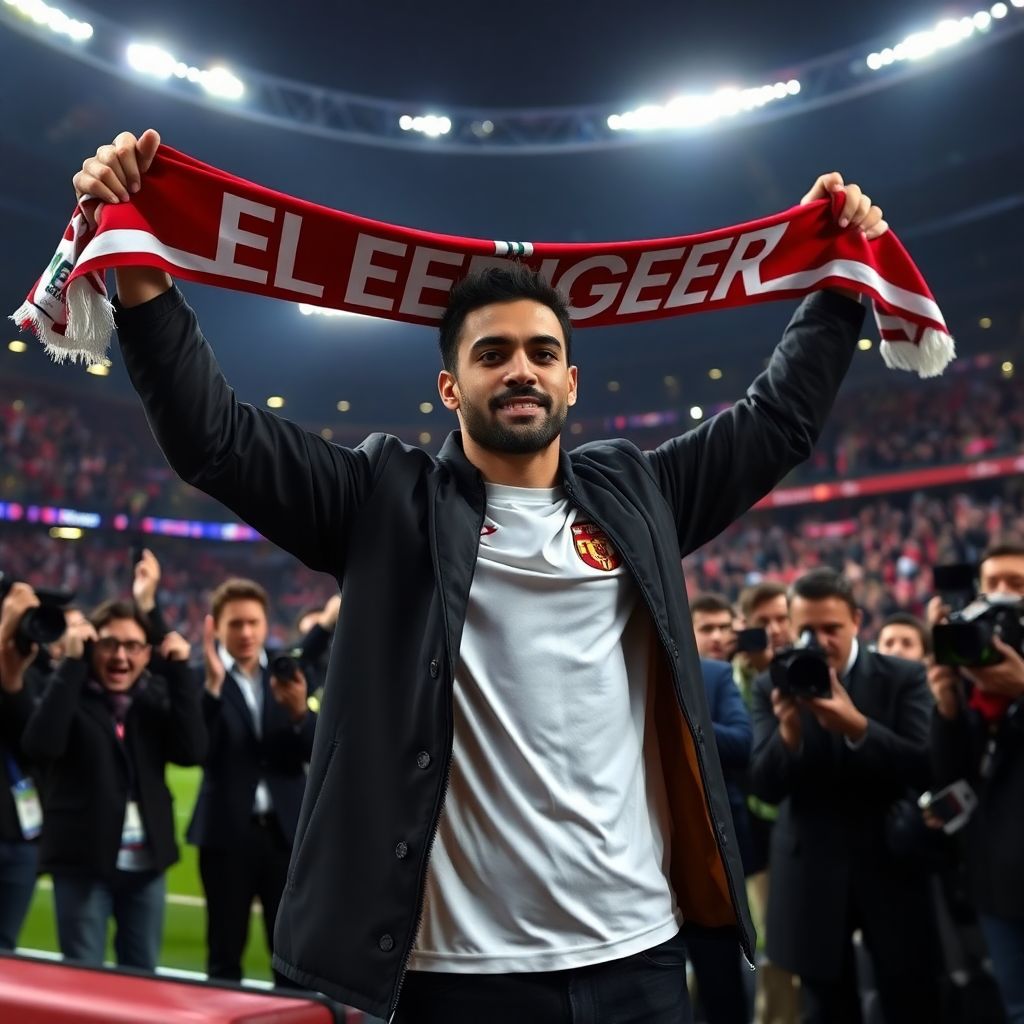
English star Jaden Philogene offered to Beşiktaş
The Beşiktaş board is examining a new name put forward by intermediaries: English winger Jaden Philogene. Club executives are currently assessing the feasibility of a move for the 24‑year‑old, whose profile has climbed rapidly in recent seasons in English football.
Philogene, a versatile wide attacking player, has been involved in several eye‑catching transfers in the last few years. After impressing at Hull City, he returned to Aston Villa before securing a high‑profile move to Ipswich Town. His market value has risen sharply in a short period, attracting attention well beyond England.
Impressive Championship campaign
In the most recent season, Philogene featured in 35 matches in the Championship. Operating primarily on the wing, he delivered 12 goals and 2 assists – strong output for a wide player in one of Europe’s most physically demanding leagues.
This was not the first time his name came across Beşiktaş’s desk. He was previously proposed to the club during the winter transfer window, but the Turkish giants did not move at that time, partly due to squad composition and financial planning.
Acun Ilıcalı’s big endorsement
Hull City, owned by Turkish businessman Acun Ilıcalı, will compete in the Premier League next season. Ilıcalı has publicly described Philogene as “one of the biggest talents in England”, a statement that helped shine an even brighter spotlight on the winger. The player’s rapid rise in value has since seemed to confirm that assessment.
Philogene moved to Hull City in the summer of 2023 for 5.8 million euros. Only a year later, his valuation had almost tripled as he returned to Aston Villa on a much larger deal. Last summer, he completed another big-money transfer, signing for Ipswich Town for a fee of 23.7 million euros. Such numbers inevitably raise questions about whether a club like Beşiktaş can realistically afford a permanent transfer or would have to explore a loan with an option to buy.
What kind of player would Beşiktaş be getting?
Philogene is primarily a winger who can operate on both flanks. He is known for:
– Quick acceleration and strong one‑on‑one dribbling
– Willingness to attack full‑backs directly and break lines
– An eye for goal, cutting inside from wide areas
– The ability to press aggressively from the front
For Beşiktaş, who are looking to inject pace and unpredictability into their attacking third, such a profile fits neatly into the club’s desire to modernise its playing style. He would add both depth and quality in wide positions where injuries and inconsistency have often forced frequent changes.
Fit within Beşiktaş’s current squad and tactics
In a system with two wingers behind a central striker, Philogene could line up on the left to drift inside onto his stronger foot, or stay wide right and stretch the pitch. His flexibility would allow the coach to rotate systems between 4‑2‑3‑1 and 4‑3‑3 without major disruption.
Beşiktaş have been criticised in recent seasons for their lack of directness in transition. An explosive winger who can carry the ball over long distances and finish attacks himself is exactly the type of profile supporters have been demanding. In theory, Philogene would complement a more static centre‑forward by bringing verticality and dynamism to the front line.
The financial reality: inflated Premier League prices
Despite the sporting logic, the financial side of the deal remains the biggest obstacle. Transfer fees for players with any Premier League or Championship exposure have ballooned, often reaching figures that are out of step with their underlying statistics or international pedigree.
Many observers in Turkey argue that bringing in such players at inflated fees is a serious risk and, at times, poor business. The fear is that clubs pay three or four times a player’s intrinsic market value simply because he has been developed or showcased in England. For teams already under financial pressure, one misjudged transfer of this size can distort the entire wage and amortisation structure.
A broader debate about Turkish football’s transfer strategy
The possible move for Philogene ties into a wider, long‑running debate in Turkish football. Critics maintain that domestic clubs have become addicted to flashy, high‑cost signings instead of building sustainable models. According to this view:
– Transfer spending regularly outstrips real income
– Youth academies and infrastructure are neglected
– Clubs seek short‑term popularity rather than long‑term stability
– The league’s overall competitive level stagnates despite high wages
There is only one major European trophy in the collective history of Turkish clubs, and that success has not been turned into a sustained presence at the top level. As a result, more and more voices insist that the old model of chasing expensive foreign names has reached a dead end.
The case for investing in youth instead
Another key argument is the need to prioritise production over consumption. Instead of spending millions on players whose value has already been “manufactured” elsewhere, many believe Turkish clubs should:
– Allocate bigger budgets to academies and training facilities
– Improve coaching education and scouting systems
– Offer clearer pathways from youth to first team
– Develop and sell their own talents for profit
If that shift takes place, occasional marquee signings would be supported by a core of homegrown players, reducing financial risk and creating a stronger identity on the pitch. Only then, proponents argue, can Turkish teams consistently compete with European clubs that combine strong academies with smart recruitment.
Can Beşiktaş balance ambition and responsibility?
For Beşiktaş, Philogene represents both opportunity and dilemma. On one hand, he is in his mid‑twenties, has resale potential, and fits the profile of a modern, pressing winger who could raise the team’s attacking level. On the other hand, his recent transfer history and rapidly increasing value mean that any deal would demand serious financial commitment, even in the form of a loan with purchase obligations.
The board’s current evaluation reportedly focuses on:
– The total package: transfer fee, wages, and commissions
– The possibility of structured payments or performance‑based clauses
– How his cost compares with alternative targets in other markets
– The risk of another high‑profile transfer that does not deliver proportional sporting impact
What a potential transfer would signal
If Beşiktaş decide to push for Philogene, it would send a clear message that the club still wants to compete aggressively in the international market for emerging talents, not just for ageing stars at the end of their careers. A move for a player with his age profile and upward trajectory would signal a slight shift toward more strategic, value‑driven acquisitions.
Conversely, walking away from the deal could indicate a new phase of caution, with the club seeing the English market as over‑inflated and instead targeting more affordable regions where promising players can be found before their values skyrocket.
A defining summer for Beşiktaş’s project
Whichever decision the board ultimately takes, the discussion around Jaden Philogene is about more than a single transfer. It encapsulates the crossroads at which Beşiktaş – and Turkish football in general – now stand:
– Continue chasing high‑priced names shaped by foreign markets, or
– Build a sustainable model rooted in development, smart scouting, and calculated risk
For now, Philogene’s name is on the table, his profile ticking many sporting boxes. The final word will depend on whether Beşiktaş are ready to pay the premium that comes with shopping in England, or whether this summer marks the beginning of a more disciplined, long‑term vision.