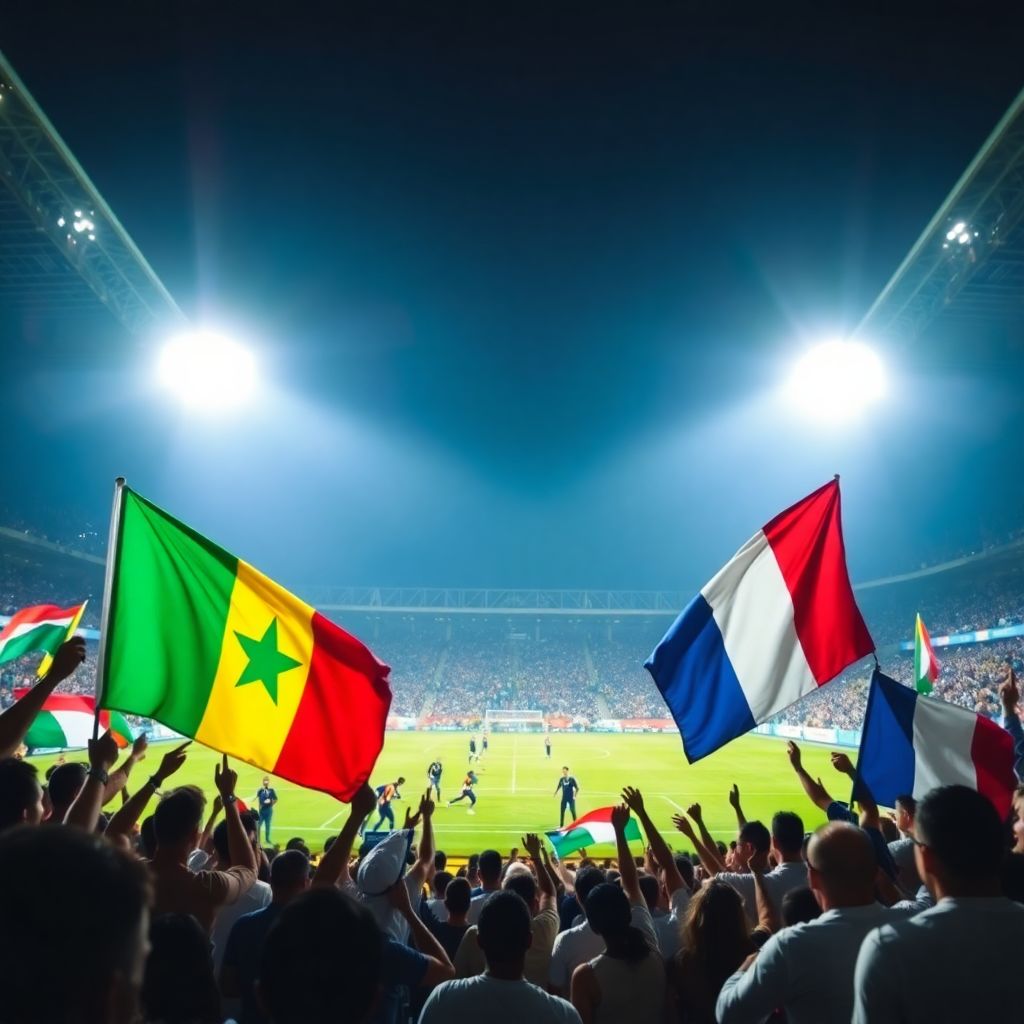
Africa’s pride in French colours: that was the phrase that ignited the debate. Before the meeting with France, Senegal’s Prime Minister Ousmane Sonko summed up the emotional load of the clash in one provocative sentence: “Africa will beat Africa.” In his view, the French national team, built for years on the talent of players with African roots, embodies a dual identity. For many on the continent, every match against France is no longer just a football game, but a symbolic duel between a former colonial power and the lands that shaped so many of its stars.
This confrontation also shows how deeply globalised modern football has become. When France lines up with players whose families come from Senegal, Mali, Guinea, Cameroon or Algeria, many African fans find themselves supporting both sides at once. On the one hand, they feel pride watching “their” children succeed in European jerseys; on the other, they long to see their own national teams break through the ceiling and no longer serve as a mere talent factory for Europe’s giants.
While France prepares for high‑pressure knock‑out nights, Spain is digesting what local media have already dubbed a “sunken ship” disaster. The team’s collapse has been likened to a shipwreck: everything looked solid on paper, yet one tactical storm was enough to send the project to the bottom. Defensive lapses, an overcomplicated possession game and a lack of cutting edge in the final third have turned a potential title contender into a warning sign for all who trust only in statistics and ball‑possession charts.
Uruguay, by contrast, continues to cultivate its old‑school style of control, even off the pitch. Their latest international gathering began with a symbolic scene at the airport: the players being greeted by narcotics dogs and strict security checks. The message is blunt – discipline first, image management second. The federation wants to avoid any hint of scandal and emphasise that the celeste jersey stands for hard work and clean competition in a football world too often shaken by doping and illicit betting headlines.
In North Africa, Tunisia has turned a new page with the appointment of a fresh head coach. The choice reflects a desire to blend local football culture with modern tactical ideas. The new man in charge is expected to break the cycle of short‑lived projects and implement a long‑term plan that includes advanced data analysis, youth development and a more proactive playing style. For a nation that regularly reaches major tournaments but struggles to go deep, the coaching change is seen as a last call to turn potential into concrete achievements.
Back in Turkey, the domestic basketball scene offered a more straightforward spectacle: Fenerbahçe Beko dismantled Beşiktaş GAİN 93-68. The scoreboard tells the story – one team superior in organisation, ball movement and depth. Fenerbahçe’s rotation worked seamlessly, with bench players maintaining, even increasing, the tempo. For Beşiktaş, the defeat exposed a lack of physicality and creativity, especially as the game wore on and defensive intensity dropped.
Fenerbahçe also made headlines off the court, announcing the prices of their new season tickets. The club is trying to strike a delicate balance: monetising its large fan base while not alienating ordinary supporters already squeezed by rising living costs. The pricing policy has become a test of how far modern clubs can push commercialisation without eroding the emotional bond that fills stadiums and drives identity.
On the football side of Europe, Udinese have decided to fully commit to Nicolo Zaniolo by activating their purchase option. The contract details point to a carefully structured deal with performance‑based bonuses and resale clauses. For Zaniolo, whose career has swung between brilliance and serious injury, this move is a chance to reboot his narrative: from a fragile promise to a stable, central figure in a Serie A project built around his technique and physical power.
In Turkey, words still resonate long after the final whistle. İbrahim Hacıosmanoğlu publicly criticised Fatih Terim with the blunt statement: “I didn’t expect this from him.” The remark underlines how strong personalities shape Turkish football. Terim is more than a coach; he is a symbol. Any perceived inconsistency or misstep instantly becomes a national topic, revealing both the respect he commands and the unforgiving scrutiny that comes with it.
On the international tournament front, the scoreboards have provided their own drama. Uruguay’s 1-1 draw with Saudi Arabia underlined their chronic problem: dominance in phases of play, but a lack of clinical finishing to kill off games. For Saudi Arabia, the result was a small triumph of resilience and tactical discipline, proof that diligent defending and quick transitions can balance out disparities in individual quality.
Iran’s 2-2 draw with New Zealand followed a different script: an open, end‑to‑end match where defensive structures repeatedly gave way under pressure. For Iran, the attacking fluidity offered optimism, particularly the way they combined in the final third. The downside was an inability to manage the game in critical moments, allowing New Zealand back into a match that could have been decided earlier.
Transfer season rumours have inevitably pulled Fenerbahçe into the spotlight. Agents keep pushing the idea of a left‑side reinforcement, with Sarr emerging as the name most frequently “offered” to the club. The pattern is familiar: player representatives try to create market noise, hoping to trigger interest and drive up value. Fenerbahçe’s challenge is separating sincere sporting needs from opportunistic proposals that could burden the wage bill without solving any real tactical problem.
At Galatasaray, sporting director Cenk Ergün has already been to London for discussions over the club’s future number eight. The plan is to bring in a midfielder capable of dictating tempo, contributing goals and playing through opposition pressure – a modern all‑rounder. The right signing could change the entire balance of the team, releasing the forwards from build‑up duties and giving the back line a reliable outlet under the press.
Another recurring theme is the search for the “new Orkun Kökçü.” Beşiktaş dreams of building a midfield around young talents of Turkish origin who have come through European systems, with names like Kenan Yıldız and Can Uzun captivating fans’ imagination. These players represent a different profile: tactically educated, technically refined, and already accustomed to the intensity and professionalism of top‑level European football. Securing such talents, however, requires not only money but also a convincing sporting project.
In Italy, coach Vincenzo Italiano is reportedly eyeing his own prince of the transfer market, a technically gifted midfielder he believes can become the heartbeat of his team. His interest in Beşiktaş’s “Nico Paşa” suggests he values creative risk‑takers who can both build and finish attacks. The tug‑of‑war over such profiles shows how Turkish clubs have become both buyers and sellers in an interconnected European market.
The World Cup has introduced a new name to the broader public: Oulai. His powerful, dynamic performances have sparked talk of an “Oulai storm” sweeping the tournament. Every successful dribble and decisive intervention increases his value and expands the list of clubs following him. Turkish sides such as Trabzonspor and Galatasaray are watching closely. Trabzonspor appear to be elaborating a precise strategy: identify emerging tournament stars before their prices explode, while Galatasaray must confront the reality that they can no longer compete financially with the wealthiest European leagues in every bidding war.
Few images stirred emotion as strongly as Merih Demiral throwing the Fenerbahçe shirt to the ground and angrily declaring, “I will never walk through this door again.” That scene reopened old wounds about respect for club symbols and the weight of the jersey. For fans, it was not just an outburst in the heat of the moment, but a question of belonging and loyalty – concepts that still matter deeply in an era when careers are increasingly nomadic.
The anecdote about Oğuz Çetin receiving his “first scolding” with the ironic question “How can a centre‑back be 1.80?” reflects a persistent prejudice in certain football cultures. Physical dimensions are often treated as destiny, especially for defenders. Yet modern football repeatedly proves that intelligence, timing and positioning can compensate for a lack of height. The comment therefore exposes a generational clash between traditional stereotypes and contemporary tactical thinking.
Another hot topic is Hakan Çalhanoğlu’s future and the firm stance against a move to Galatasaray. The argument is that his arrival would “break the family atmosphere” in the dressing room. It is a reminder that building a team is not only about adding the most talented individuals, but also about protecting the chemistry and hierarchy in the squad. Some players, however gifted, come with such a strong aura and established status that they can unintentionally destabilise existing structures.
Beşiktaş, meanwhile, is trying to avoid falling victim to “agent games” in the search for a new left‑back. The term “time bomb” has been used to describe certain offers: players whose physical condition, injury history or personality risks could explode into problems once they sign. The club must therefore weigh short‑term needs against long‑term stability, resisting the temptation to plug gaps with risky stop‑gaps.
In England, Leandro Trossard’s future has drawn comparisons with Sofyan Amrabat’s – another case of a player unsure of his place in his manager’s plans. Italiano’s “real opinion” about these profiles matters enormously. A coach who sees a player only as a rotational option or a system back‑up can unintentionally stall that player’s career. The situation encapsulates a broader truth: at the top level, tactical fit and manager trust often matter more than pure talent.
All these stories – from Sonko’s “Africa will beat Africa” declaration to the World Cup rise of Oulai and the domestic dramas in Turkish football – illustrate the same underlying reality. Modern sport is a dense web of identity, politics, money and emotion. National teams with multicultural roots embody both globalisation and old colonial scars. Clubs juggle commercial ambitions with fan loyalty. Agents exploit every rumour, while coaches try to build coherent teams amid constant noise.
For African football in particular, the duality highlighted by France’s success is becoming sharper. As long as European clubs and national teams reap the biggest rewards from African‑born players, discussions about pride will always be mixed with frustration. The long‑term challenge for African federations is to build infrastructure, youth academies and sustainable leagues that can convince more talents to commit their prime years to their home nations, not just their birthplace on paper.
Turkey, standing at the crossroads of Europe and Asia, mirrors these tensions on a smaller scale. Its clubs aspire to be European powers, chase international stars, groom young prodigies of Turkish descent abroad and fight over coaching philosophies. The constant whirl of controversies, spectacular goals, basketball blowouts and dramatic transfer sagas is not mere noise; it is the daily soundtrack of a football culture that lives every detail with maximum intensity.
In this landscape, every public statement, every thrown jersey, every coaching appointment and every 2-2 draw carries meaning far beyond the ninety minutes or the final buzzer. The stories listed above are snapshots of a wider transformation: a world game struggling to reconcile tradition with change, local passion with global markets, and individual glory with collective identity.