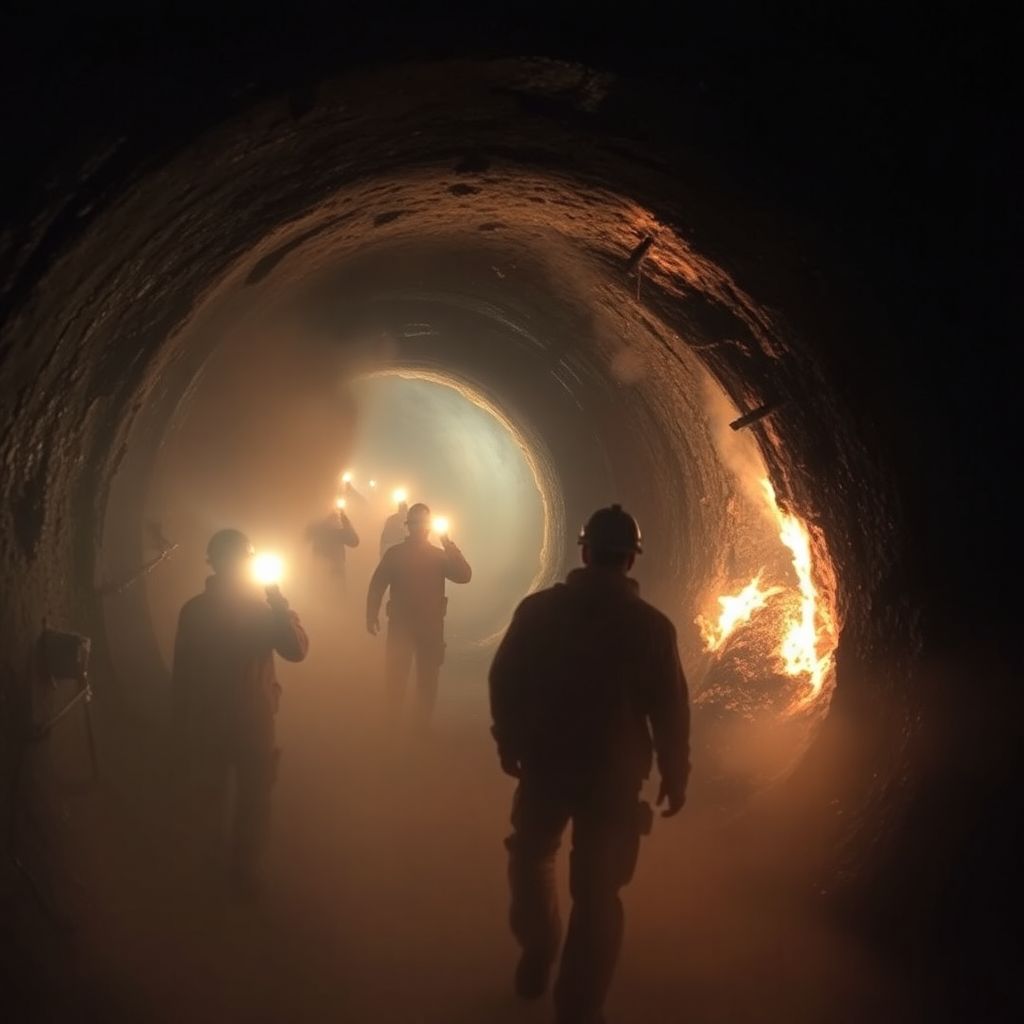
Mine Fire Still Burning After Six Days: Production Halted, Sealing Operations Underway
A fire that broke out nearly a week ago in an underground coal mine operated by the Turkish Hard Coal Enterprise (TTK) in Amasra is still not fully extinguished. As a precaution, production has been suspended in the affected section, while teams work around the clock to cut off the fire’s access to oxygen and bring it under control.
According to initial information, the blaze started six days ago in the mechanized longwall production panel located between the minus 270 and minus 370 meter levels of the mine. The fire developed in the No. 6 coal production gallery, a key area for output in that part of the facility.
Emergency response teams specializing in mine rescue were immediately deployed underground. Their first objective was to localize the fire, clear smoke-filled sections, and prevent the flames from spreading to neighboring galleries and levels. Despite intensive intervention, the blaze proved stubborn, and direct extinguishing attempts did not achieve the desired result.
Mine management then switched to a different strategy: sealing off the burning zone from the rest of the mine, a standard firefighting method in underground coal operations. A decision was taken to construct a barrier-commonly referred to as a “mine dam” or stoppage wall-in the gallery where the fire started. The purpose is to isolate the area, cut off the oxygen supply, and allow the fire to suffocate over time.
In the early morning hours, heavy materials and equipment were transported into the mine via the shaft and the main ventilation entry. Trucks delivered construction materials to the mouth of the mine, from where they were moved underground to the designated sealing points. The barrier system will be built using fire-resistant and airtight materials designed to withstand high temperatures and pressure differences.
So far, there have been no casualties, and no miners have been reported as affected by smoke inhalation. Production was halted in the impacted section immediately after the fire was detected, and non-essential personnel were evacuated as a safety measure. Only trained rescue and technical teams are allowed entry into the risk zone.
Experts point out that underground coal mine fires are particularly dangerous because coal itself can continue to smolder for long periods, even in low-oxygen environments. Spontaneous combustion, heat accumulation, and the presence of methane or other gases can complicate extinguishing efforts. For this reason, sealing off the affected galleries and carefully monitoring gas concentrations is often considered the safest and most reliable method.
The decision to build a barrier means the fire is unlikely to be extinguished quickly. Once the gallery is sealed, the area will have to remain closed for a significant period to ensure the blaze has completely died out. Only after continuous measurements show that temperatures and gas levels have normalized will engineers consider reopening or recovering that part of the mine.
Meanwhile, production in other, unaffected areas of the mine is being reassessed. Management is conducting risk analyses to determine whether operations can continue safely in adjacent sections or whether further shutdowns are necessary. Occupational safety teams are reviewing ventilation systems, emergency escape routes, and monitoring devices to prevent any secondary incidents.
This incident has once again highlighted the critical importance of preventive measures in underground mining: regular inspection of coal faces, strict control of heat and gas buildup, and early detection systems for smoldering zones. Specialists emphasize that even minor temperature anomalies in coal seams can signal the onset of a slow-burning fire that may take days to fully reveal itself.
Local residents and families of miners are closely following the developments. While the absence of injuries has brought some relief, the persistence of the fire for six days has raised concerns about long-term damage to the mine and potential economic consequences for the region. Authorities have indicated that a detailed technical investigation will follow once the situation is under control, with the aim of determining the exact cause and preventing similar events in the future.
Seven Orphaned Wolf Pups Receive Intensive Care
While the mine fire continues to dominate attention, another story from the region underscores the fragile balance between human activity and wildlife. In the province of Elazığ, seven wolf pups were found in the wild in a state of extreme weakness, apparently after losing their mother.
The young wolves were discovered hungry and exhausted, unable to fend for themselves. Wildlife officers transported them to the Dicle Wildlife Animal Rescue and Rehabilitation Center in Diyarbakır, where they are now receiving specialized care. Veterinarians and caretakers are monitoring the pups closely, providing medical treatment, controlled feeding, and a safe environment in which they can regain strength.
Because wolves are a protected and ecologically important species, the primary goal of the rehabilitation process is to preserve their natural behavior. The staff avoid unnecessary human imprinting, ensuring that the animals do not become overly accustomed to people. This is crucial if they are to be successfully returned to their natural habitat once they are strong enough.
The care regimen for the pups includes a carefully balanced diet, hydration, regular health check-ups, and gradual physical conditioning. As they grow, their enclosure space will be expanded and enriched with natural features to encourage hunting instincts, social interaction, and other typical behaviors.
Experts stress that cases like these often arise from habitat loss, human-wildlife conflict, or accidental death of adult animals. The survival of orphaned pups depends heavily on rapid intervention and professional rehabilitation. Each successfully released animal helps maintain the genetic diversity and ecological role of predator populations, which are vital for regulating prey numbers and preserving the health of ecosystems.
The story of the seven wolf pups stands in stark contrast to the ongoing industrial emergency underground. Together, the two events highlight how closely intertwined environmental, economic, and safety issues are: while communities rely on mining and heavy industry for livelihoods, they also share the landscape with vulnerable wildlife that needs protection and careful management.
As operations continue to seal off the burning section of the mine, and as the wolf pups slowly recover under expert care, both developments will be watched closely. One represents a battle against an invisible, persistent fire deep underground; the other, a quiet effort to give a handful of fragile animals a second chance at life in the wild.