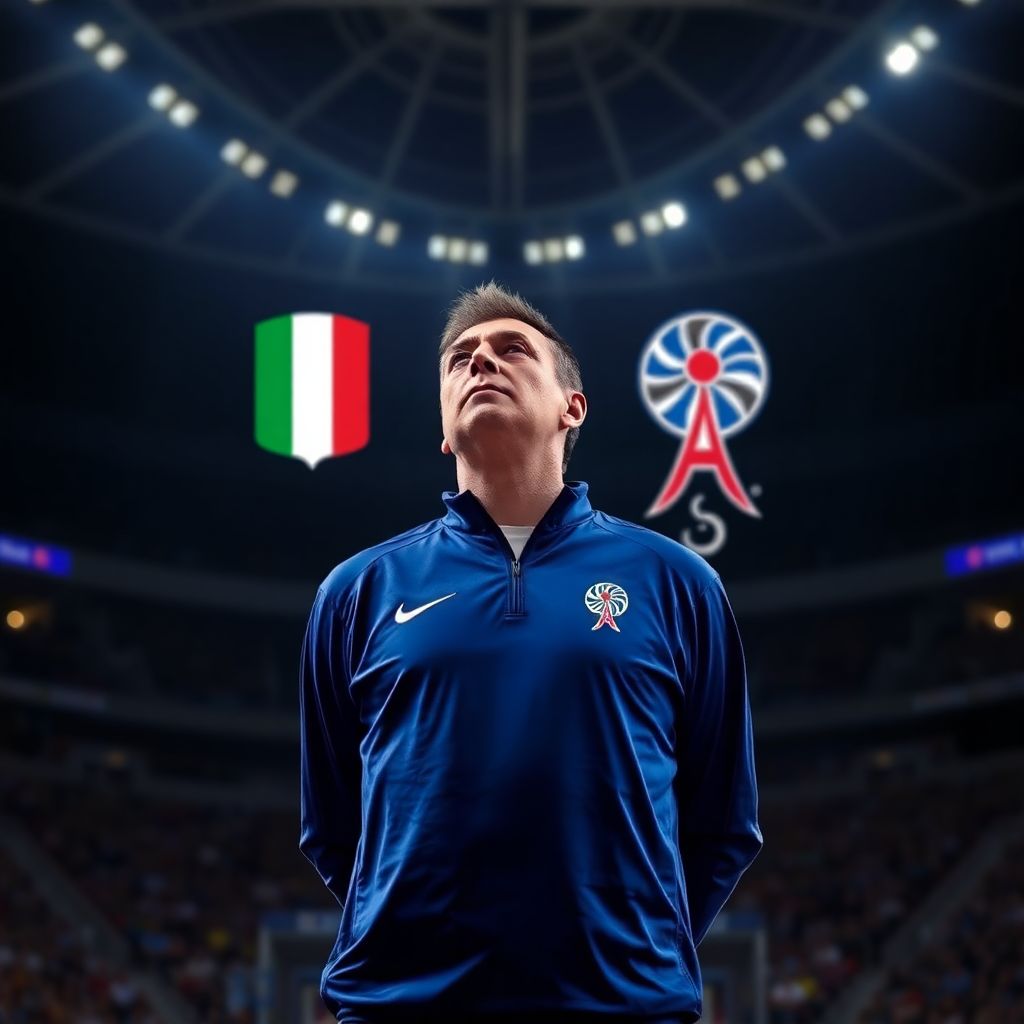
Luca Banchi set for double duty: Italy and Anadolu Efes
——————————————————
Anadolu Efes are on the verge of a bold and unusual move: bringing back Luca Banchi, the coach who previously helped revive their EuroLeague campaign, and allowing him to juggle two high‑pressure jobs at once. The Italian tactician is close to a new agreement with Efes while retaining his role as head coach of the Italian national team.
If the deal is finalized, Banchi would guide Italy in international competitions and, in parallel, try to return Efes to the EuroLeague elite. The club’s management believes his familiarity with the organization and his proven ability to quickly stabilize a struggling roster make him the ideal name for a quick reset. For Banchi, it would be a rare chance to shape both a national and a club project at the same time, something that demands meticulous planning of workloads, travel and player management.
National team spotlight: first drills in Canada
———————————————–
While club negotiations grab the headlines, national teams are already at work. The national squad has held its first training session on Canadian soil, beginning preparations for a crucial series of fixtures. Attention naturally turns to the hosts: will Canada lean heavily on the power and physicality of a Larin‑led attack, or will Bosnia and Herzegovina respond with the experience and composure of a Džeko‑inspired front line?
Both Canada and Bosnia are seen as dangerous opponents for any side. Canada’s new generation promises intensity and athleticism, while Bosnia, when Džeko is on the pitch, tends to rely on clever movement, hold‑up play and clinical finishing. The upcoming clashes are shaping into a duel of styles: youthful energy against veteran savvy.
A World Cup song that misses the mark
————————————-
Off the pitch, another controversy rumbles on. Shakira, usually a guaranteed hitmaker when it comes to global football anthems, has found herself at the center of criticism. Many fans argue that her latest World Cup song is a disappointment, lacking the rhythm, emotion and cultural flavor that previous tournament anthems carried.
For supporters who grew up with unforgettable World Cup songs, this edition feels like a missed opportunity. Instead of uniting the globe in a shared chant, the track is accused of sounding generic and disconnected from the stadium atmosphere. The backlash has revived an old complaint: that modern football marketing chases trends and streaming numbers more than authenticity.
“Football’s soul betrayed” and U.S. indifference
———————————————–
That dissatisfaction spills over into broader accusations aimed at the organizers. Critics claim that the football authorities have betrayed the spirit of the game, prioritizing commercial deals, showbiz aesthetics and branding over fan culture and on‑field passion. High ticket prices, controversial hosting decisions and increasingly corporate ceremonies are held up as evidence that the tournament is drifting away from its roots.
In parallel, a different issue emerges in the United States, where the upcoming World Cup barely registers for a large part of the public. While football is growing steadily in North America, for many Americans the tournament is still far from a national obsession. League sports like the NFL, NBA and MLB dominate conversation, leaving the World Cup struggling for space in the mainstream. This contrast between global hysteria and U.S. indifference accentuates the identity crisis football is facing: is it a grassroots‑driven culture or just another entertainment product to be marketed?
Osimhen’s nightlife storm
————————–
Back in club football, Victor Osimhen finds himself under heavy criticism after reports that his nightlife has started to overshadow his performances. Late‑night outings and party photos have drawn anger from supporters who believe that off‑field distractions are affecting his focus and fitness.
For a striker of Osimhen’s caliber, expectations are unforgiving. Fans point out that every poor touch or missed chance now gets linked, fairly or unfairly, to stories about his night‑time escapades. Coaches and club officials are under pressure to impose stricter discipline, while the player must balance his private life with the reality that top‑level footballers live under a microscope.
Guirassy or Vlahović: who will be missed more?
———————————————-
Another heated debate swirls around two prolific forwards: Serhou Guirassy and Dušan Vlahović. Both are crucial to their teams, and the question is simple: whose absence would hurt more?
Guirassy brings relentless movement, sharp finishing and a knack for finding space in crowded penalty areas. Vlahović, on the other hand, offers a mix of physical dominance, aerial power and the ability to create something out of nothing with a single strike. Tactically, losing Guirassy might reduce a team’s speed and vertical threat, while being without Vlahović could strip it of a focal point and psychological edge. Coaches and analysts are split, but everyone agrees on one thing: either missing from the lineup dramatically changes how their teams can play.
Fenerbahçe’s “distance learning” project and Aziz Yıldırım’s dream
——————————————————————
At Fenerbahçe, long‑term planning and modernisation are back in focus. A “distance education” concept, long pushed behind the scenes, is finally reaching the implementation stage. The idea, nurtured as part of Aziz Yıldırım’s vision for the club over the past eight years, aims to combine academic learning with football education through digital platforms and remote programs.
The project is designed to help develop not only better players but more educated professionals who understand sports science, tactics, languages and media relations. Using online modules, data platforms and remote mentoring, Fenerbahçe wants to build a player pathway that is not limited to the training ground. If successful, this could become a model for other clubs seeking to blend football academies with a broader educational mission.
Besiktas and the never‑ending striker hunt
——————————————
Across Istanbul, Beşiktaş are again scouring the market for a centre‑forward. The question haunting fans is whether the club can truly upgrade on Oh, whose departure left a noticeable mark on the attack. The Korean forward’s work rate, pressing and link‑up play were valued even when he was not scoring, and replacing that full package is no easy task.
Beşiktaş are linked with various profiles: experienced target men, fast transitional forwards and technically gifted second strikers. The board must decide whether to chase a big name, which would excite supporters, or a less glamorous but tactically perfect option who can immediately fit the system. Each misstep in recruitment pushes the team further from title contention, making this search one of the club’s most delicate decisions of the season.
Aykut Kocaman and the “carpet wrapping” saga
——————————————–
Fenerbahçe’s internal debates do not stop at educational reforms. Rumours involving Aykut Kocaman have sparked heated argument, especially the bizarrely named “carpet wrapping” crisis. Reports suggested there had been a serious incident behind the scenes, but these claims have been firmly denied. Still, the story continues to circulate, adding tension to an already sensitive atmosphere around the coach’s legacy and influence.
The episode illustrates how quickly narratives can spiral in big clubs. Even when a story is publicly rejected, fragments of it linger in the fanbase and media discussions. For Fenerbahçe, it underlines the urgent need for clear communication and a coherent sporting project that reduces the space for speculation and internal conflict.
Fenerbahçe’s biggest transfer finally lands
——————————————-
Amid all the drama, Fenerbahçe supporters have at least one reason to celebrate: the club’s most important transfer of the window, long anticipated, has finally been completed. This arrival, prepared for weeks and eagerly awaited for months, is seen not just as another signing but as a cornerstone for the new season.
Whether it is a star player, a key defender or a playmaking midfielder, the new addition is expected to lift the overall quality of the squad and provide leadership on and off the pitch. The club’s management view this move as the starting point for a new cycle, hoping it will stabilize the dressing room and give the coach the tools to compete on all fronts.
Oh’s fever, Czech disappointment and a Korean hero
————————————————–
On the international stage, one of the most striking individual stories belongs to Oh, who became a national hero in South Korea after producing a decisive performance against Czechia despite suffering from a 38‑degree fever. Dragging himself onto the pitch when many assumed he would not play, he contributed in key moments and helped secure a memorable victory.
In South Korea, such displays of self‑sacrifice resonate deeply. The image of a player pushing through illness for his country feeds into a narrative of commitment that fans cherish. For the Czechs, however, the match represented a bitter collapse against an opponent who simply wanted it more on the day.
Erden Timur and a possible Galatasaray return
———————————————
At Galatasaray, whispers of a major comeback are getting louder. Erden Timur, once a central figure in the club’s transfer operations and strategic planning, is rumoured to be considering a return. The key question is what kind of role and authority president Dursun Özbek will put on the table to tempt him back.
Timur’s previous stint was associated with ambitious signings and a clear sporting project. Bringing him back could restore a sense of structure and direction at a time when the club faces fierce competition domestically and in Europe. For Özbek, the challenge is to craft an offer that grants enough influence to be meaningful while keeping decision‑making balanced within the existing hierarchy.
South Korea’s win and Beşiktaş smiles
————————————-
South Korea’s victory had repercussions far beyond Asia. Beşiktaş fans found themselves unusually invested, and many of them smiled at the final whistle. Certain players connected to the club’s current or past plans delivered strong performances, boosting their market value and public perception.
For Beşiktaş, any positive exposure of their targets or former players can shift negotiations. Strong showings at international level can either make a transfer more expensive or convince the club to accelerate talks before other suitors arrive. Either way, South Korea’s success reverberated through the corridors in Istanbul.
“Without Guirassy, I’m out” – Fenerbahçe’s dilemma
————————————————–
In yet another twist in the transfer market, an apparent ultimatum has complicated Fenerbahçe’s planning: “If there is no Guirassy, then I’m not coming.” Such a stance, allegedly taken by a potential signing or an internal decision‑maker, has left the club facing a strategic dilemma.
Guirassy is considered a key piece in several tactical blueprints Fenerbahçe have drawn up. If they cannot close a deal for him, they may have to change their entire attacking structure, which could also affect the interest of other players or staff who were keen to work within that framework. The club now has to decide whether to double down on chasing Guirassy or pivot quickly to alternative targets before the market moves on.
Tedesco ruins Beşiktaş’ plans and Flamengo enters the scene
———————————————————–
Beşiktaş’ transfer strategy suffered another blow when coach Domenico Tedesco reportedly snatched a target out of their hands. A player believed to be close to the Istanbul club ended up in Tedesco’s plans instead, forcing Beşiktaş to rethink their summer blueprint.
With that door closed, eyes have turned toward Flamengo. The Brazilian giants possess several players who could fit Beşiktaş’s requirements, whether it be dynamic wingers, box‑to‑box midfielders or goal‑scoring forwards. Negotiating with a South American powerhouse is never simple, but the Black‑and‑Whites see an opportunity to secure talent that is both technically gifted and mentally used to playing under intense pressure.
Summit at Galatasaray: Özbek and Gardi’s key meeting
—————————————————–
Inside Galatasaray, a high‑level summit has brought renewed focus to the club’s sporting hierarchy. President Dursun Özbek held a crucial meeting with Gardi, discussing the medium‑ and long‑term project. The agenda reportedly covered squad restructuring, academy integration and financial sustainability.
Özbek is believed to have outlined clear expectations regarding European competition and domestic dominance, asking for a coherent plan that synchronizes recruitment, youth development and tactical philosophy. For Galatasaray, which has oscillated between boom‑and‑bust cycles in recent years, this meeting could mark a turning point if the decisions are followed by consistent execution.
Porto’s revolution and Galatasaray’s Deniz Gül opportunity
———————————————————–
In Portugal, Porto are undergoing significant changes that may inadvertently benefit Galatasaray. As the Portuguese club reshape their squad and sporting structure, a pathway could open for Deniz Gül. The Turkish talent, long monitored as a potential asset for the future, may now find fewer obstacles blocking a move or a more prominent role.
Galatasaray’s recruitment team sees this as a window that cannot be missed. If Porto’s restructuring leads to renegotiated terms or a clearer development plan, Deniz Gül could become a symbol of a new transfer strategy: targeting young players with high upside, rather than relying solely on veterans with big reputations.
Aykut Kocaman under pressure and the Arne Slot factor
—————————————————–
Within Fenerbahçe, the Aykut Kocaman issue is far from settled. What began as murmurs of discontent has grown into a full‑blown internal crisis, as differing visions of the club’s future collide. While some value Kocaman’s experience and history with Fenerbahçe, a significant section of the younger fanbase and emerging voices within the club are increasingly vocal in their desire for a more modern figure.
The name on many lips is Arne Slot. The Dutch coach, known for high‑intensity football, fluid attacking patterns and data‑driven preparation, represents the stylistic revolution younger supporters crave. Their hope is for a coach who will press aggressively, develop youngsters, and bring a contemporary tactical identity that can compete with Europe’s best.
Balancing tradition and innovation
———————————-
Fenerbahçe’s predicament encapsulates a challenge many big clubs face: how to respect tradition while embracing innovation. Kocaman symbolizes continuity with the past, a safer, more conservative approach that once brought stability. Slot, by contrast, is associated with risk, evolution and a break from old habits.
The decision the club ultimately takes will echo for years. Opting for continuity could preserve short‑term calm but risk leaving Fenerbahçe behind tactically. Choosing radical change could revitalize the team but also expose it to growing pains and initial inconsistency. In this crossroads moment, fans, executives and players alike are waiting to see which direction the club will choose.
From Italy to Istanbul: a football landscape in flux
—————————————————-
From Luca Banchi potentially managing both Italy and Anadolu Efes, to national teams fine‑tuning their preparations in Canada, from World Cup song scandals to heated debates over coaches and transfers in Istanbul, one common thread runs through all these stories: football and basketball are in a period of rapid transformation.
Clubs and federations are being forced to rethink old models, adapt to new financial realities and respond to shifting fan expectations. The coming months will show whose bold decisions pay off and whose miscalculations will be ruthlessly exposed on the scoreboard.