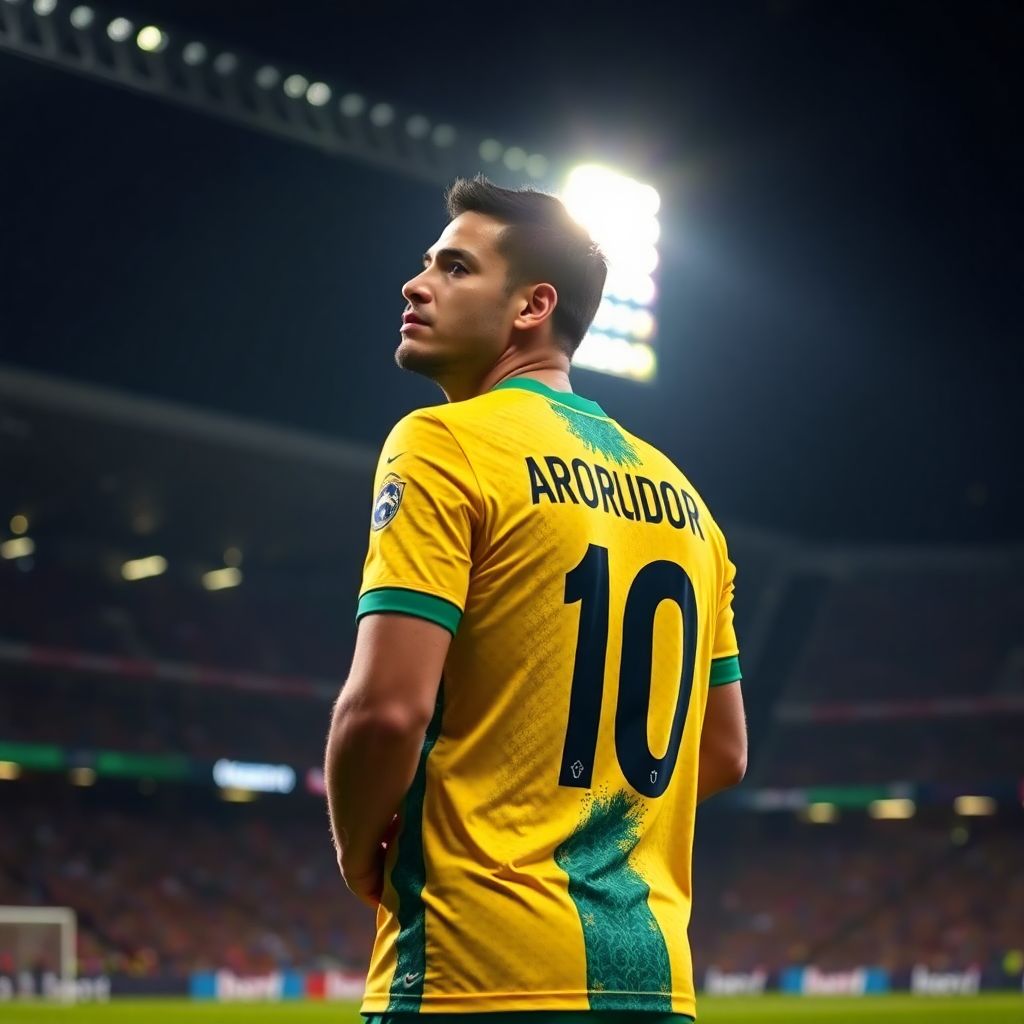
“He even talked about Beşiktaş!” – the phrase has been echoing around Turkish football circles ever since Keny Arroyo broke his silence after reigniting his career in Brazil. The playmaker, who once arrived in Istanbul with the weight of the legendary No.10 shirt on his shoulders, has finally found the spark that was missing during his spell in black and white.
At Beşiktaş, Arroyo was supposed to be the creative brain of the team: the conductor, the one to decide games with a single pass or a flash of imagination. The club handed him the symbolic No.10 jersey, a move that signaled trust and expectation in equal measure. Instead of becoming the protagonist of a new story, he struggled to adapt – fluctuating form, tactical mismatches and growing pressure from the stands slowly pushed him to the periphery.
When the transfer to Cruzeiro was finalized, many in Turkey saw it as the quiet end of an overhyped chapter. For most, Arroyo would be remembered as another “could have been” in the long list of foreign signings who never truly settled in Istanbul. But Brazil offered him something Beşiktaş, at that moment, could not: a fresh environment, less suffocating expectations and a style of football that suited his natural instincts.
In Belo Horizonte, Arroyo’s transformation has been nothing short of dramatic. At Cruzeiro, he looks like a player reborn: more confident on the ball, more decisive in the final third, and far more influential on the rhythm of his team’s attacks. The Brazilian side trusted him with a central role, built patterns of play around his strengths, and gave him the freedom to drift between the lines. The same player who seemed lost in the compact, physically demanding game of the Turkish league is now dictating tempo and deciding matches.
What turned heads in Turkey, however, wasn’t just Arroyo’s resurgence. It was his decision to speak openly about his Beşiktaş experience. Instead of dodging the subject, he addressed it directly: the expectations, the pressure, the reality that sometimes a talented player and a big club simply don’t fit each other at the right moment. He admitted that the atmosphere in Istanbul was unique, that the fan base was passionate to a level he had never experienced before, and that this passion can both elevate and crush a player.
According to Arroyo, one of the biggest challenges at Beşiktaş was mental rather than technical. He didn’t deny his own shortcomings; rather, he underlined how fine the margins are at a club where every misplaced pass is scrutinized. He suggested that, once confidence starts to waver, the iconic No.10 shirt feels heavier with every game. In Brazil, that weight was lifted. At Cruzeiro, the jersey number is a symbol, but not a burden. The team’s structure allowed him to make mistakes without being defined by them.
His reflections inevitably fueled a familiar debate in Turkey: how top clubs handle their creative players. Beşiktaş has often been praised for embracing big personalities and risk-takers, yet the demands of instant success can suffocate exactly the type of footballer who needs time and patience. Arroyo’s case has become a textbook example – a reminder that talent alone is not enough without the right environment, tactical setup and psychological support.
While Arroyo’s comments sparked discussion, they landed in a football landscape already buzzing with storylines. domestically, the idea that “it was always hard to beat Beşiktaş” still holds a trace of truth – especially in big games where the crowd can tilt the pitch. Yet the balance of power shifts every season. Coaches like Ergin Ataman, for instance, have mastered the art of seizing momentum in crucial moments, not only in basketball but as a broader symbol of Turkish sport’s tactical evolution. Taking “the advantage” has become a theme: whether in title races, European campaigns or transfer battles, a small strategic edge can change an entire year.
The sports scene has also recently witnessed milestones described as “a first for Turkey,” from historic achievements on international stages to unprecedented financial deals. Emerging talents such as Can Uzun are already fielding questions about their next move, caught between the pull of European giants and the emotional weight of representing Turkish clubs. Each answer becomes a headline, each silence an invitation for speculation.
Beşiktaş itself continues to live on the edge between tradition and reinvention. The club recently secured a coveted place in the GAİN final, setting up a classic confrontation with Fenerbahçe Beko. That alone revives one of the country’s most intense rivalries, where every possession, every decision by the referee and every tactical tweak is amplified. For Beşiktaş, reaching such finals is part of safeguarding its identity as a club that competes at the highest level across disciplines, not just in football.
On the football side, the quest for a clear direction is equally visible in coaching plans and transfer strategies. Discussions around Aykut Kocaman and the construction of a new technical staff have raised expectations in another corner of Istanbul, with the promise of a “brand new Fenerbahçe” and detailed projections even for the 2026-27 season. Each candidate in a backroom staff is now analyzed as “a name to be taken seriously,” showing how much Turkish football has professionalized the behind-the-scenes dimension of the game.
The transfer market, as always, remains a battlefield. Reports of Galatasaray’s persistence over certain targets, debates over whether a major Italian newspaper is accurately reflecting negotiations, and the constant back-and-forth about players like Camavinga, Khephren Thuram or Jhon Duran have turned the summer window into a daily drama. The idea that Camavinga’s price is now clearly defined and “the ball is in Galatasaray’s court” illustrates how aggressively Turkish clubs are willing to operate to compete with Europe’s elite.
Beşiktaş, too, is not standing still. A “goalkeeper revolution” has been framed as one of the key projects within the club. It is said that the new coach Italiano has requested specific profiles, while sporting director Özen has given his approval to a structural rebuild in goal. In parallel, the club is moving for a left-footed centre-back – notably, a former student of Italiano – in an effort to modernize the back line. These are not cosmetic changes but tactical statements: building from the back, emphasizing ball-playing defenders, and aligning recruitment with the manager’s philosophy.
Elsewhere, agent controversies and media noise continue to swirl. Icardi’s representative publicly pushed back against rumors by insisting that they “have not spoken with anyone,” a bold attempt to silence the constant transfer chatter. At the same time, boardroom maneuvering never truly stops. Figures like Dursun Özbek are said to be putting trusted names such as Ali Dürüst “on the table” as potential trump cards in domestic power games and long-term planning.
Beneath all of this, there is also a growing layer of reflection about identity and culture. When players refer to themselves as “Kara Beygir” or share why this nickname holds a particular meaning, they are tapping into Turkey’s rich tradition of metaphors in sport. Statements like Kerem’s sociological observations from the national team camp-describing his surprise at certain dynamics and attitudes-show that football here is never purely about tactics and goals. It is a mirror of society, its tensions and its aspirations.
The financial side has exploded as well. The 100 million euro barrier being broken for a high-profile move, with Osimhen poised as the first big signing under Mourinho in his new chapter, exposes the growing gulf between the European super-elite and everyone else. Turkish clubs, realizing this gap, are trying to be smarter, faster and bolder in recruitment. Choosing the right project over the biggest name is no longer just a slogan; it is becoming a survival strategy.
Within that broader picture, Keny Arroyo’s story resonates more deeply. He is a reminder that careers are not linear and that a player judged as a failure in one context can become a star in another. Beşiktaş fans may look at his revival at Cruzeiro with mixed feelings: frustration that he did not show this level in Istanbul, but also a sense of vindication that the talent they believed in was real. For the club, his case should be a lesson in how to balance ambition with patience, symbolism with practicality.
Ultimately, when Arroyo “even talked about Beşiktaş,” he did more than revisit an old chapter. He reopened a conversation that Turkish football needs to have again and again: how clubs handle pressure, how they protect their playmakers, and how they build an environment where a No.10 shirt inspires creativity instead of fear. Beşiktaş, constantly evolving between past glory and future plans, will be judged not only by trophies and finals, but also by how it learns from the players who slipped through its fingers and then rose from the ashes elsewhere.