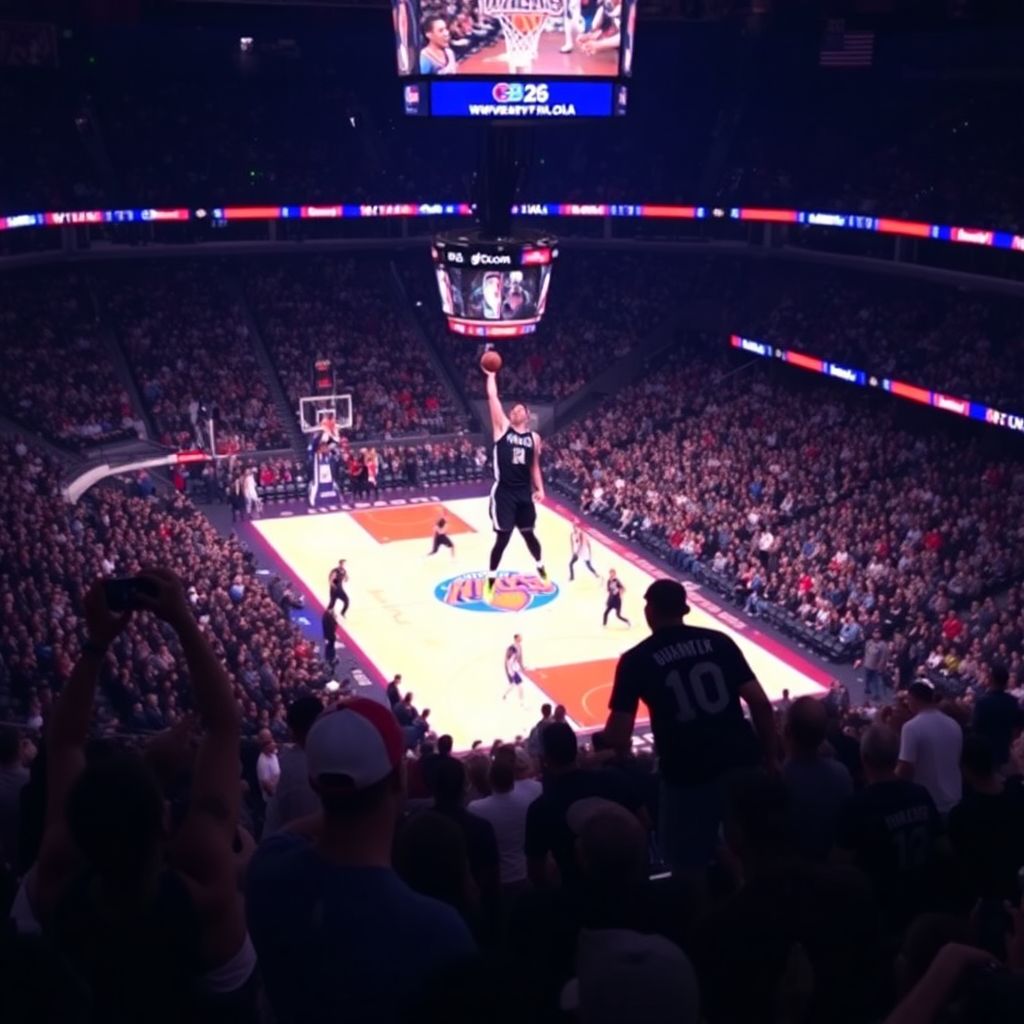
Knicks take 2-0 lead after last‑second thriller
The New York Knicks have seized full control of the NBA Finals, going up 2-0 in the series after a dramatic 105-104 victory over the San Antonio Spurs in Game 2. In a contest that stayed within a few possessions from the opening tip to the final buzzer, New York survived a nail‑biting finish and once again protected home court, leaving San Antonio with no margin for error heading into Game 3.
From the first quarter on, the game developed into a tactical battle. The Knicks pushed the pace in transition and attacked the paint, while the Spurs answered with disciplined half‑court sets and relentless ball movement. Neither side was able to pull away: every mini‑run was immediately answered, every defensive lapse punished. The scoreboard reflected that balance, with the lead changing hands repeatedly and neither team enjoying a double‑digit advantage.
In the decisive fourth quarter, both coaches shortened their rotations and star players took over. The Knicks leaned on aggressive perimeter defense, forcing San Antonio into tough mid‑range attempts, but the Spurs stayed within striking distance with clutch shot‑making and offensive rebounds. The final two minutes were a showcase of playoff basketball at its highest level: contested threes, hard drives to the rim, and defensive stops that felt as valuable as made shots.
The outcome hinged on the very last possession. With New York clinging to a one‑point lead, the Spurs drew up a play to steal the game in the closing seconds. The ball found its way to San Antonio’s hot hand, but the Knicks’ help defense rotated perfectly, contesting the shot just enough. The attempt rimmed out as the buzzer sounded, freezing the score at 105-104 and sending Madison Square Garden into chaos. A single point now separates the teams on the scoreboard, but in the series it translates into a commanding 2-0 advantage for New York.
This narrow win underscores how slim the margins are at this stage of the season. The Knicks’ ability to execute late‑game situations, secure critical defensive rebounds, and stay composed under pressure is becoming a defining feature of their playoff run. For San Antonio, there is little time to dwell on the heartbreak; down 0-2, Game 3 on their home floor becomes a must‑win. Historically, teams that fall behind 0-2 in the Finals face long odds, but the Spurs’ resilience and tactical discipline mean the series is far from over.
Looking ahead, adjustments on both sides will be critical. The Spurs will likely search for better ways to create open looks against New York’s switching defense and work to limit the Knicks’ second‑chance points. New York, meanwhile, will aim to maintain its defensive intensity while finding ways to reduce turnovers that nearly opened the door for a Spurs comeback in Game 2. With emotions high and momentum clearly favoring the Knicks, the next game could define the entire series narrative.
Beyond the X’s and O’s, this 2-0 start has shifted the psychological landscape. New York’s confidence is surging; they have proven they can win both convincing games and one‑possession battles. The Spurs, traditionally one of the league’s most composed playoff teams, now face the challenge of responding to adversity on the biggest stage. How they handle this pressure, and how quickly they can impose their style on the series, will determine whether the Finals become a long chess match or tilt decisively toward New York.
For neutral observers and fans alike, Game 2 delivered everything expected from a championship series: star performances, tactical intrigue, and a finish that will be replayed for years. With the Knicks halfway to the title but the Spurs far from conceding, the Finals promise more intense, tightly contested basketball as the series shifts arenas and the stakes rise even higher.
—
Anadolu Efes top Fenerbahçe Beko in high‑scoring clash
On the European stage, another big matchup delivered fireworks. In Turkish basketball, Anadolu Efes defeated Fenerbahçe Beko 102-93, in a game that mirrored the NBA Finals in intensity and offensive firepower. Efes controlled key stretches with efficient perimeter shooting and timely defensive stops, while Fenerbahçe struggled to contain multiple scoring threats and paid the price in transition.
Cross‑town battles between Anadolu Efes and Fenerbahçe Beko routinely shape the domestic and continental hierarchy, and this 102-93 result is no exception. Efes’ ability to move the ball and create open looks from beyond the arc again proved decisive. For Fenerbahçe Beko, the defeat raises questions about defensive rotations and bench contributions, especially in long, physically demanding campaigns where depth is crucial.
—
Tense atmosphere around Fenerbahçe: Hakan Safi, Aziz Yıldırım and Sporting’s backlash
While Fenerbahçe fight on the court, the club is also at the center of a political and transfer‑market storm off it. A historic day looms for the Istanbul giants as the club stands before a pivotal choice: Aziz Yıldırım or Hakan Safi. The presidential race has triggered bold promises, dramatic exchanges and an increasingly heated climate in Turkish football.
One of the flashpoints came from abroad. Sporting’s president publicly delivered a sharp message aimed at Hakan Safi, declaring that he does not know Fenerbahçe’s presidential candidate. This unexpected remark was interpreted as a firm response to transfer rumors and behind‑the‑scenes negotiations allegedly involving Sporting players. The comment added an international dimension to the already intense Fenerbahçe election narrative and signaled that European clubs are paying close attention to developments in Istanbul.
Aziz Yıldırım did not let the situation pass without a reply. The former long‑time president, known for his strong personality and direct communication style, answered Hakan Safi and defended his own vision for the club’s future. The exchange underscored the ideological and strategic gap between the candidates: one stressing continuity and experience, the other attempting to portray himself as the architect of a new era, unafraid of big investments and ambitious projects.
For Hakan Safi, financial “limits” are being openly dismissed as an obstacle. His camp insists that budget caps and regulations will not prevent them from building a star‑studded squad. A headline‑grabbing 100‑million‑euro plan has been floated, underlining the scale of his promises. The message is clear: if elected, Safi intends to reshape Fenerbahçe’s roster with marquee signings, raising expectations among supporters who are desperate to see their club return to the top both domestically and in Europe.
The transfer rumors surrounding Safi do not stop there. One of the most symbolic stories involves Robert Lewandowski, referred to as Safi’s “prince”. A message from the Polish striker, seen as a positive signal for Fenerbahçe fans, was framed as the good news supporters had been waiting for. Even if a move of that magnitude remains complex, the mere association with a world‑class name has electrified the fan base and aligned with Safi’s narrative that the club should think on a continental scale.
Another saga involves Luis Suárez. The Uruguayan star, speaking for the first time on his future and potential projects, reportedly gave statements that delighted Hakan Safi. At the same time, these developments appeared to upset Sporting, adding another layer of tension between the Portuguese side and the Fenerbahçe camp. These overlapping stories illustrate how the club’s presidency race has become tightly intertwined with high‑profile transfer speculation, fueling excitement but also creating diplomatic friction.
—
Montella’s World Cup approach: “Step by step”
On the national team front, Vincenzo Montella has articulated a clear motto for his World Cup journey: “We will move forward step by step.” Rather than making grandiose promises, the coach emphasizes gradual progress, tactical evolution and squad cohesion. This measured tone contrasts with the extravagant pledges heard in some club elections and underlines how different the pressure and time horizons are between international and club football.
Montella’s philosophy is built on building a flexible, modern side that can adapt to opponents while maintaining a strong identity. By insisting on steady improvement instead of instant miracles, he is aiming to create a stable platform that can survive generational changes and injuries. In a landscape dominated by headlines about megatransfers and power struggles, this calm, methodical perspective offers a reminder that long‑term success often comes from patience and continuity.
—
Transfer market buzz: Noah Saviolo, Can Uzun and Galatasaray’s moves
The Turkish transfer market is equally busy. Noah Saviolo has arrived in Turkey for Trabzonspor, signaling the Black Sea club’s ambition to rebuild with fresh energy and international talent. His arrival is expected to add versatility and depth, especially in attacking phases where Trabzonspor aim to become more unpredictable and technically refined.
At the same time, Can Uzun finds himself in the spotlight. Asked directly about Galatasaray, he provided a measured response that will only intensify speculation about his future. The idea of the young talent joining one of Turkey’s biggest clubs fits with a broader trend of top teams aggressively pursuing promising prospects to secure both immediate impact and long‑term value.
A separate storyline revolves around a player who, at 17, “did not become a Lion” but is now on track to join Galatasaray at 20. The phrase hints at a long‑courted target who previously slipped through the club’s fingers but is finally edging closer to a move. This kind of delayed transfer, where an early opportunity is missed but later revived, often comes with emotional weight for both player and fanbase.
Galatasaray are also at the center of sensational external rumors. Victor Osimhen reportedly stunned Galatasaray supporters with his quip: “Will you take me to Barcelona?” The playful comment instantly went viral, illustrating how even a casual remark from a top‑level striker can spark massive debate about future destinations and hypothetical super‑team scenarios. Regardless of seriousness, such statements feed into the ongoing theater of the transfer window.
Within Galatasaray’s own planning, the focus is on targeted reinforcements for the Champions League. There is talk of a “perfect fit” signing who would become Okan Buruk’s “prince”, a key player built around to elevate the team’s European performance. Rather than quantity, the idea is to bring in one or two precise additions that can deliver immediate impact at the highest level, reflecting how every top club must balance budget, squad chemistry and continental ambitions.
—
“Greenwood-Kerem-Luis Suárez”: a fantasy trio full of promise
Another eye‑catching idea circulating around Turkish football fans is the prospect of a front line featuring Greenwood, Kerem and Luis Suárez. On paper, this “magnificent trio” offers a blend of youth, creativity, experience and ruthless finishing. Greenwood’s technical skill and shooting range, Kerem’s dynamism and dribbling, and Suárez’s instinct and leadership could, in theory, form one of the region’s most feared attacking setups.
Whether such a combination ever materializes is another question, but the fact that it is being seriously discussed shows how much Turkish clubs and their followers are dreaming bigger. As domestic teams strengthen financially and organizationally, they are increasingly confident about competing for high‑caliber forwards who just a few years ago might have seemed completely out of reach. This shift in ambition is reshaping expectations across the league.
—
Beşiktaş rebuild: Italiano’s “Bologna package” and a dream free trio
Beşiktaş are also shaping their future with an eye on both the dugout and the pitch. The club is working on an “Italiano revolution”, with the coach dubbed “Little Pep” expected to introduce a more modern, proactive style of football. Reports suggest that Italiano might bring along a “partner in crime” from Bologna, effectively delivering a “Bologna package” to Beşiktaş that would include both tactical staff and possibly certain players suited to his system.
The goal is to overhaul the playing style: more pressing, cleaner build‑up from the back, and smarter use of space in the attacking third. If successful, this could radically change how Beşiktaş approach big games, both in Turkey and in Europe, surprising opponents who have grown accustomed to a more conservative setup. For supporters, the promise of a clear footballing identity is as exciting as any single big‑name signing.
On the recruitment side, Beşiktaş are being linked with a sensational “free” triple package: Kevin De Bruyne, Romelu Lukaku and André-Frank Zambo Anguissa. The idea of all three arriving at no transfer fee sounds almost too good to be true and clearly belongs in the realm of dream scenarios. Still, the association with such elite names speaks volumes about the level of ambition being projected. Even if only part of this trio were to become reality, the impact on the league would be seismic.
Beşiktaş are also maintaining strong contact with supporters through events such as autograph days. These signing sessions, where new arrivals and existing stars meet fans, play a key role in building a sense of belonging around the club, particularly during periods of transition. As the team restructures, keeping fans engaged and hopeful becomes just as important as the tactical and transfer decisions being made behind closed doors.
—
Istanbul derby rivalry spills into Italy over Colombian target
The transfer battlefield has even expanded into Serie A. An “Istanbul duel in Italy” has emerged, as Turkey’s three giants go head‑to‑head for a Colombian player. All three clubs believe the South American could be a perfect fit for their needs, combining physicality, technique and resale value. With multiple Turkish suitors and Italian clubs also involved, negotiations promise to be complex and closely fought.
This race exemplifies a broader trend: Turkish clubs are no longer content to limit themselves to regional markets. Instead, they are competing assertively in Europe’s major leagues for talent, using their passionate fan bases, improving facilities and ambitious sporting projects as key selling points. The outcome of this particular Colombian chase could be a symbolic victory in the ongoing rivalry between Istanbul’s big three.
—
The bigger picture: ambition, pressure and the thin line between promise and delivery
From New York’s 2-0 lead over the Spurs to the feverish atmosphere around Fenerbahçe’s elections and the sweeping plans at Galatasaray and Beşiktaş, one common thread runs through all these stories: ambition. The Knicks’ success is the product of sustained work and precise late‑game execution. Turkish clubs, meanwhile, are attempting to accelerate their rise through bold political choices, aggressive transfer strategies and tactical revolutions.
Yet the gap between promises and results is always thin. Just as the Spurs discovered in their one‑point loss, a season’s work can hinge on a single possession. Similarly, the credibility of presidential candidates, coaches and directors will ultimately be judged not by slogans about 100‑million‑euro budgets or fantasy trios, but by trophies lifted, Champions League qualifications secured and the quality of football delivered.
As the NBA Finals continue and the European off‑season gathers pace, fans are left to navigate a landscape filled with drama on the court and spectacle off it. Whether it is the Knicks trying to close out a historic series or Turkish giants racing to sign the next star, the coming months promise a mix of decisive games, headline‑making decisions and turning points that will shape club identities for years to come.