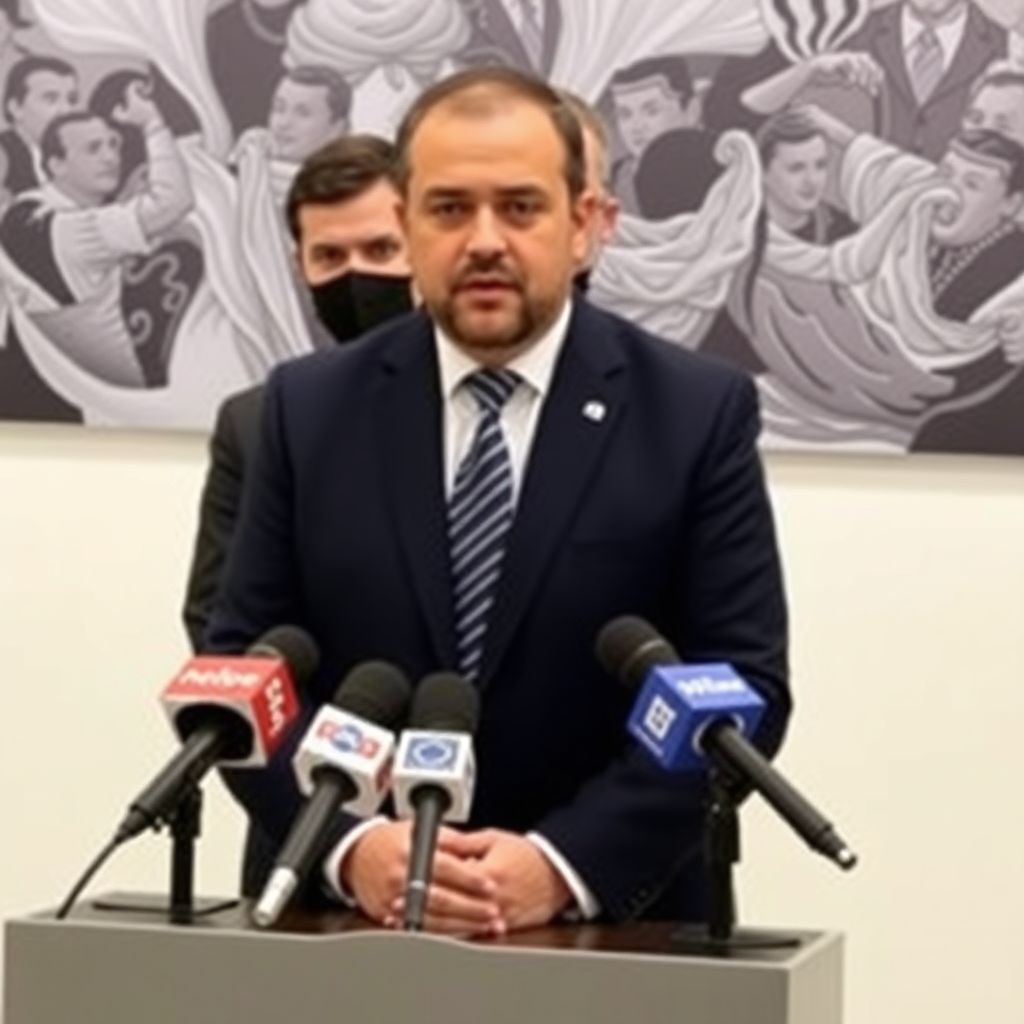
Ankara Metropolitan Municipality denies claim that Mansur Yavaş called Kılıçdaroğlu after holiday event
Ankara Metropolitan Municipality (ABB) has firmly rejected allegations that Mayor Mansur Yavaş phoned former CHP leader Kemal Kılıçdaroğlu on the fourth day of Eid al‑Adha. In an official statement, the municipality described the claims, which appeared in a newspaper column, as completely unfounded and not based on any factual information.
The controversy began when a columnist asserted that Yavaş had called Kılıçdaroğlu immediately after attending a holiday greeting event held in Ankara’s Güvenpark. According to the column, Yavaş allegedly told Kılıçdaroğlu that he had joined the gathering because of the existing “social conjuncture” and added, “I want you to know that I am not on any side regarding this matter.” The article portrayed the supposed phone conversation as a political message aimed at maintaining equal distance between different factions within the opposition.
ABB: “No such phone call took place”
The municipality responded with a detailed clarification, directly refuting the columnist’s narrative. In its written statement, ABB underlined that Yavaş did not contact Kılıçdaroğlu after the Güvenpark event and that there was no phone conversation between the two on that day.
The statement read:
“Following the Güvenpark rally, Mansur Yavaş did not have any telephone conversation with Kemal Kılıçdaroğlu. The expressions used in today’s column by a newspaper writer are entirely baseless. If these allegations had been put to us for verification, it would have been clearly stated that no such phone call took place. We would even have been ready to share records showing exactly who Mansur Yavaş spoke to by phone that day.”
With this wording, ABB not only denied the report but also drew attention to what it described as a lack of basic journalistic diligence. The municipality emphasized that a simple request for confirmation would have prevented the spread of a false story into the public sphere.
Political backdrop of the claim
The timing and content of the alleged phone call are politically sensitive. Following local elections and internal debates within the opposition, the relationship between leading figures such as Mansur Yavaş and Kemal Kılıçdaroğlu has been the subject of constant speculation. Any hint that Yavaş might be attempting to balance between political camps or distance himself from one side could influence both party dynamics and public perception.
In this context, the suggestion that Yavaş told Kılıçdaroğlu, “I am not on any side,” was particularly notable. The municipality’s strong and swift denial can be seen as an attempt to prevent the narrative from being used to question Yavaş’s stance or loyalty within the broader opposition landscape.
Media responsibility and fact‑checking
ABB’s statement also indirectly raises broader questions about media ethics and verification procedures. By stressing that the columnist never contacted the municipality before publishing the alleged dialogue, the administration pointed to a recurring problem: politically charged claims getting circulated without cross‑checking with the parties involved.
In high‑tension political environments, unverified reports can quickly turn into tools of manipulation. A single speculative column or claim about a private conversation can fuel new fault lines, heighten personal rivalries, or deepen divisions between political actors. The municipality’s reference to phone records serves not only as a rebuttal but also as an implicit call for more rigorous fact‑checking.
What the Güvenpark event represents
The holiday greeting program at Güvenpark, which stands at the center of the allegation, was one of the visible public gatherings during Eid al‑Adha. Such events are often used by mayors and political figures to reinforce their connection with citizens, deliver messages of unity, and display solidarity at times of national celebration.
Portraying Yavaş’s participation as something he allegedly felt “forced” to do “due to social conjuncture” reinterprets a routine public appearance as a reluctant, politically calculated move. By denying both the phone call and the quoted remarks, ABB is effectively rejecting an attempt to reframe a standard municipal activity as a sign of behind‑the‑scenes tension.
Impact on Mansur Yavaş’s public image
Mansur Yavaş has built much of his political profile on a reputation for prudence, transparency, and a focus on municipal services rather than personal feuds. Claims that he secretly called Kılıçdaroğlu to distance himself from political camps carry the potential to undermine that image, suggesting double messages: one in public, another behind closed doors.
The municipality’s insistence on the possibility of sharing call logs is therefore significant. It signals that ABB sees this not just as a minor journalistic error but as a story serious enough to warrant proof‑based refutation, precisely to protect Yavaş’s standing as a straightforward political actor.
Legal and political follow‑up possibilities
Although the statement does not explicitly mention legal steps, declarations of this kind sometimes precede complaints against media outlets or authors for spreading misinformation. Whether ABB will move in that direction remains unclear, but the tone of the statement indicates that the administration is sensitive to efforts to attribute fabricated words or actions to the mayor.
Politically, the denial also serves to block attempts to use the alleged phone call as a wedge between Yavaş and other figures within the opposition. By flatly dismissing the story, ABB aims to prevent new speculation about secret alignments or hidden disagreements.
Esenyurt construction scandal: thousands allegedly defrauded
Alongside the political debate in Ankara, another serious issue continues to unfold in Istanbul’s Esenyurt district. There, a major housing project launched in 2011 by a real estate company has turned into a large‑scale victimization case, according to allegations.
The project was planned as a large residential complex consisting of seven blocks and approximately five thousand apartments. More than four thousand people are reported to have been affected. Many of them say they paid significant sums over the years with the expectation of becoming homeowners but did not receive the properties they were promised.
Those who did finally take possession of their homes encountered yet another shock. According to residents, many of the apartments were handed over unfinished, with incomplete interiors, missing fixtures, and construction work left undone. On top of that, some owners claim the actual size of their flats turned out to be smaller than the square meter measurements stated in their contracts or sales brochures.
Long‑term uncertainty for buyers
The Esenyurt project, which has dragged on for about fifteen years, illustrates how delays and irregularities in major housing schemes can devastate individual household budgets. Buyers who planned their financial lives based on a certain delivery date ended up paying rent, loan installments, or both for far longer than they expected.
Victims say they have been trapped between the real estate company’s unfulfilled promises and the slow pace of legal and administrative processes. For many, this prolonged limbo has meant not only financial loss but also psychological strain and a sense of being left without effective protection.
Broader implications for urban development and consumer rights
Cases like the Esenyurt project deepen public distrust in the housing market and in oversight mechanisms intended to protect consumers. When thousands of people report similar grievances about uncompleted projects, smaller‑than‑advertised apartments, or missing building permits, the debate moves beyond a single company and turns into a question of regulatory failure.
Urbanization in Turkey has been rapid and heavily driven by large construction projects. The Esenyurt experience highlights the need for stronger controls at every stage: from project licensing and supervision of construction standards to transparent information about floor areas and timely delivery. It also points to the importance of more accessible legal remedies for homebuyers who feel they have been misled.
Connection between political administration and trust
Although the Esenyurt case is geographically and administratively separate from the debate over Mansur Yavaş and the alleged phone call, both stories revolve around a central issue: public trust in institutions. In Ankara, the municipality insists it is confronting misinformation with verifiable facts. In Istanbul’s Esenyurt, thousands of residents are seeking accountability for promises they say were never properly fulfilled.
In both situations, citizens depend on clear, accurate information and effective oversight. Whether the matter involves what a mayor did or did not say after a public event, or how a construction company handled billions of lira in investments, the underlying expectation is the same: that public statements and official processes should align with reality.
The larger picture
The denial issued by Ankara Metropolitan Municipality is more than a routine correction of an erroneous column. It is a sign of growing sensitivity to how narratives about political figures are constructed and circulated. Likewise, the Esenyurt housing saga is more than a local real estate dispute; it is a symptom of structural vulnerabilities in urban planning and consumer protection.
As these debates continue, they will likely shape how citizens view both their elected representatives and the mechanisms meant to safeguard their rights-whether in the political arena or in something as basic as the promise of a secure home.