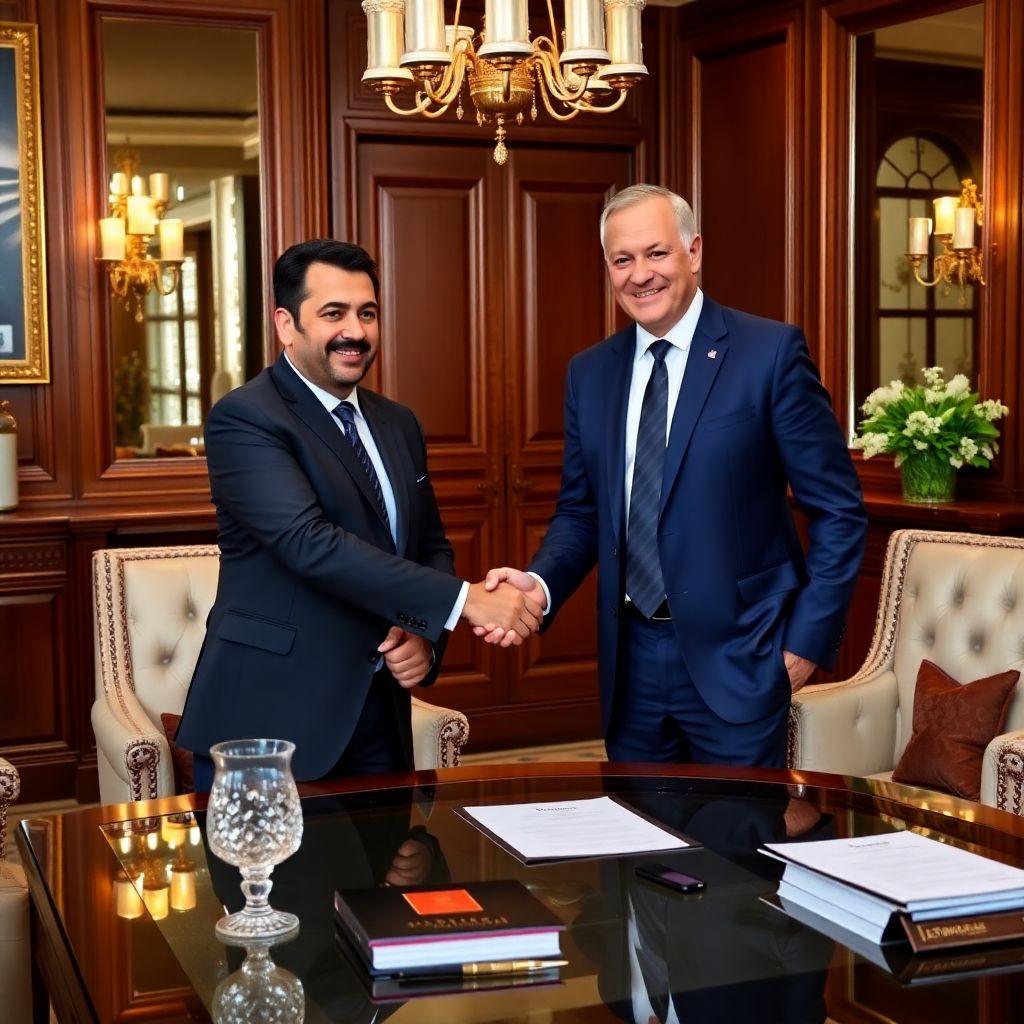
Beşiktaş are on the verge of a new era on the bench. Club president Serdal Adalı has travelled to Italy to complete talks with Vincenzo Italiano, and negotiations have reportedly reached the final stage. According to Italian television reports, a two‑year contract is practically ready, with only the last details left to be agreed before signatures are exchanged. Within the club, the feeling is that the coaching position is now “entrusted” to Italiano in everything but official confirmation.
Adalı’s trip is seen as a clear sign of determination from Beşiktaş. Rather than delegating the discussions, the president himself has stepped in to convince the Italian coach face to face, outline the project and remove remaining doubts. The plan is to hand Italiano broad authority over the first team, from tactical identity to transfer priorities, and to build a long‑term structure instead of another short‑term gamble.
The choice of Italiano aligns with Beşiktaş’s desire to modernise their style. Known for high‑tempo, proactive football and organised pressing, the Italian technician fits the profile of a coach who can both develop young players and keep the team competitive in domestic and European competitions. A two‑year deal would give him enough time to impose his ideas while keeping the door open for adjustments if the project does not progress as expected.
Behind the scenes, Adalı’s negotiations are said to have included assurances on squad reinforcements and infrastructure. Beşiktaş are aware that any coach arriving from Serie A standards will expect a clear sporting plan, from training facilities to scouting support. That is why the talks in Italy have gone beyond salary and contract length, focusing on how to construct a team capable of challenging the dominance of their main rivals.
While Beşiktaş work on their coaching puzzle, the rest of Turkish football is equally turbulent. Former Fenerbahçe president Aziz Yıldırım continues to dominate headlines with his bold rhetoric. In a climate where star names drive electoral campaigns and sporting debates, Yıldırım has once again drawn attention by claiming he would go after global icons like Kylian Mbappé. His comments, mixed with references to Erling Haaland, underline the escalating rhetoric around “superstar promises” in the domestic game, even if such transfers are clearly out of realistic reach under current economic conditions.
On the playing side, Merih Demiral has been highlighted for making what is described as a major sacrifice for Fenerbahçe. The defender is reported to have accepted a deal that is 6 million euros lower than what he could earn in Saudi Arabia, a significant financial concession to prioritise sporting ambition and emotional ties over pure salary. In a period when many players are heading to the Middle East for lucrative offers, Demiral’s choice is being framed as a rare gesture of loyalty and competitive hunger.
Transfer rumours are also swirling around Vedat Muriqi. A pre‑contract is said to have been signed, with details reportedly emerging from Spanish sources. The agreement suggests that the powerful striker may once again become a key figure in the Turkish league, with his physical presence and aerial ability seen as an ideal fit for teams looking for a classic target man. The structure of the deal reportedly includes performance‑based bonuses, reflecting both belief in his potential impact and a desire to protect the club’s finances.
Beşiktaş themselves have been linked with what is described as a “crazy offer” on the market – an incredible 2.5 million euro proposal, a figure that stands out in a period of financial caution. Whether this offer concerns a transfer fee or salary package, it underlines the Black Eagles’ willingness to stretch their budget for the right profile. For a club that has juggled between financial fair play constraints and the pressure of an ambitious fan base, such numbers show how urgently they want to return to title contention.
Another talking point in recent days has been Hakan Safi, who has made a striking confession related to disciplinary matters. His admission regarding penalties and complaints involving Fenerbahçe has caused a storm, especially because it involves criticism coming from someone associated with the same colours. This kind of internal challenge fuels debates about transparency, fairness, and how clubs handle disputes behind closed doors.
At Galatasaray, coach Okan Buruk is reportedly close to settling on his new number 8. The identity of this midfielder is kept under wraps, but insiders are already joking that supporters will “laugh when they hear his name,” hinting at either an unexpected profile or an ironic twist involving a former rival or an underrated player. For Buruk, the choice of a central midfielder is crucial to balancing his attacking lines with the defensive cover needed in European competition.
Sergen Yalçın also remains a central figure in the coaching carousel. Rumours suggest that he could move to Amedspor and take four star players with him. Such a move would instantly transform the club’s profile and competitive level, underlining Yalçın’s pulling power and the respect he commands in Turkish football. For players, following him would mean a chance to become leaders in a new environment rather than rotation options at bigger clubs.
Meanwhile, Luis Suárez continues to be at the centre of speculative stories involving Fenerbahçe. Reports claim that the Uruguayan forward would be willing to accept a very low fixed salary, with an unprecedented system of bonuses making up the difference. This type of incentive‑heavy structure would allow Fenerbahçe to minimise risk while still adding a world‑famous striker to their attack, with payments triggered only if Suárez delivers on the pitch through goals, appearances and team success.
Beşiktaş are not only focused on a new coach from Italy. They are also said to be eyeing a Croatian legend as part of their rebuilding. This experienced figure, often described as a “hero” in his homeland, would bring leadership and a winning mentality to the dressing room. His arrival is linked to the new coach’s plans, suggesting that tactical familiarity and professionalism are key criteria in the transfer strategy.
On the opposite shore of the Bosphorus, names tied to Jorge Jesus continue to move on the market. One of his former favourites, often labelled “the prince” of his system, is reported to be on his way out to pursue new challenges. Clubs in Turkey follow such situations closely, knowing that players trusted by Jesus generally possess high tactical intelligence, versatility and the ability to adapt quickly to demanding training regimes.
Another name whose value is rising sharply is Jhon Durán. The young forward has suddenly become “precious,” with his form and physical tools fuelling rumours about a possible move to Galatasaray. Observers note that some at the club may be hoping that no serious rivals appear in the race, allowing them to secure a promising attacker at a reasonable cost. However, competition from abroad could quickly complicate any attempt to bring him in.
Fenerbahçe’s internal power struggle has also produced spectacular declarations. Aziz Yıldırım, refusing to be overshadowed by others’ big promises, has responded with rhetoric about bringing in either Haaland or Mbappé, refusing to “stay under” any previous statement. Although such claims are not grounded in current realities of budgets and transfer markets, they do reflect the escalating competition in communication and the constant effort to keep fans excited.
In the background, Turkish football is witnessing other ambitious designs described dramatically as “the response of the century.” Some see these manoeuvres as attempts to overshadow previous moves such as Hakan Safi’s involvement with Suárez. Each new claim about potential mega‑signings or revolutionary projects keeps social and traditional media permanently on alert, even when the gap between words and realistic plans is obvious.
Trabzonspor, traditionally proud of standing tall against financial and sporting pressures, are shaping a new identity with fresh faces. The club is said to have found their “new Yattara” – a player who, while very different from the iconic winger, could become just as decisive in his own way. Rather than a pure dribbler, this new star is characterised by tactical discipline and versatility, showing how Trabzonspor are adapting to modern demands while still chasing the kind of player who can get fans off their seats.
Another target for Trabzonspor is a star born in Israel, a player whose multicultural background and technical qualities fit the club’s evolving profile. The story of his path to professional football reportedly includes a surprising connection: thanks to a neighbourhood known as Spangen, he ended up spending formative years among Turkish communities, playing football on hard concrete pitches. Fellow youngsters from Turkish families helped shape his mentality and resilience, and those experiences are now seen as part of what makes him an ideal fit for the intense atmosphere in Trabzon.
The case of Cabral offers a similar narrative. Growing up on rough, concrete surfaces, often playing alongside Turkish kids, he developed strength, balance and a fearless approach in duels. Those street‑football roots echo the passion of Turkish supporters, who value hard‑working, fearless players as much as technical artists. For clubs like Trabzonspor, adding such profiles is a way to reconnect with the gritty, emotional style that made them famous, while still modernising tactically.
Back in Istanbul, Galatasaray are enjoying what is described as a “Luis Suárez festival.” Comparisons have even been drawn between the Uruguayan striker and Victor Osimhen, focusing on their different styles of finishing, movement and physicality. While Osimhen represents the modern, explosive centre‑forward, Suárez stands for experience, cunning and ruthless efficiency in front of goal. Debates around which profile suits Galatasaray better show how supporters are increasingly thinking in tactical and strategic terms, not just in terms of big names.
Across all these stories runs a common thread: Turkish clubs are trying to balance showmanship with structure. Presidents make spectacular promises, coaches push for continuity and tactical coherence, and players weigh big‑money offers against sporting ambition. The case of Serdal Adalı’s trip to Italy is emblematic. Behind the simple headline “he went to bring the coach,” there is a clear attempt to turn Beşiktaş into a club with a recognisable football identity, guided by a manager like Vincenzo Italiano and supported by carefully chosen signings.
If the expected two‑year deal with Italiano is signed, it will be the starting point of a broader transformation in Beşiktaş. Success will not only depend on the coach’s touchline decisions, but also on how effectively the club implements its promises about squad renewal, infrastructure and long‑term planning. In a landscape full of spectacular declarations and transfer fantasies, building a coherent project may be the only way to keep up with rivals who are also chasing stars, records and headlines.