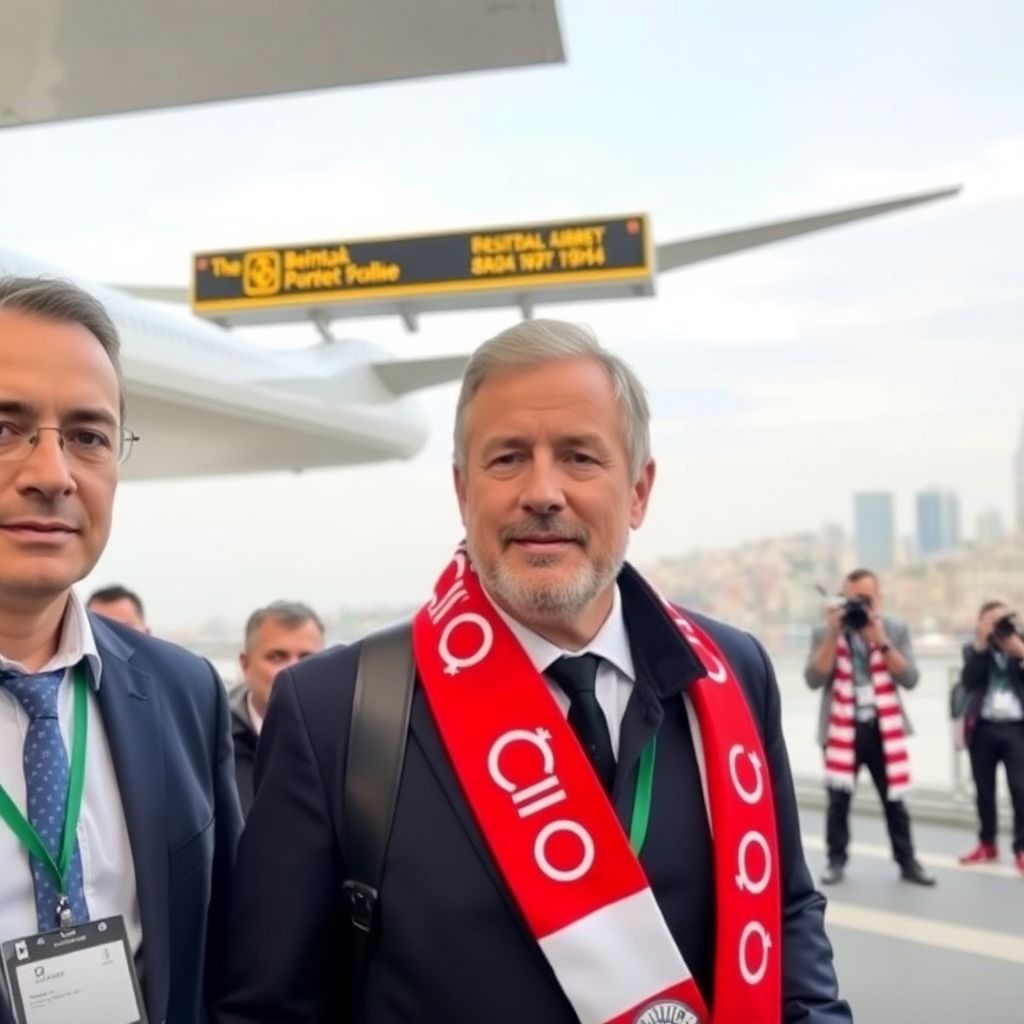
Beşiktaş closing in on new head coach as Italiano arrives in Istanbul
Beşiktaş appear to be entering the final phase of their search for a new head coach, with a key meeting scheduled in Istanbul that could determine the future of the team’s technical leadership.
According to the latest information, Italian manager Vincenzo Italiano, who has been on Beşiktaş’s shortlist for the role, is expected to arrive in Istanbul today at 15:00. The 48-year-old coach will reportedly meet with club president Serdal Adalı to hold detailed talks about taking over the first team.
This face-to-face meeting is viewed inside the club as a decisive step in the process. If the talks progress positively, the black-and-whites are prepared to move quickly to finalise an agreement and close a chapter that has been causing uncertainty among both players and fans.
Negotiations with Italiano: salary and contract length
Behind the scenes, figures being discussed have already stirred debate. Reports suggest that Beşiktaş are ready to offer Italiano a salary of 6 million euros per year, while his technical staff would collectively receive 2.5 million euros annually. The proposed contract length is two years.
One of the key questions still hanging in the air concerns the size and structure of any termination clause. How much compensation the club would be liable to pay if they decide to part ways early – or what it would cost another club to buy out his contract – is a crucial detail in modern football and is being carefully evaluated by the Beşiktaş board.
Mixed reaction from the fan base
The possibility of Italiano taking charge has already triggered strong reactions. Some supporters are excited by the idea of an attack-minded Italian coach, pointing out that his footballing philosophy is dynamic, bold and based on high pressing and offensive play. They underline that, tactically, he is different from Vincenzo Montella, whose name had also been linked with Beşiktaş in the past.
According to these fans, Italiano prefers an entertaining, proactive style: more pressure on the opponent’s half, more risk in possession and a clear emphasis on scoring goals rather than sitting back. They go as far as to say that in the future, major clubs like Fenerbahçe or even the Turkish national team could consider him as a serious candidate if he proves himself in Istanbul.
However, not everyone is convinced. A section of the fan base questions the logic of paying such a high salary to a coach they consider unproven at the very top level. In their eyes, 6 million euros per year is an excessive amount for a manager who, in their view, has not yet delivered major trophies. The feeling of financial risk looms large in their criticism.
Some voices express frustration in harsh terms, arguing that the club would be making a mistake by investing that kind of money in a coach whose achievements, for now, remain limited compared to Europe’s elite names.
Concerns about defensive balance
Another main discussion point is Italiano’s approach to defending. Even among those who admire his attacking principles, there is recognition that his teams are not known for conservative, deep-lying defensive setups.
Supporters who have analysed his style warn that Beşiktaş will need a world-class or at least very strong attacking line if they want to succeed under Italiano. In their view, if the club cannot assemble a powerful front line capable of turning constant pressure and possession into goals, the flaws in defensive organisation could become more visible and lead to problems.
Some fans state it bluntly: without building a high-level offensive unit, they believe Italiano will struggle and may eventually leave, because his football is not based on rigid defending or purely pragmatic results.
“We must support the coach” vs. “He’s not the right man”
Despite the concerns, there is also a more moderate group urging patience and unity. This group stresses that once a coach is appointed, the responsibility of the fans is to support him and the team, rather than creating pressure from day one. They argue that clever recruitment, time on the training ground and a clear project can help Italiano adapt his ideas to Beşiktaş’s reality and to Turkish football.
On the opposite side, more sceptical voices continue to reject the appointment in advance, labelling Italiano as an average coach and mocking his background. These critics draw comparisons with previous managers, arguing that there have been “more provincial” or “more limited” coaches in the past, and that the club has already paid the price for such choices.
The sharp tone of this debate shows how emotionally charged the coaching issue has become for Beşiktaş supporters.
Why Beşiktaş are attracted to Italiano
From the club’s perspective, the interest in Italiano is not accidental. Beşiktaş are believed to be looking for a manager who can modernise their playing style, bring intensity to pressing, and help the team dominate games rather than reacting to the opponent.
Italiano is known for using systems that emphasise rapid ball circulation, organised pressure in the opposition half and quick transitions into attack. This profile fits the idea of a long-term project, in which the team’s identity is clearly defined and attractive football becomes part of the club’s brand.
The board also appears to be seeking a coach who can develop players and increase their market value. Attack-minded managers often push young talents forward and put them in positions to shine, which can later translate into profitable transfers.
Tactical fit and squad requirements
If Italiano does sign, Beşiktaş will need to adapt their squad composition to his style. That likely means:
– Dynamic, technically strong midfielders who can sustain high pressing and quick passing.
– Wingers and forwards capable of constant movement, pressing from the front and exploiting spaces behind the defensive line.
– Full-backs who are comfortable joining attacks and providing width.
– Central defenders who can play with the ball under pressure and maintain a high defensive line without panicking.
This tactical shift could also influence transfer priorities. Instead of focusing solely on individual star names, the club may look for players whose physical and tactical profiles match Italiano’s demands, even if they are less well-known.
Financial risk vs. sporting ambition
The figures being mentioned – 6 million euros annually for Italiano and 2.5 million for his staff – inevitably bring up the broader discussion of financial discipline in Turkish football. Beşiktaş, like other major clubs in the country, must constantly balance between pursuing ambitious sporting goals and keeping their budget under control.
Investing heavily in a coach can be justified if he creates a clear structure, improves results and enhances the value of the squad. On the other hand, if results are poor, an expensive contract and a large compensation clause can become a serious burden.
This is why the termination clause is such an important part of the negotiations. The board will aim to protect the club’s interests while still offering a package attractive enough for Italiano to commit to the project.
Pressure from the league environment
Another factor that cannot be ignored is the competitive environment in the Turkish league. Rivals are constantly investing in coaches and players, and expectations in big clubs are extremely high. Coaches are rarely given long periods to build; two or three bad results can bring immediate calls for change.
Italiano, if appointed, would have to adapt quickly to this reality. The tempo of the league, the intensity of stadium atmospheres and the daily media scrutiny can be challenging for foreign coaches, particularly those who like to implement complex systems that require time.
Beşiktaş’s management will therefore need to show consistency. If they choose a coach known more for his philosophy than for short-term pragmatism, they must be ready to stand behind him during the inevitable ups and downs.
What this decision means for Beşiktaş’s future
The outcome of today’s meeting between Vincenzo Italiano and Serdal Adalı could shape Beşiktaş’s direction for the next several years. It is not just about picking a new name for the bench; it is about deciding what style of football the club wants to embody, what risks they are prepared to take financially, and how patient they are willing to be in building a new sporting project.
Supporters will look for clear signals: is the club truly committed to modern, attacking football, or will pressure for instant success force more conservative decisions? Will Italiano, if appointed, be allowed to leave his mark, or will he become just another short-term experiment?
As the black-and-white side of Istanbul awaits the result of the talks, one thing is clear: the coaching “knot” that has been tying the club’s hands is close to being untangled. Whether Vincenzo Italiano will be the man to lead Beşiktaş into a new era will depend on what is agreed across the table this afternoon – on tactics, on money and, above all, on trust.