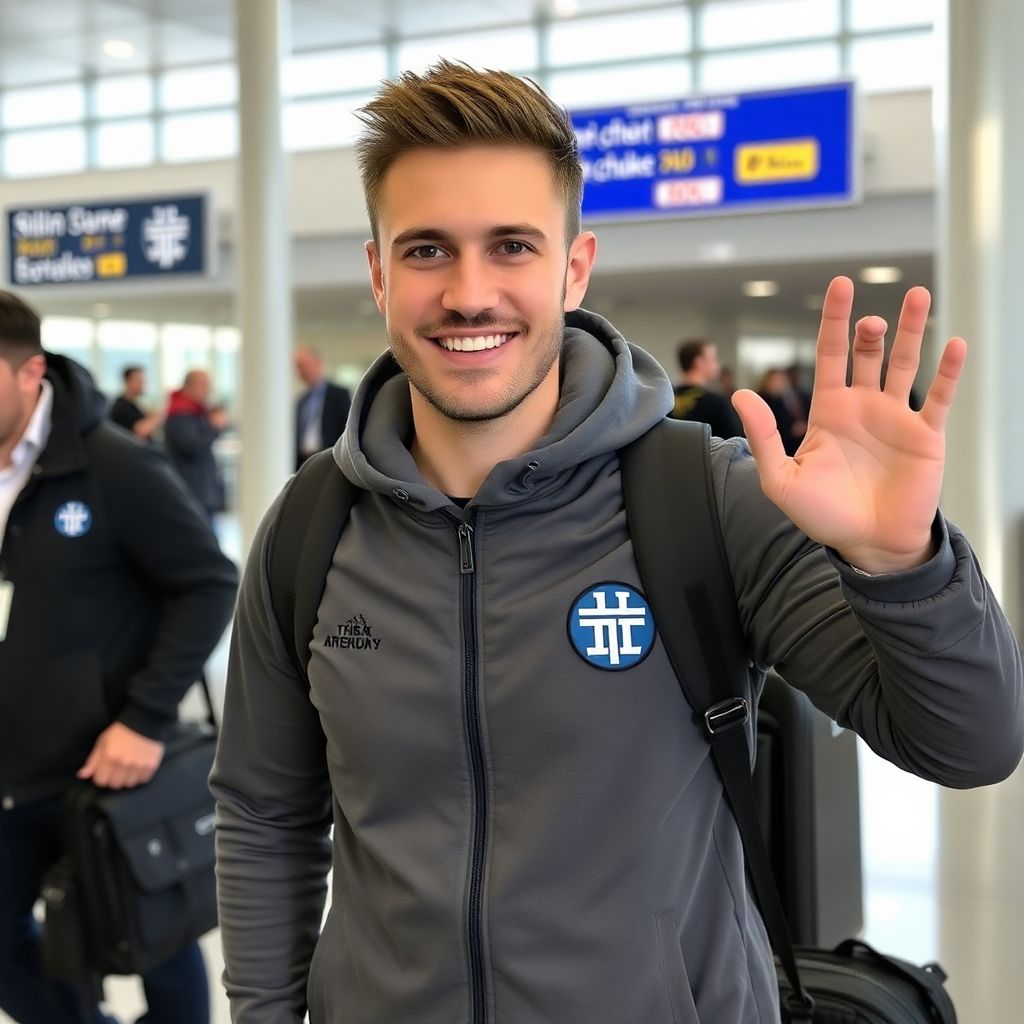
From Trabzon to Athens: Farewell to Zubkov
Trabzonspor have reached a full agreement with Greek side AEK Athens over the transfer of Oleksandr Zubkov. The 29‑year‑old Ukrainian winger is expected in Athens today, where he will undergo a routine medical before signing his contract and officially becoming an AEK player. With this move, Zubkov’s spell in Trabzon comes to an end, opening a new chapter in his career in the Greek Super League.
Details of the transfer
While the financial terms have not been made public, both clubs have confirmed that negotiations are complete and only formalities remain. Zubkov, who joined Trabzonspor to add depth and versatility to the attacking line, had attracted interest thanks to his work rate, tactical discipline and ability to operate on both flanks. AEK, looking to strengthen their squad for both domestic competition and European ambitions, moved quickly to secure his services.
The deal is structured so that once the medical examinations in Athens are successfully completed, the final documents will be signed and the transfer registered. Zubkov is expected to join AEK’s pre-season preparations immediately and integrate into the team’s tactical setup without delay.
Zubkov’s time at Trabzonspor
During his stay in Trabzon, Zubkov provided valuable squad depth. Even when he was not always in the starting XI, he remained an important option from the bench, contributing with pressing, wide play and link‑up in the final third. His professionalism and willingness to adapt to different roles on the pitch earned him respect in the dressing room.
However, with Trabzonspor restructuring their squad and targeting new profiles in the wide positions, both club and player saw the transfer as an opportunity. Zubkov gets the chance to become a more central figure in AEK’s plans, while Trabzonspor can open space in the squad and wage bill for other reinforcements.
Why AEK wanted Zubkov
AEK’s interest in Zubkov is primarily tactical. The Greek club has been seeking a winger who can combine intensity without the ball and directness in attack. Zubkov’s background, his international experience and his familiarity with high‑pressure matches made him an attractive target.
His ability to track back, help full‑backs defensively and quickly transition into attack fits the high‑tempo style AEK are trying to impose. Moreover, at 29, he arrives in what is often considered a footballer’s prime, offering several seasons at a high level if he stays fit and adapts well to the league.
What this means for Trabzonspor’s squad
Zubkov’s departure signals that Trabzonspor are serious about refreshing their attacking options. With one foreign spot freed and a salary removed from the books, the club can move more aggressively in the market for a winger with different characteristics, possibly someone with more direct goal contribution or a younger profile with resale value.
Internally, this transfer may also create additional opportunities for younger players and for those on the fringes of the first team. Competition on the wings is expected to remain high, but the coaching staff now have a clearer picture of which players will be part of the long‑term project.
How Zubkov could fit into AEK’s system
At AEK, Zubkov is likely to be used predominantly on the wings, though his versatility allows him to act as a second striker or an attacking midfielder when needed. In systems that rely on quick transitions, his defensive effort and positional awareness are particularly valuable. He can stay wide to stretch the opposition or drift inside to create numerical superiority in midfield.
In the Greek league, where many teams sit deeper against the top clubs, his one‑on‑one ability and crossing will be crucial. AEK will expect him not just to press and combine, but also to deliver assists and chip in with goals, especially in key matches and European qualifiers.
The emotional side of the farewell
For Trabzonspor supporters, every departure carries a touch of nostalgia, even when it is seen as a logical step for both sides. Zubkov may not have been the biggest star of the team, but his dedication and team‑first approach left a positive impression. Farewell messages circulating among fans underline gratitude for his commitment and wish him success in Athens.
From Zubkov’s perspective, moving from the Black Sea city of Trabzon to the Greek capital is not just a sporting change, but also a cultural one. Athens offers a new environment, a different football culture and a fresh challenge both on and off the pitch.
Wider context: Turkish football’s busy transfer period
Zubkov’s move comes during a particularly active period for Turkish football, with a series of transfer rumours, coaching decisions and strategic moves dominating the agenda. Clubs across the country are reshaping their squads and technical staff, aiming to be more competitive both domestically and in European competitions.
In this dynamic environment, Trabzonspor’s decision to part ways with Zubkov fits the broader trend: focusing on more targeted signings, reducing unnecessary costs and building teams around clear tactical ideas. The move to AEK is one piece of a much larger puzzle in a summer full of negotiations and bold decisions.
National team spotlight: Montella and player ambitions
On the national team front, head coach Vincenzo Montella has recently addressed rumours about his future, decisively shutting down talk of an imminent departure. His clear stance brings a measure of stability to the squad at a time when players are vocal about their ambitions.
Goalkeeper Altay Bayındır has openly stated that lifting a major trophy with the national team remains a primary objective. Defender Mert Müldür has underlined how much the squad is looking forward to the World Cup, pointing to a group hungry to appear on the biggest stage and change the narrative of Turkish football in global tournaments.
Midfielder Orkun Kökçü, reflecting on recent victories, has highlighted the increasing maturity of the team: results, according to him, are not accidental but the product of consistent work, tactical discipline and a stronger mentality.
Domestic competitions: tight margins and injury concerns
At club level, domestic competitions continue to serve up drama. In basketball, the rivalry between Fenerbahçe Beko and Anadolu Efes once again produced an intense clash, with Fenerbahçe narrowly edging the game 60-59. Such tight scorelines reflect how small details and clutch performances decide titles in Turkey’s top sports.
Football clubs are also dealing with injury issues that can influence transfer and tactical decisions. Trabzonspor have shared updates on the health of Eren Elmalı, a key player whose physical condition is closely monitored by both technical staff and supporters. Each medical report is carefully examined because squad planning, particularly in defence, depends heavily on his availability.
Fenerbahçe in the spotlight: transfers, finances and coaching
Fenerbahçe remain at the centre of constant speculation. Reports have linked forward Mason Greenwood with a potential move, signalling the club’s ambition to add a player with high individual quality to their attacking line. At the same time, the management is acutely aware of financial constraints; internal calculations suggest that some previous “all‑in” moves have cost the club at least 25 million euros, a reminder that every decision must be evaluated in terms of both sporting and economic impact.
On the coaching front, Antonio Conte’s name was heavily discussed as a possibility. However, suggestions from those close to the situation indicate that one of the reasons behind his reluctance to join Fenerbahçe may have been the presence and aura of José Mourinho, whose arrival has changed the dynamics and expectations at the club. The competition between such high‑profile coaches inevitably affects how candidates evaluate potential jobs.
In the background, agents and intermediaries play a central role. Both Aziz Yıldırım and Hakan Safi have been reportedly warned about the influence of certain representatives, whose guidance may not always align with the long‑term interests of the clubs. This tension between sporting vision and external pressure can even place experienced figures like Aykut Kocaman in uncertain positions.
Galatasaray’s plans and European ambitions
Galatasaray are also actively shaping their future. President and board members have denied that Mauro Icardi is currently on their agenda in the way some rumours have suggested, insisting that the club will move only for targets that fit both the tactical project and financial framework.
At the same time, Galatasaray have been associated with creative transfer formulas, including the idea of a swap deal with Napoli involving Wilfried Singo and multiple players in return. These negotiations show how top clubs try to leverage their assets rather than simply spending cash.
Recent European campaigns have kept Istanbul’s yellow‑red side firmly in the continental spotlight. Lifting the Champions League trophy remains a dream for any club, and every season’s run in Europe shapes recruitment, budget planning and long‑term strategy.
Beşiktaş, coaching choices and surprise projects
Beşiktaş are in search of a clear direction as well. The name of Vincenzo Italiano has emerged as a prominent candidate for the head coach position, and well‑connected journalists such as Gianluca Di Marzio have already reported concrete steps towards an agreement. Beşiktaş see Italiano as a modern coach, capable of combining possession‑based football with intense pressing.
Away from the headline names, figures like Serdal Adalı are working on less obvious but potentially decisive moves. One of the ideas that has gained attention is a surprise project involving a so‑called “El Turco”, a coach or player with a reputation for winning cups, fitting Beşiktaş’s desire to bring back a “trophy mentality” to the club.
Strategic debates and international perspectives
Beyond individual signings, Turkish football is also engaged in broader strategic debates. Questions are being asked about whether major businessmen should invest in foreign clubs to expand their influence and build sporting networks. One example that has been floated is whether a figure like Ali Koç should consider acquiring a club in Spain, such as Sevilla, in order to create synergies, share scouting networks and open new pathways for Turkish talent abroad.
Spanish observers, in turn, have their own views on such projects, emphasising that ownership of a club in one of Europe’s top leagues requires long‑term planning, strict financial discipline and a very clear sporting identity. They argue that without these elements, cross‑border investments can quickly become more of a burden than an advantage.
A summer of decisions
Against this backdrop of managerial changes, high‑profile transfers, financial scrutiny and bold ideas, the move of Oleksandr Zubkov from Trabzonspor to AEK Athens might look like a small note. Yet it perfectly illustrates the current phase of Turkish football: squads are constantly being reshaped, players are seeking roles where they can have a bigger impact, and clubs are trying to balance ambition with sustainability.
For Trabzonspor, Zubkov’s farewell is an opportunity to adjust their sporting project. For AEK, it is a calculated bet on a player who brings experience, versatility and professionalism. And for Zubkov himself, it is a chance to write a new story-this time under the lights of Athens, with new colours on his shirt but the same determination to make a difference on the pitch.