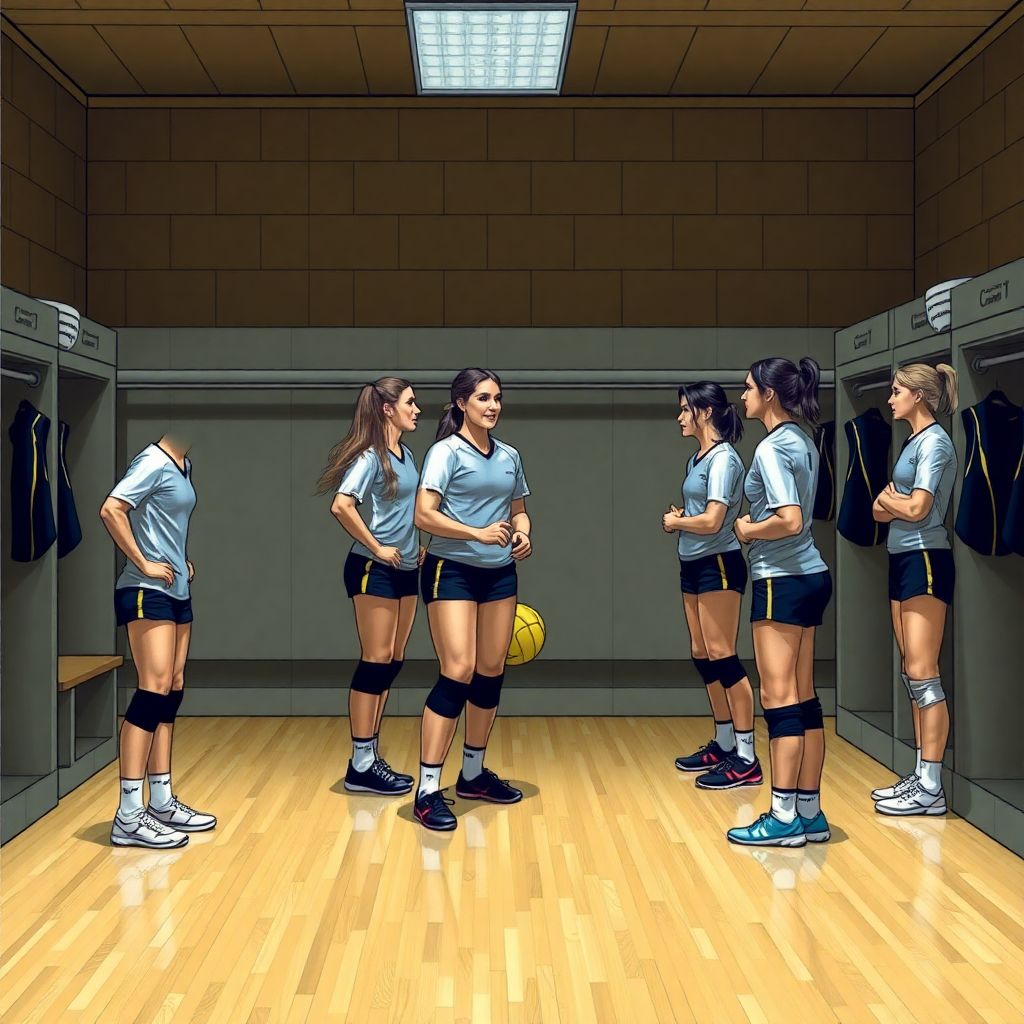
Volleyball locker-room chemistry is built through repeatable habits: shared team standards, clear communication rituals, structured trust work, and fast, respectful conflict repair. For intermediate teams in Türkiye, the safest path is to formalize what the group stands for, practice specific talk-and-listen scripts, and assign rotating leadership roles that keep accountability consistent across training and match days.
Core Principles of Locker-Room Chemistry

- Make expectations explicit: behavior standards beat vague slogans.
- Use the same language every day: short cues, consistent meanings, no sarcasm.
- Build trust with small, repeatable commitments that teammates can observe.
- Distribute leadership: responsibility rotates, so buy-in scales beyond the captain.
- Address friction early: separate the person from the behavior and return to the standard.
- Connect locker-room habits to court actions: tie every value to a volleyball behavior.
Foundations: Shared Values and Team Identity
Best fit: intermediate school/club teams, new rosters, teams changing coaches, or groups that look talented but feel inconsistent under pressure. This also works well when you want a repeatable volleyball team chemistry training program across a season.
When not to run it (or delay it): right after a heated incident (cool down first), when the team has unresolved safety/harassment concerns (escalate to club/school policy), or when you have less than 10 minutes and need immediate tactical prep.
Communication Rituals: From Signals to Safe Language
Prepare these basics before you try to change talk on the court or in the locker room:
- A shared cue list (one page): 8–12 standard words/phrases for serve-receive, free ball, transition, and coverage (post it in the locker room and share in the team chat).
- A reset script: one sentence anyone can say after errors (example: “Next ball, I’ve got line” or “Next ball, tempo up”).
- Two feedback rules: (1) name the behavior, (2) offer the next action. This is the fastest way for how to improve communication in volleyball team without turning every rally into a debate.
- A 3-minute daily check-in format: one round: “Energy 1–5, focus 1–5, any constraints?” (injury, exams, travel). No discussion—just awareness.
- Access and boundaries: decide which topics belong in the locker room, which in coach/player meetings, and what must be escalated to club/school safeguarding procedures.
Trust-Building Exercises That Actually Work
- Set two observable standards (10 minutes)
As a group, choose two behaviors you can see and measure in practice (example: “call the seam early” and “help up immediately after a dive”). Keep them specific so teammates can recognize follow-through.- Write them on a whiteboard and include the matching court behavior (e.g., “seam” call happens before the server contacts the ball).
- Agree on one neutral reminder phrase: “Back to standard.”
- Run a 7-minute “Talk-First” pepper progression
Pairs pepper while saying the next action out loud before contact (example: “high outside”, “platform to target”). This reduces guesswork and normalizes helpful communication.- Rule: no coaching tone; only future-focused cues.
- Switch partners every 60–90 seconds to spread familiarity.
- Do a “Micro-commitment” round (5 minutes)
Each player states one small promise for today (example: “I will call every tip” or “I will sprint through coverage”). Trust grows when commitments are small enough to keep.- Coach writes 3–5 common commitments to reinforce during drills.
- Use a controlled pressure drill (12–15 minutes)
Play a short wash game where the only scoring condition is communication + execution (e.g., point counts only if the rally includes an early call and a successful coverage touch). This links bonding to performance instead of forcing artificial hype.- Keep consequences light: extra ball pick-up, not punishment laps.
- Stop once to highlight a good example of the standards in action.
- Close with a 90-second debrief using a fixed script
Go around: one sentence each: (1) what we did well, (2) the next behavior we choose. This prevents blame and trains consistency after mistakes.- Ban names in the debrief; only talk about behaviors and situations.
Quick mode: 12-minute fast-track algorithm
- Pick 1 team standard for today (observable, not motivational).
- Run 4 minutes of “Talk-First” pepper with rotating partners.
- Play 6 minutes of a wash game where points count only with early calls.
- Finish with a 2-minute debrief: one win, one next behavior.
Leadership Roles and Distributed Responsibility
Use this checklist weekly to verify you are building leadership depth (not just relying on the loudest player). Aim for “yes” answers most days.
- At least two non-captains initiate resets after errors without coach prompting.
- Someone other than the setter organizes the next rep (balls, rotation, or spacing).
- Players can repeat the two team standards in the same wording.
- Feedback includes a next action (not just “good/bad”).
- One athlete is assigned as “communication lead” for the day and actually speaks.
- Roles rotate (warm-up lead, drill clarity lead, energy lead, equipment lead).
- During timeouts, players name one tactical adjustment before the coach talks.
- Newer players speak at least once in a practice debrief.
To accelerate this, borrow structure from volleyball team coaching camps: short role rotations, strict timeboxes, and a predictable debrief format.
Conflict Resolution Without Fracturing Cohesion
- Waiting for “the right moment”: small tensions become identity conflicts; address within 24–48 hours when possible.
- Talking through teammates instead of to them: side conversations create factions and distrust.
- Mixing performance notes with personal judgments: say “late call” not “you never communicate.”
- Public corrections in emotional moments: fix the next action on-court; handle the relationship off-court.
- Letting sarcasm become the team language: it kills psychological safety and reduces honest calls.
- Captain-as-therapist: captains can facilitate, but serious issues should go to coach/club leadership per policy.
- Unclear standards: without agreed behaviors, every conflict becomes about personality.
- Winning the argument instead of restoring the standard: the goal is functional cooperation on the next ball.
Translating Locker-Room Bonds to On-Court Performance
If your team needs a different route (or you’re short on time), these alternatives still improve cohesion when used intentionally:
- Constraint games instead of speeches: use small-sided games with one communication constraint (best when players tune out talks).
- Role-based film review: each role group (middles, outsides, setters, liberos) shares one clip and one actionable cue (best when you need clarity more than hype).
- Simple off-court bonding with boundaries: a planned meal or team walk with a short prompt can be effective, especially as low-pressure volleyball team bonding activities for mixed-age rosters.
- Station-based practice rotations: 3–4 stations with rotating leaders can replace generic volleyball team building exercises when you want chemistry built through volleyball-specific reps.
Practical Concerns and Quick Solutions
How do we build chemistry if half the roster is new?
Start with two shared standards and rotate partners every drill for one week. Keep language fixed so new players learn the team’s cues quickly.
What if the team is quiet and nobody calls the ball?
Use a “talk-first” rule for 5–7 minutes daily where points only count with early calls. Reward clarity (specific cues), not volume.
How do we handle cliques in the locker room?
Change seating/partner patterns on purpose and assign rotating micro-roles so influence is distributed. Address gossip directly as a behavior that violates the team standard.
What can we do when mistakes trigger blaming?
Install a single reset phrase (for everyone) and ban naming people during debriefs. Ask for the next action only: what we do on the next serve or free ball.
How often should we run a chemistry routine?
Daily: 3-minute check-in and one communication constraint. Weekly: one short pressure wash game plus a 90-second debrief.
Can we run this as a season-long program?
Yes: treat it like a volleyball team chemistry training program with one theme per week (calls, coverage, transitions) and rotating leadership assignments.
What if off-court activities feel forced?
Keep them brief, optional when possible, and connected to a team purpose. Many teams build trust faster through structured reps than through long social events.
Комментарии