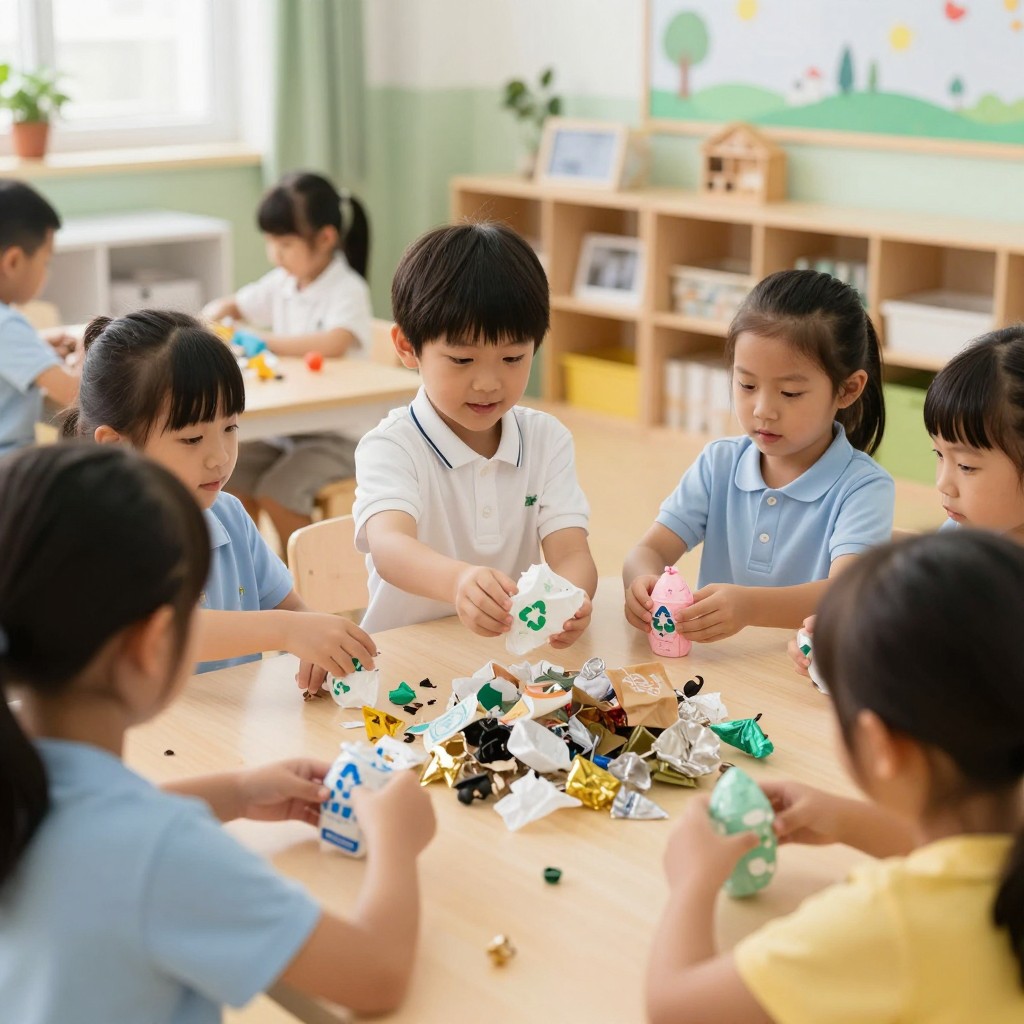
Tekirdağ Municipality Teaches Preschoolers About Zero Waste
Tekirdağ Metropolitan Municipality has held environmental education sessions for young children at three schools in Süleymanpaşa, helping preschoolers learn how to sort waste and protect the environment.
The activities took place as part of “Zero Waste Month in Schools,” included in the Ministry of Environment, Urbanization and Climate Change’s 2026 Zero Waste Theme Plan. The municipality’s Department of Climate Change and Zero Waste organized the sessions at Doğa College, Aka College and Final Schools.
Designed for preschool-age children, the program combined simple explanations with games and hands-on activities. Environmental engineers from the department introduced concepts including zero waste, recycling and the importance of caring for the natural environment, adapting the information to the children’s age group.
A video about zero waste helped make the topic easier to understand and encouraged pupils to think about what happens to everyday rubbish. The practical part of the sessions gave children a chance to put that knowledge into action: together, they prepared colorful recycling bins and learned which types of waste belong in each one.
Games made sorting an interactive exercise rather than a lesson based only on instructions. By matching waste with the appropriate bin, pupils could practise what they had learned and see how separating materials supports recycling. The activities were intended to build environmental awareness and encourage responsible habits from an early age.
Students and teachers showed strong interest in the program. At the end of the sessions, participating children received “Environmentally Friendly Child” badges and zero-waste planners as gifts.
Why waste sorting matters
Separating waste at home and at school can make recyclable materials easier to recover and reduce the amount of rubbish sent for disposal. For young children, learning the basic categories is a practical first step: paper, plastic, glass and other materials should be placed in the containers designated for them locally.
It is also helpful to explain that not everything should go into a recycling bin. Food scraps, used tissues and items made from mixed materials may require different handling, depending on local rules. Clear labels and pictures on bins can help children make the right choice.
Turning a lesson into a routine
Adults can reinforce the message by making waste sorting part of everyday activities. After a snack or craft session, children can be invited to identify the materials they have used and decide where each item belongs. The aim is not perfection, but giving them regular opportunities to practise.
Reusable items offer another simple way to introduce the idea of reducing waste. A refillable water bottle, reusable lunch container or cloth bag can help children understand that preventing rubbish is as important as sorting it after use.
Schools and families can also encourage children to use both sides of paper, take care of classroom materials and avoid unnecessary packaging when possible. These small choices make environmental responsibility visible and easy to understand.
The sessions in Süleymanpaşa brought these ideas to preschool classrooms through age-appropriate instruction and play. By combining information with hands-on practice, the municipality’s program sought to help children carry the principles of zero waste into their daily lives.