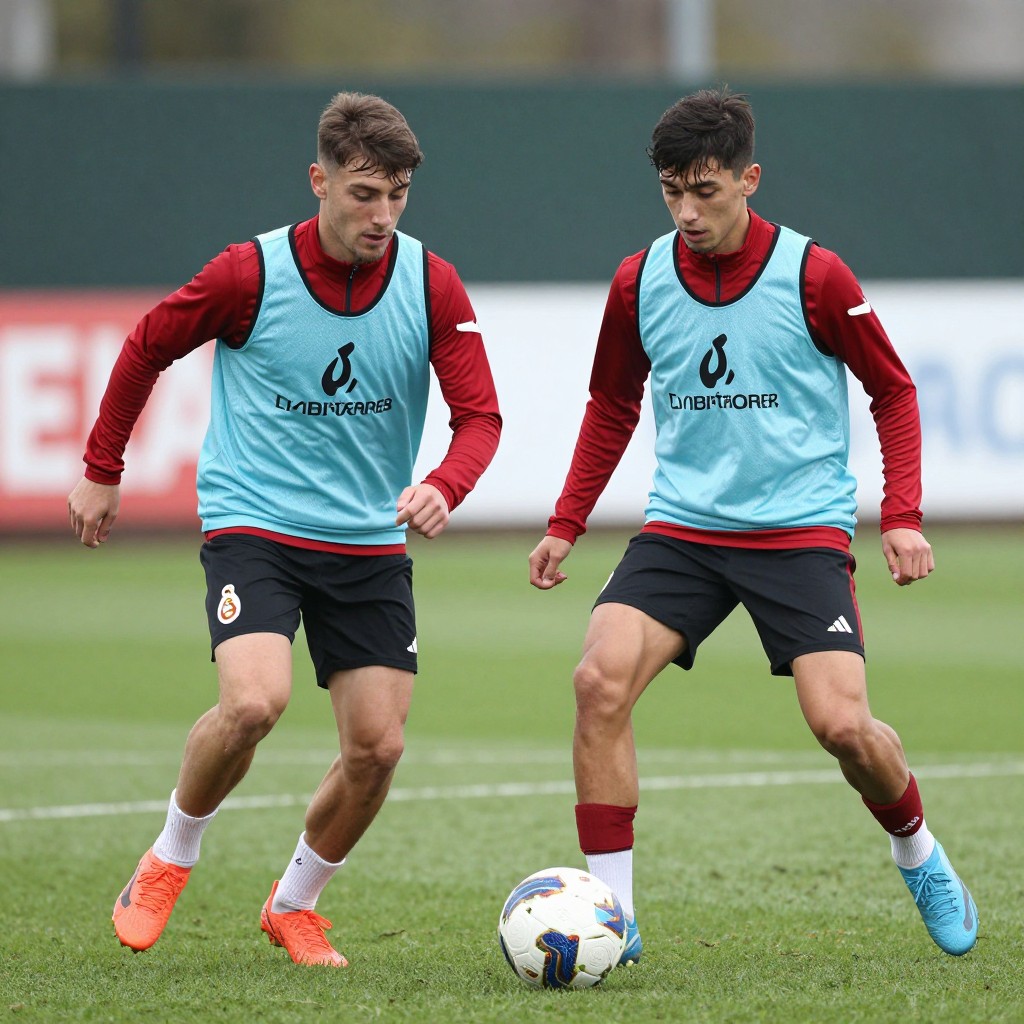
Lesley Ugochukwu and El Chadaille Bitshiabu Arrived on Loan for Squad Depth, Not Long-Term Plans
Galatasaray brought Lesley Ugochukwu and El Chadaille Bitshiabu into the squad on loan, with purchase options included in both agreements. The clauses give the club flexibility, but they do not mean the two players were signed with identical roles or a guaranteed future in Istanbul. Their arrivals were intended primarily to add depth, and the club’s longer-term plans for them remain uncertain.
A loan can serve several purposes. It may provide cover during a demanding run of fixtures, increase competition for places or give a team the chance to assess a player before considering a permanent transfer. In this case, Galatasaray’s arrangements with Ugochukwu and Bitshiabu offer the club options without requiring an immediate, long-term commitment.
That distinction matters. Having a purchase option allows Galatasaray to consider keeping either player, but it does not oblige the club to do so. A permanent move would depend on factors such as each player’s performances, their place in the squad, the club’s needs and the financial terms involved. Until a decision is made, both remain temporary additions.
The two signings also had different purposes. Their shared status as loanees should not be taken to mean they were recruited for the same position in the squad or with the same expectations. The available information points to separate roles within the team’s depth planning, rather than a single long-term project built around both players.
For a club competing across multiple fixtures, additional depth can be useful even when a player is not expected to become a regular starter immediately. Injuries, suspensions, changes in form and a congested schedule can all increase the need for reliable alternatives. A loan signing can help address those needs while giving the club time to judge whether a more permanent arrangement makes sense.
There is also a practical advantage to keeping the commitment temporary. Galatasaray can evaluate how each player adapts to the team and its demands before deciding whether to activate the purchase option. The loan period therefore functions both as squad reinforcement and as an assessment period. The option protects the club’s ability to make a later choice; it is not a promise that the choice will be made.
For Ugochukwu and Bitshiabu, the immediate priority is to make the most of the opportunity available to them. Consistent performances, readiness when called upon and adaptation to the team’s structure could all influence their prospects. A player brought in for depth can still earn a more prominent role, but that possibility depends on what happens on the pitch rather than on the terms of the loan alone.
Galatasaray, meanwhile, can review its options as the loan arrangements progress. If either player proves valuable and the conditions are attractive, the club may consider a permanent deal. If not, the temporary agreements allow it to move on without having made a longer commitment. The presence of purchase clauses keeps both possibilities open.
The key point is that the signings should not be interpreted as evidence of long-term plans already being settled. Ugochukwu and Bitshiabu were recruited on loan to strengthen the squad’s depth, but their futures at Galatasaray remain undecided. The purchase options provide flexibility, while the players’ performances and the club’s changing needs will determine what happens next.