Why Did the Bosphorus Turn Brown After the Rain?
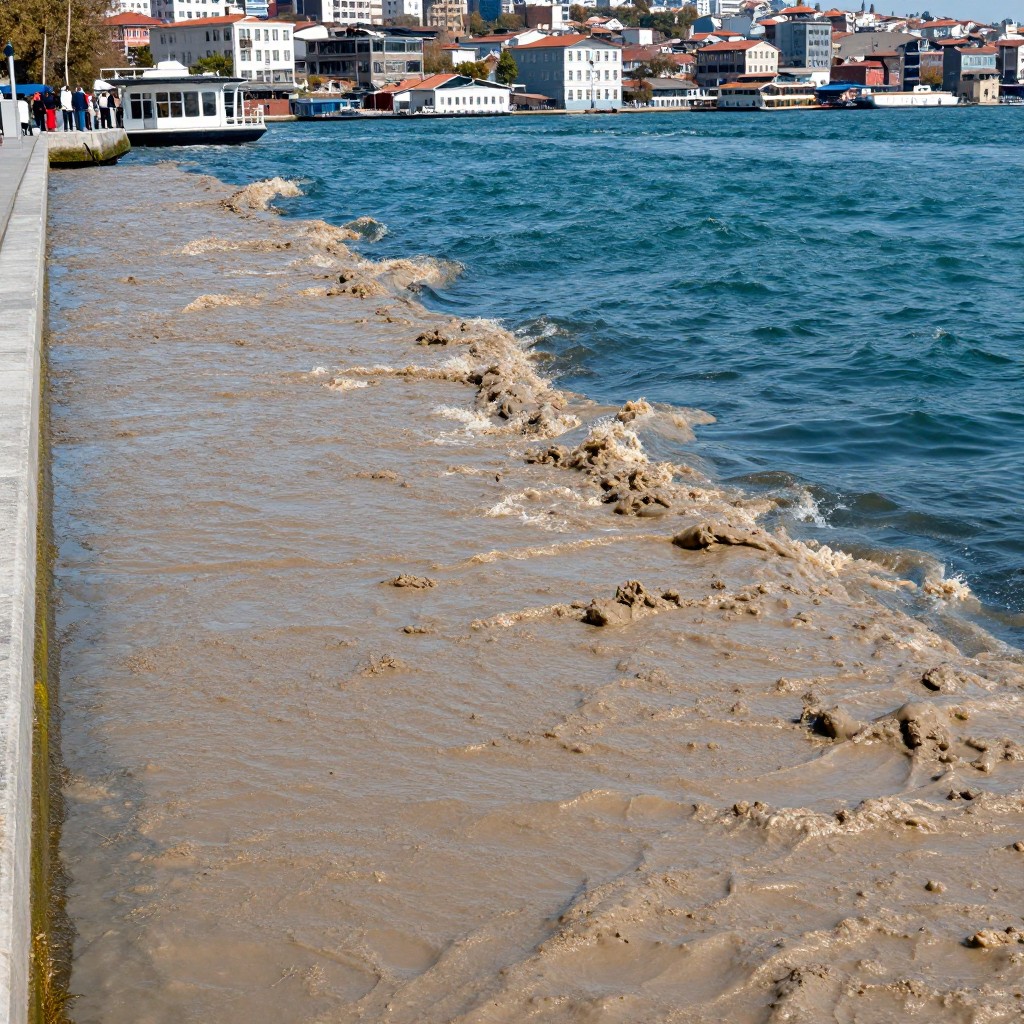
Heavy rain in Istanbul caused a visible change in the color of the Bosphorus shoreline, where muddy water carried from land flowed into the sea. After downpours that began in the evening, intensified the following day and continued intermittently, parts of the coast took on a brown appearance.
The discoloration was especially noticeable around Eminönü. Brown water spread from the shore toward the open sea, creating a clear contrast with the surrounding seawater. The affected area extended from the Eminönü waterfront toward the waters off Topkapı Palace, and the color change was visible across a broad stretch of the surface.
The likely cause was runoff: rainwater flowing over land can pick up soil and sediment before entering the sea. When that muddy runoff meets seawater, it may form a visible plume near the coast. The different colors can remain distinct for a time, particularly where currents and water movement have not yet mixed them thoroughly.
Such changes are often most apparent after intense or prolonged rain. Water moving through streets, drainage channels and streams can carry fine particles into coastal waters. The amount of sediment, the strength of the rainfall and local currents all influence how far a muddy plume spreads and how long it remains visible.
A brown appearance alone does not establish whether the water contains pollutants or is unsafe. Sediment can cause discoloration, but assessing water quality requires separate testing. The color may fade as currents disperse the runoff and suspended particles settle, though the timing depends on weather and sea conditions.
The episode illustrates how closely Istanbul’s coastline is connected to conditions on land. Rain falling inland can quickly affect the appearance of nearby waters, especially in densely built areas where runoff is directed toward the shore. The Bosphorus’s changing currents can then carry or break up the sediment, causing the affected zone to shift over time.
For residents and visitors, the key distinction is between a visible change and a confirmed environmental hazard. Brown water after rain may result from soil washed into the sea, but appearance alone cannot determine its composition. Until conditions are assessed, it is sensible to avoid contact with visibly muddy water, particularly near drainage outlets and places where runoff enters the shoreline.
The discoloration was observed along several coastal sections after the recent rainfall, with the most prominent change reported at Eminönü. In that area, the muddy water spread beyond the immediate edge of the coast and remained visible over a substantial part of the sea surface.