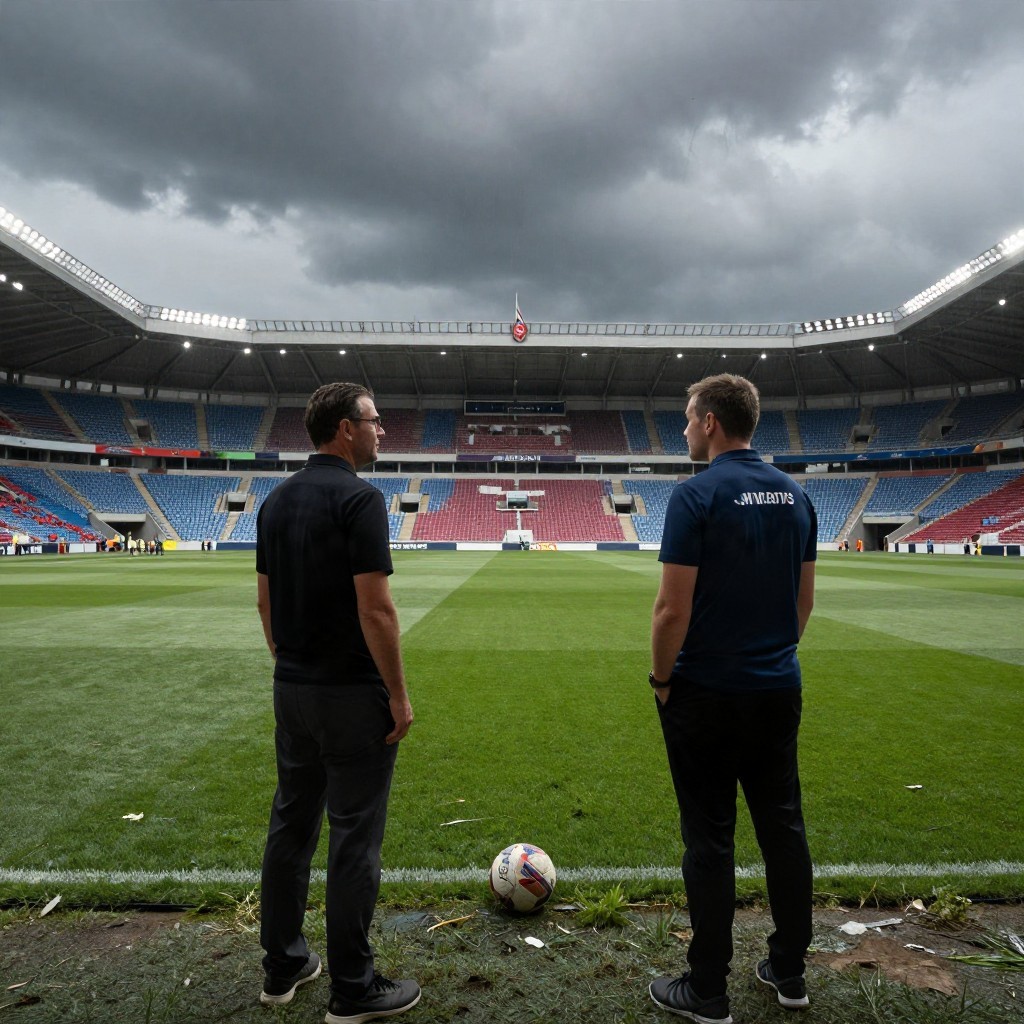
The “Potato Field” Controversy Comes at a Cost: Abdullah Kavukcu’s Camp Targets Dursun Özbek
Although Abdullah Kavukcu has resigned and left his post, the dispute surrounding him has not faded. Social media accounts said to be close to the former official continue to direct criticism at Galatasaray president Dursun Özbek, focusing on the condition of the playing surface and the role of Kavukcu’s assistant, Mehmet Keçe.
The argument has taken on a sharper tone through the “potato field” label, a derisive description used in connection with the pitch. Rather than ending with Kavukcu’s departure, the controversy appears to have shifted to social media, where the state of the ground and the assistant’s position have become recurring points of attack against Özbek.
The claims should be understood as criticism circulated by accounts described as close to Kavukcu, not as an established finding about responsibility. The available account does not provide details about when the pitch problems occurred, what caused them, or what role any individual played in addressing them. Those questions require evidence and clear answers from the people and institutions involved.
Still, the persistence of the criticism matters for Galatasaray. A poor playing surface is not merely an aesthetic concern: it can affect training, the quality of football and players’ confidence. If the ground has been below the club’s expected standard, supporters are entitled to ask when the problem began, who was responsible for maintenance and what steps were taken to resolve it.
The way the issue is being presented also carries a political dimension. By linking the pitch and Mehmet Keçe to Özbek, the posts place the club president under pressure even though Kavukcu has already left. That does not, by itself, establish that Özbek was responsible for the condition of the field. It does show how disputes inside a club can continue after an official departure, with social media serving as a venue for competing versions of events.
A productive response would be to separate verifiable facts from personal accusations. Galatasaray could clarify the timeline of any work on the pitch, explain which department oversaw it and outline what has changed since. A transparent account would help supporters judge whether the criticism reflects a genuine operational failure or is being used mainly as a weapon in an internal dispute.
The club should also avoid allowing a debate about one surface to become a proxy battle between former colleagues and current leadership. If there were shortcomings, they should be acknowledged and corrected. If accusations against particular people are unsupported, that should be made clear as well. Silence leaves room for speculation, while personal attacks do little to improve the ground or answer practical questions.
For supporters, the central issue is straightforward: is the pitch fit for the demands placed on it, and is there a credible plan to keep it that way? The “potato field” phrase may grab attention, but the substance lies in the condition of the playing area, the decisions behind its upkeep and the accountability that follows.
Kavukcu’s resignation has therefore not closed the matter. Instead, the criticism associated with his circle has kept Özbek in the spotlight and ensured that the debate over the ground remains active. Whether the controversy leads to meaningful explanations or stays at the level of social-media confrontation will depend on how openly the club addresses the questions it has raised.