Financial Stability Committee Says Fund Market Disruptions Are Temporary and Manageable
The Financial Stability Committee has stated that recent volatility in Turkey’s capital markets does not point to a fundamental or structural threat to the functioning of Borsa Istanbul or the wider securities market. According to the committee, the difficulties are concentrated in a limited segment of the investment fund industry and are considered temporary and manageable.
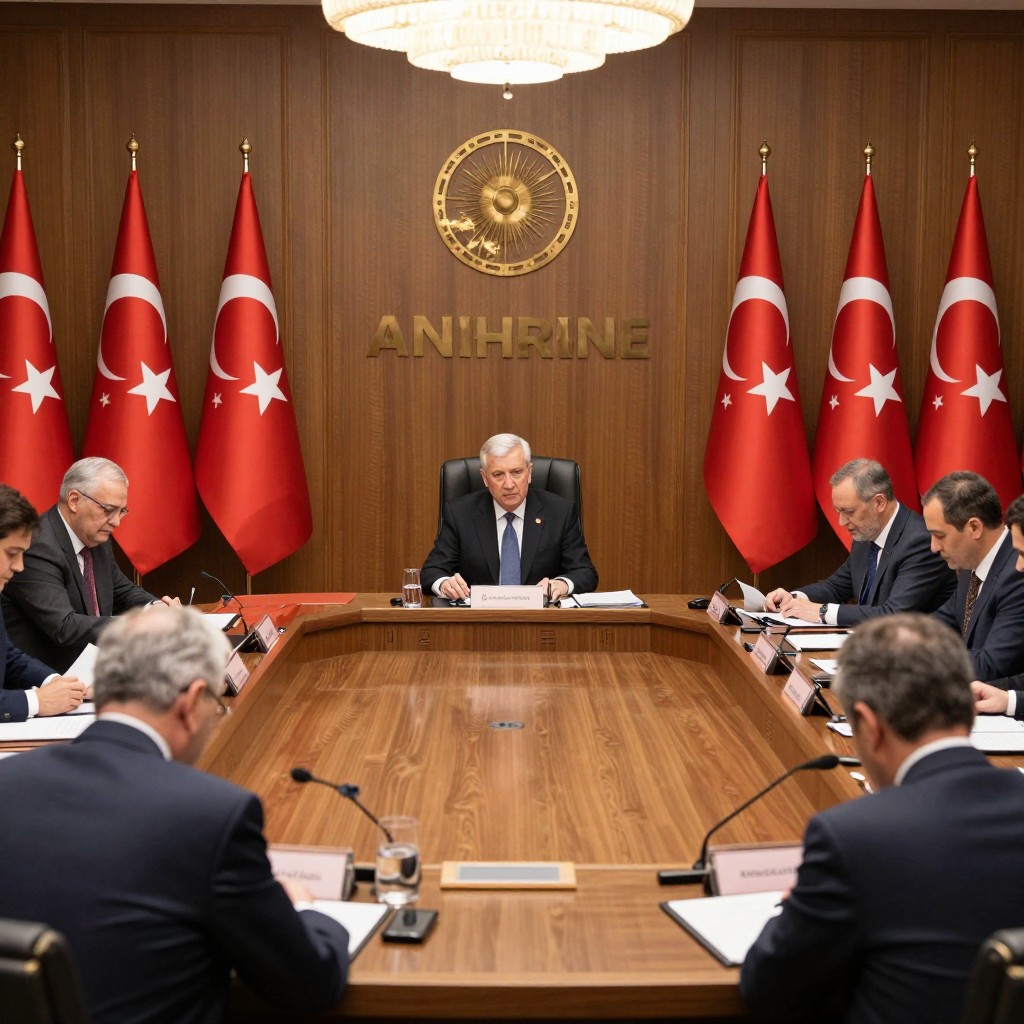
The committee convened at 8:00 a.m. under the chairmanship of Treasury and Finance Minister Mehmet Şimşek. Its meeting focused primarily on recent developments in capital markets and the factors behind the increased market volatility.
In its post-meeting statement, the committee assessed that the disruption was linked to credit and liquidity pressures affecting certain funds managed by a limited number of portfolio management companies. The authorities emphasized that the issue does not reflect a broad-based weakness across the entire financial system.
The Financial Stability Committee met on September 17, 2026, to review the latest conditions in the capital markets. During the meeting, officials examined market movements, the position of investment funds and potential risks arising from liquidity constraints.
The committee underlined that Borsa Istanbul continues to operate without a fundamental or structural risk threatening its functioning. It also stressed that the difficulties are concentrated in a specific part of the fund market rather than being spread throughout the banking and capital market system.
The statement described the current situation as manageable, signaling that financial authorities believe existing monitoring and intervention mechanisms are sufficient to address the problem. The wording also appears intended to reassure investors concerned about whether recent market movements could develop into a broader financial instability event.
Liquidity problems can emerge when a fund cannot quickly convert its assets into cash to meet redemption requests or other short-term obligations. This risk may become more visible during periods of elevated volatility, particularly when investors seek to withdraw money at the same time.
Credit-related difficulties may also affect funds that hold assets exposed to delayed payments, weakened counterparties or changing market valuations. Such problems do not automatically indicate that all funds or portfolio management companies are under pressure. Their impact depends on the size of the affected portfolios, the quality of their assets and the availability of alternative sources of liquidity.
The committee’s assessment suggests that the authorities have identified the source of the disruption and are distinguishing between localized fund-level problems and system-wide risks. This distinction is important because a temporary liquidity imbalance in a small group of funds has different consequences from a widespread loss of confidence in banks, exchanges or financial intermediaries.
For investors, the announcement highlights the importance of examining a fund’s portfolio structure rather than relying solely on its recent performance. Factors such as asset liquidity, concentration, borrowing arrangements, redemption terms and exposure to credit risk can influence how a fund performs during market stress.
Fund investors may also face different levels of risk depending on whether their portfolios contain highly liquid securities or assets that require more time to sell. A fund holding assets that are difficult to trade may experience greater pressure when redemption requests rise suddenly.
Portfolio management companies are expected to maintain adequate liquidity buffers and risk-management systems. These measures can help funds meet investor obligations while reducing the need to sell assets under unfavorable market conditions.
The statement also points to the role of financial authorities in monitoring developments across capital markets. Regular supervision can help identify whether a problem remains limited to individual funds or begins to spread through interconnected institutions and markets.
Market participants will likely continue to watch fund flows, redemption activity, credit conditions and daily trading volumes in the coming period. Stabilization in these indicators would support the committee’s view that the disruption is temporary.
At the same time, the committee’s reassurance does not eliminate the need for caution. Investors should review official disclosures, understand the risks associated with their chosen funds and avoid making decisions based solely on short-term market movements.
The authorities’ message is therefore twofold: recent problems should not be interpreted as evidence of a structural breakdown in Borsa Istanbul or Turkey’s capital markets, but the affected part of the fund industry still requires close monitoring until liquidity and credit conditions normalize.
Overall, the Financial Stability Committee considers the current difficulties limited in scope, temporary in nature and capable of being managed through existing financial oversight and risk-control mechanisms.