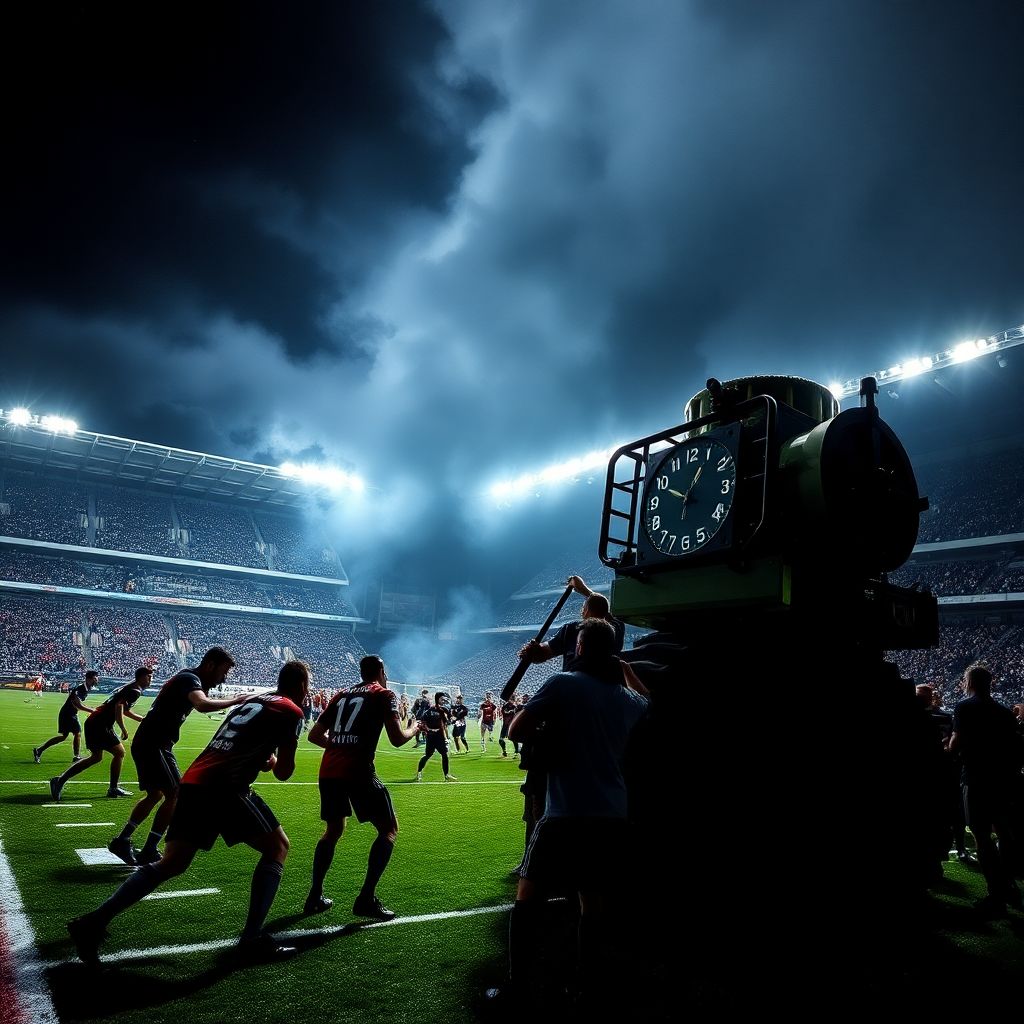
Beşiktaş betting on a ‘Northern Machine’ to escape chaos
Beşiktaş has reshaped its squad planning for the 2026-27 season around a clear geographic and footballing axis. Turning decisively toward Germany, the Netherlands and Belgium, the club is building what can be described as a rational, disciplined and almost clockwork “Northern Machine” designed to bring order to the chaos of the Süper Lig.
At the heart of this new structure stand elite names such as Trossard, Nübel and Orkun Kökçü. This trio forms the backbone of a side built on tactical loyalty, high-level athleticism and strict positional discipline. How this cold-blooded, system-oriented setup will react to the unpredictable, improvisation-heavy and often chaotic nature of Turkish football will likely determine where the championship trophy ends up.
Central Europe and Benelux as a blueprint
In assembling the new squad, Beşiktaş deliberately turned to players shaped in the football cultures of Germany, the Netherlands and Belgium. Taylan Bulut, who came through a German academy system, Orkun Kökçü, developed at Feyenoord, Václav Černý, an Ajax academy product, and Salih Özcan, formed in Germany, are the prime examples of this orientation.
This “Central Europe and Benelux axis” promises early tactical adaptation, high work rate and a serious approach to match preparation. Players formed in these environments are used to clear game models, detailed match plans and strict adherence to the coach’s instructions. For a Beşiktaş side that often got lost in emotional swings and structural fragility in previous seasons, this marks a radical cultural shift.
German school and pressing football
The presence of players with German football education gives the technical staff a valuable platform. Their familiarity with pressing schemes, compact team shape and rapid transition play will make it easier to implement a modern, high-intensity style without major growing pains.
This is especially important in a league where games often become stretched and disorganized. A team that can maintain spacing, coordinate pressing triggers and manage transitions efficiently gains a clear edge. Beşiktaş’s new profile appears tailor-made to exploit exactly that.
Benelux-toughened athletes in the spine
Beyond tactical structure, physicality stands out as one of the biggest strengths of this new Beşiktaş. Ndidi, who took his first big European step at Genk in Belgium, Agbadou, who arrived in Europe through Eupen, Hyeon-gyu Oh, signed from Genk, and Murillo, who made his mark at Anderlecht, all carry the imprint of the Belgian Pro League and Bundesliga’s physical demands.
These leagues are known for fast tempo, intense duels and athletic defenders and midfielders. Beşiktaş is effectively importing that level of physical robustness into the Süper Lig. As a result, the team aims not only to outplay opponents tactically, but also to wear them down in duels, second balls and late-game battles.
Nübel and Trossard as cultural leaders
In the dressing room, the presence of Nübel, trained in the German system, and Trossard, a product of Belgian football with experience at the very top level, elevates the professional standards. These are players who understand what it means to perform under pressure, follow detailed game plans and maintain focus over a long season.
For younger talents such as Yasin Özcan, who also has a Belgian background through his Anderlecht experience, this creates a natural mentoring environment. Training intensity, preparation routines, nutritional habits and mental approach to competition are all influenced when such figures set the tone daily.
The missing “Latin touch”
Yet, this almost perfect-looking mechanical design faces a serious test in Turkish realities. The Süper Lig has long rewarded not only structure, but also spontaneity. Many games are decided not by the original plan, but by moments of individual genius, unexpected dribbles or risks taken outside the script.
A squad that is highly rational and strictly disciplined can sometimes struggle when matches turn into tactical stalemates. In these locked contests, “Latin-style” improvisation and individual flair often become the key that unlocks deep defensive blocks. For Beşiktaş, whether the current roster has enough of that unpredictable spark is an open question.
Creativity concentrated on few shoulders
In this context, the bulk of the creative burden falls on Trossard and Orkun Kökçü. They will be expected to connect the structured build-up with the chaotic reality of the final third: breaking lines, finding pockets between the lines, and producing the decisive final pass or shot when patterns alone are not enough.
If opponents succeed in neutralizing these two through tight marking or double teams, Beşiktaş risks becoming too predictable. That raises the importance of secondary creative sources-full-backs making surprise runs, midfielders joining the box, and forwards capable of individual actions in one-on-one situations.
Emotional control vs. Süper Lig chaos
Another question mark is psychological. Players programmed primarily around tactical obedience must now compete in a league where crowd pressure, refereeing controversies and emotional swings can define the rhythm of a match.
The ability of this group to stay calm when games turn fiery will shape the title race. If the “Northern Machine” maintains composure instead of getting dragged into chaos, Beşiktaş can dominate through structure and patience. But if repeated emotional shocks break the system’s cohesion, the team could lose its greatest advantage: collective order.
Tactical adaptability will be crucial
For this project to succeed, Beşiktaş cannot remain a one-speed machine. The coaching staff will need flexibility to switch between different registers: from controlled build-up to more direct approaches, from organized pressing to compact low or mid-blocks, depending on match context.
In certain away games where the atmosphere is particularly intense, a more pragmatic, counter-attacking style may protect the team’s mental balance. Against deep-lying opponents in Istanbul, however, extra emphasis on positional rotations and overloads in attacking zones will be necessary to generate chances beyond what rigid structures alone can create.
Balancing drills and freedom in training
Much will depend on how balance is struck on the training ground. Overemphasis on patterns can suffocate instinct; too much freedom can erode the very discipline the club is trying to build. The ideal scenario is clear: a base of well-rehearsed automatisms combined with defined “free zones” where players are encouraged to improvise.
Trossard and Kökçü, in particular, should be given tactical frameworks that protect the team’s shape, but enough freedom to interpret space creatively. If they feel trusted to take risks in the final third, Beşiktaş’s attack can avoid becoming mechanical and sterile.
Physical durability across a long season
The “Northern Machine” concept also implies reliability over time. Players from German, Dutch and Belgian systems are used to rigorous conditioning, but the Süper Lig’s unique blend of travel, pitch conditions and intense fixtures will still test depth and durability.
Rotation policy will be critical. The squad’s physical strengths must be managed so that high-intensity pressing and constant duels do not lead to a spike in injuries. If Beşiktaş can maintain its athletic superiority from August to May, it will gain an edge especially in the latter stages of matches and in the decisive months of the season.
Potential evolution of the project
Looking ahead, this model could become more than just a one-season experiment. If successful, Beşiktaş may continue to tap into Central European and Benelux markets, gradually establishing a stable identity based on discipline, athleticism and tactical intelligence.
However, the club might also learn that sprinkling in one or two more “Latin-style” attackers-players with street football instincts and dribbling flair-creates a more complete mix. The ideal Beşiktaş of the future may be neither a pure machine nor pure chaos, but a hybrid: a well-oiled structure that still leaves room for genius.
Verdict: machine or mirage?
On paper, the 2026-27 Beşiktaş squad looks like a coherent, deliberately engineered project. The spine shaped in Germany, the Netherlands and Belgium offers clear advantages in discipline, athleticism and tactical clarity. Nübel and Trossard bring leadership, while Kökçü connects midfield and attack with intelligence and creativity.
The big unknowns lie in adaptation: to the emotional volatility of the Süper Lig, to locked matches that demand inspiration rather than instruction, and to the expectation-loaded pressure that comes with a title challenge. If the “Northern Machine” can add just enough improvisation to its precision, Beşiktaş has every chance to turn order into trophies and finally move from chaos to control.