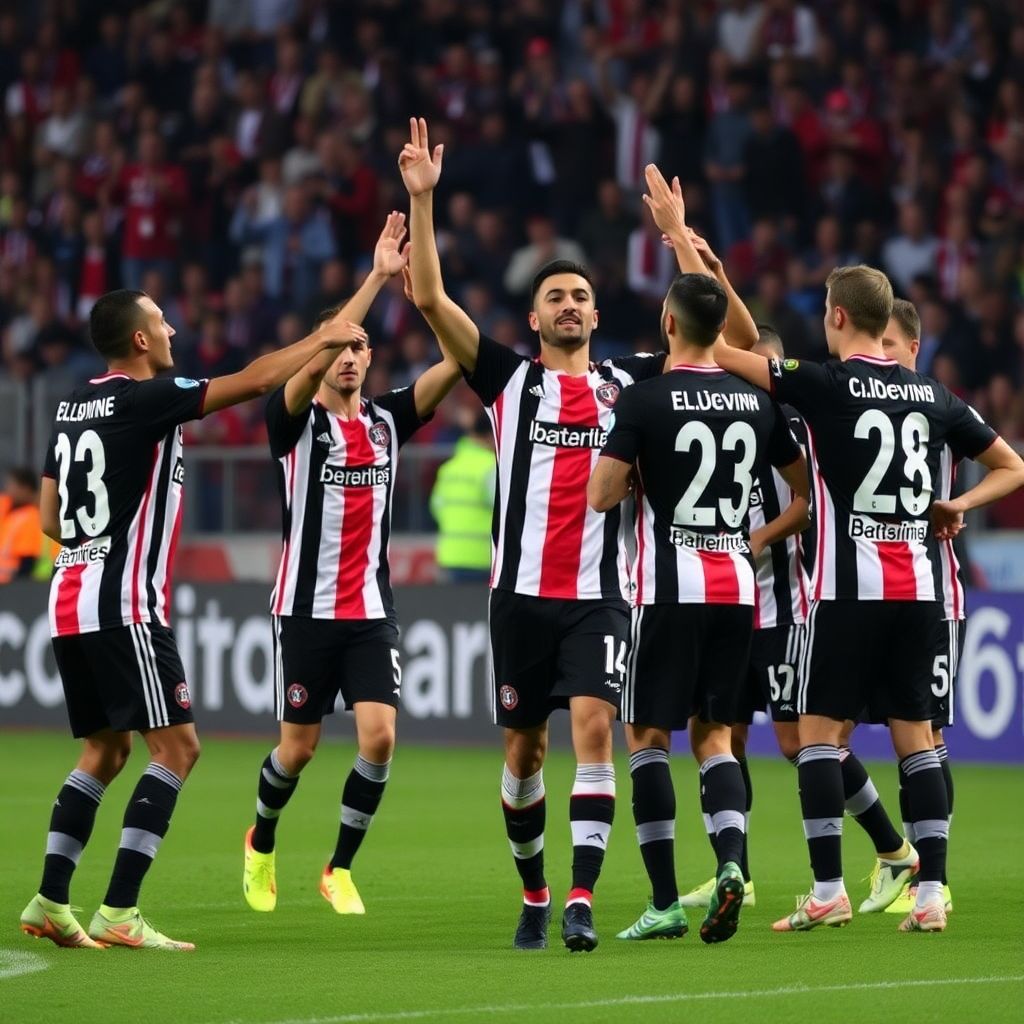
We Are Still Standing, but Now We Must Face the Facts
Beşiktaş secured its place in the Europa League league phase after eliminating Žalgiris, and that achievement deserves recognition. Yet looking beyond the final result reveals several uncomfortable questions. What happened to the Beşiktaş that appeared so convincing at the beginning of the season? Were expectations simply too high, or has the team already begun to show its structural weaknesses?
The answer is probably a combination of both. Beşiktaş survived the tie, but the performance in Lithuania demonstrated that the team still has significant problems to solve. The club remains standing, but it is now facing reality without the protective effect of early-season optimism.
A night overshadowed by broader issues
The match in Lithuania naturally dominated the agenda, but Turkish football’s wider problems were impossible to ignore. Before Galatasaray and Fenerbahçe had even begun their Champions League campaigns, sections of the sports media were already presenting exaggerated financial expectations.
Headlines claiming that both clubs would soon have overflowing accounts because of Champions League revenues are misleading. Fenerbahçe’s debt, even before its latest transfer activity, was reported at nearly 28 billion Turkish lira. The financial situation of other major clubs is hardly comfortable either. European income can provide valuable support, but it does not automatically erase enormous liabilities.
The same lack of balance appears in the treatment of coaches and players. A manager may be condemned one day and praised as a genius the next, depending entirely on the latest result. Such extreme reactions do not help supporters understand football; they merely turn every match into a dramatic verdict.
Beşiktaş had the advantage but failed to control the danger
Having won the first leg 3-0 in Istanbul, Beşiktaş entered the return match with an enormous advantage. The ideal plan was straightforward: score once, keep possession, manage the tempo and avoid unnecessary risks.
For long periods, the team did control the ball. Žalgiris struggled to build attacks, while Beşiktaş circulated possession and dictated the rhythm. However, possession alone is not enough. A side controlling the match should also create regular opportunities, force the goalkeeper into action and make the opponent defend deep under constant pressure.
Beşiktaş failed to do that. The team dominated the ball but lacked precision in the final third. Attacks often ended with a misplaced pass, a poorly timed cross or a player choosing the safest option instead of taking responsibility.
Cerny’s performance raised further doubts
Vaclav Cerny was particularly disappointing on the right flank. He saw plenty of the ball but rarely transformed that involvement into genuine danger. Despite repeated opportunities to deliver from the wing, he produced very little from the attacking area.
Too often, he either lost possession or passed backward and removed himself from the decisive phase of the move. Every turnover created another transition for Beşiktaş to defend, forcing the team’s advanced players to sprint back and wasting energy that should have been used to attack.
A winger is not judged only by the number of touches he receives. He must carry the ball forward, beat his marker, create chances and make the opposition uncomfortable. Beşiktaş did not get enough of those qualities from Cerny.
Žalgiris did not play like a team needing four goals
The home side’s approach was equally difficult to understand. Žalgiris needed a remarkable comeback after losing the first match 3-0, which meant that an aggressive and adventurous performance was essential. Instead, the Lithuanian team often appeared content to defend.
A team requiring at least four goals cannot spend most of the match protecting its own penalty area. Žalgiris did not offer the intensity or attacking quality expected from a side fighting for qualification. Its lack of offensive threat made Beşiktaş’s failure to create even more noticeable.
The only goal came after a misplaced pass by Tiago Emanuel Embalo Djalo. Renan Abner do Carmo de Oliveira, who had entered the match as a substitute, took advantage and scored. The goal was not the product of sustained Žalgiris pressure; it was largely a gift from Beşiktaş.
The central problem is still attacking production
The most important concern remains Beşiktaş’s inability to turn possession into chances. The team may circulate the ball for long stretches, but its attacking structure remains predictable. Wingers do not consistently deliver accurate crosses, midfielders do not make enough late runs and the striker is frequently isolated.
There was, however, one positive development. For the first time this season, Beşiktaş managed to place several players inside the opposition penalty area at the same time. The striker was no longer left entirely alone, and more teammates were present to attack rebounds and crosses.
That improvement must become a permanent feature rather than a one-off moment. The problem is that the players inside the box still did not receive enough quality service. Arriving in dangerous positions is useful only when the team can deliver the ball accurately and frequently.
The squad still needs reinforcements
The match also highlighted the need for greater depth. Beşiktaş appears short of reliable options on both wings, especially players capable of operating effectively on either side. Supporters have suggested that the club should consider a more dynamic wide attacker while reviewing the futures of players who have not provided sufficient production.
Midfield is another area requiring careful evaluation. The team needs a player who can carry the ball, break defensive lines and contribute directly to attacks. A technically strong midfielder with the ability to accelerate play could make Beşiktaş less dependent on slow, predictable possession.
The centre-back position also deserves attention. Competition for places is essential over a long season involving domestic football and European matches. Relying on a single consistent starter for dozens of games creates both a sporting and physical risk. A stronger defender would not only improve the team but also push the existing players to maintain a higher level.
Tactical identity must become clearer
Beşiktaş’s problem is not simply the quality of individual players. The team also needs a clearly defined attacking identity. If the plan is based primarily on avoiding mistakes, the side may remain difficult to defeat, but it will struggle to win consistently against organized opponents.
A top club must know how to attack a deep defence. That requires rehearsed movements, quick combinations around the box, overlapping full-backs and midfielders willing to make forward runs. It also demands more courage from the players in one-on-one situations.
The coaching staff must decide whether Beşiktaş will prioritize controlled possession, fast transitions or direct wing play. At present, the team appears to shift between these ideas without fully mastering any of them.
Europe will expose every weakness
The Europa League league phase will offer Beşiktaş valuable experience and important financial opportunities, but it will also bring stronger opponents. Teams at that level will punish loose passes, weak transitions and ineffective finishing far more severely than Žalgiris did.
The club therefore cannot rely solely on the first-leg advantage or on moments of individual quality. European matches require concentration, athletic strength and the ability to maintain intensity for the full ninety minutes.
Qualifying is a positive step, but it should not conceal the flaws revealed in the tie. Beşiktaş has reached the next stage; it has not yet proven that it is ready to compete with the strongest teams in the competition.
A balanced assessment is essential
Beşiktaş supporters should celebrate the qualification while remaining realistic. The team did what was necessary over two matches, but the overall football was not convincing. It survived the tie through the advantage created in Istanbul, not because it displayed overwhelming authority in Lithuania.
The club now needs clear decisions in recruitment, tactical planning and player development. Endless changes in mood-turning players into heroes after one good match and villains after one poor performance-will not solve anything.
Beşiktaş is still alive in Europe, and that matters. But remaining standing is only the beginning. If the team wants to challenge for trophies and compete successfully in the Europa League, it must improve its attacking efficiency, strengthen the squad and establish a more convincing footballing identity. The qualification is complete; the real test starts now.