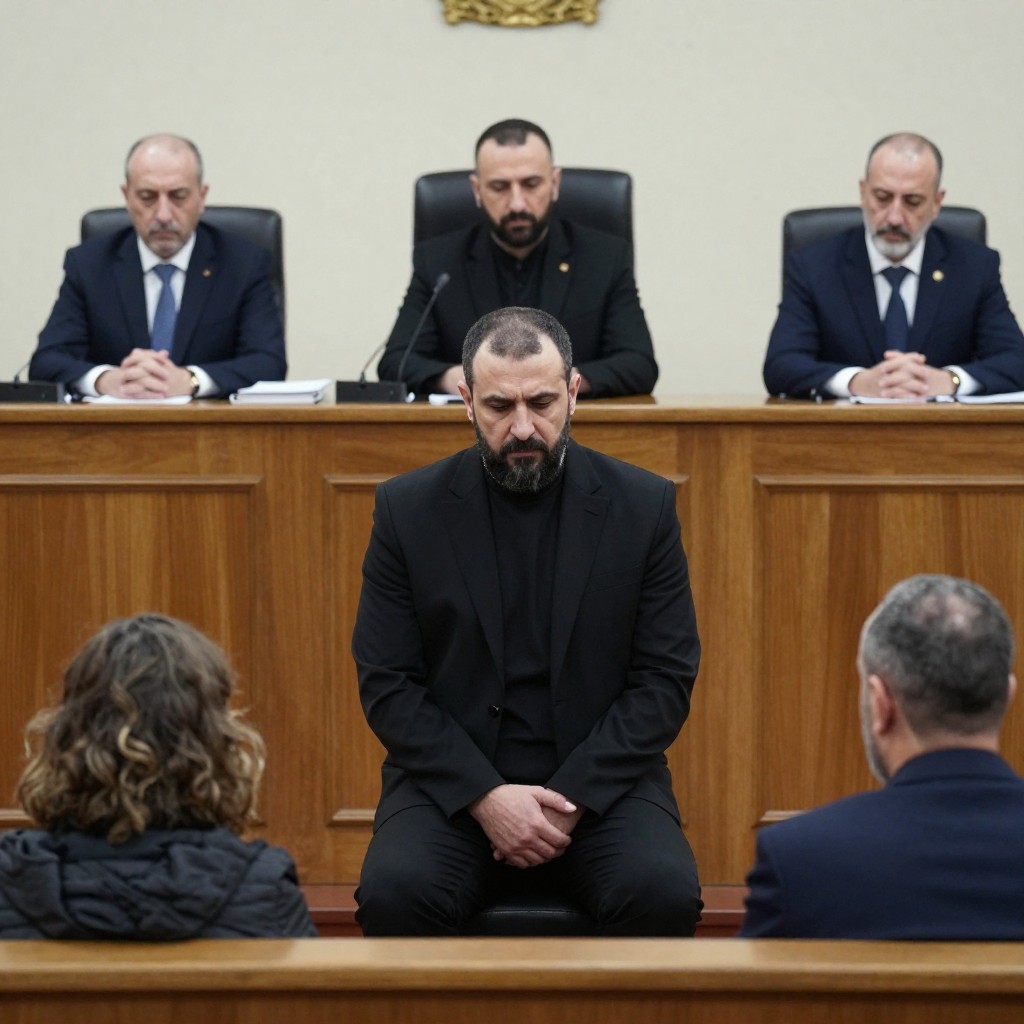
Acquitted in Double Murder Case, Ali Aydıner Receives Two Life Sentences
A court in Isparta has sentenced Ali Aydıner to two aggravated life terms for the murders of Korhan Taştekin and Zehra Çaycı, who disappeared in 2017. Aydıner had previously been acquitted because the prosecution could not provide sufficient evidence. That decision was later overturned after the Court of Cassation assessed the evidence in the case and sent the file back for a retrial.
Taştekin, 34, a father of three, and Çaycı, 24, a mother of two, both worked at a yarn factory in Isparta. The pair disappeared on August 10, 2017. Investigators began examining the possibility that they had been murdered after they failed to make contact with relatives and did not leave behind any clear explanation for their disappearance.
They were last seen at Aydıner’s cattle farm
According to the investigation, Taştekin and Çaycı were last seen at a cattle farm belonging to Ali Aydıner, who was known locally by the nickname “Besici Ali.” The police detained Aydıner in May 2018 after examining his connection to both missing individuals.
He was subsequently arrested and prosecuted at the Isparta 1st High Criminal Court. Prosecutors initially sought two life sentences for intentional homicide. However, during the hearing held on January 7, 2021, the court ruled that the evidence was insufficient and acquitted Aydıner. He was also released.
The families of Taştekin and Çaycı objected to the verdict. Their appeal led the Court of Cassation’s 1st Criminal Chamber to review the file. On January 14, 2026, the higher court overturned the acquittal and returned the case to the local court for a new trial.
The Court of Cassation highlighted several pieces of evidence
The appellate ruling addressed the local court’s reasoning that the victims’ bodies had not been found and that they could theoretically still be alive. However, the higher court stated that years had passed without any indication that either person was living.
The ruling noted that Taştekin and Çaycı had limited financial means, yet neither had withdrawn their salaries, carried out official transactions or established any form of contact with their families. The Court of Cassation concluded that these circumstances made the possibility of their continued survival extremely unlikely.
Investigators also examined video footage from the house located at the cattle farm where the two were reportedly last seen. Live-stream footage, mobile phone data and signals from nearby base stations were evaluated as part of the case file.
Another significant detail concerned the SIM cards belonging to the missing individuals. According to the ruling, the cards were later traced to Aydıner. The court also drew attention to allegations that the defendant attempted to shift suspicion toward other people during the investigation.
Alleged confession included in the file
The case file also contained a statement Aydıner allegedly made to Özlem Singeç, the former wife and later cohabiting partner of Korhan Taştekin. According to the testimony, Aydıner told Singeç, “I killed Korhan and Zehra.”
The Court of Cassation considered this statement together with the digital records, communication data, the last known location of the victims and the absence of any evidence that they had continued their lives elsewhere. Rather than evaluating each detail separately, the higher court assessed the evidence as a whole and concluded that the acquittal did not adequately address the available findings.
Following the reversal, Aydıner was arrested again and placed in custody. The retrial was held before the Isparta 1st High Criminal Court.
Prosecutor requested two life sentences
The final hearing took place on September 8. Taştekin’s mother, Fadime Taştekin, his former wife Özlem Singeç, Çaycı’s mother Keziban Çaycı and the lawyers representing the families attended the hearing. Aydıner participated in the proceedings through the Audio and Video Information System.
In the final opinion, the prosecution stated that Aydıner’s responsibility for the intentional killings of both victims had been established. Prosecutors therefore requested two separate life sentences.
When given the opportunity to respond, Aydıner denied the accusations. He said that the families knew him and would understand that he was not capable of committing such acts. He asked the court for acquittal and release.
The families and their lawyers agreed with the prosecutor’s opinion and demanded that the defendant be punished.
Court imposes two aggravated life sentences
After evaluating the evidence, the court found Ali Aydıner guilty of intentionally killing both Korhan Taştekin and Zehra Çaycı. He was sentenced to two aggravated life terms.
The panel also ruled that there were no grounds for a reduction based on remorse. The court stated that Aydıner had not demonstrated genuine regret and therefore did not qualify for a discretionary sentence reduction.
The verdict brings a new stage to a case that remained unresolved for years because the victims’ bodies were never located. The decision shows that, in missing-person investigations, physical remains are not always the sole determining factor. Phone records, financial activity, location data, witness statements and the behavior of the accused may collectively form the basis of a conviction.
The case also illustrates the distinction between an initial acquittal and a final legal conclusion. A defendant may be acquitted at first instance when the court considers the evidence inadequate, but that ruling can be overturned if an appellate court determines that important findings were overlooked or assessed incorrectly.
For the victims’ families, the verdict represents the first major judicial conclusion after years of uncertainty. Despite the absence of the bodies, the court determined that the combined evidence was sufficient to establish that Taştekin and Çaycı had been killed and that Aydıner was responsible for both deaths.