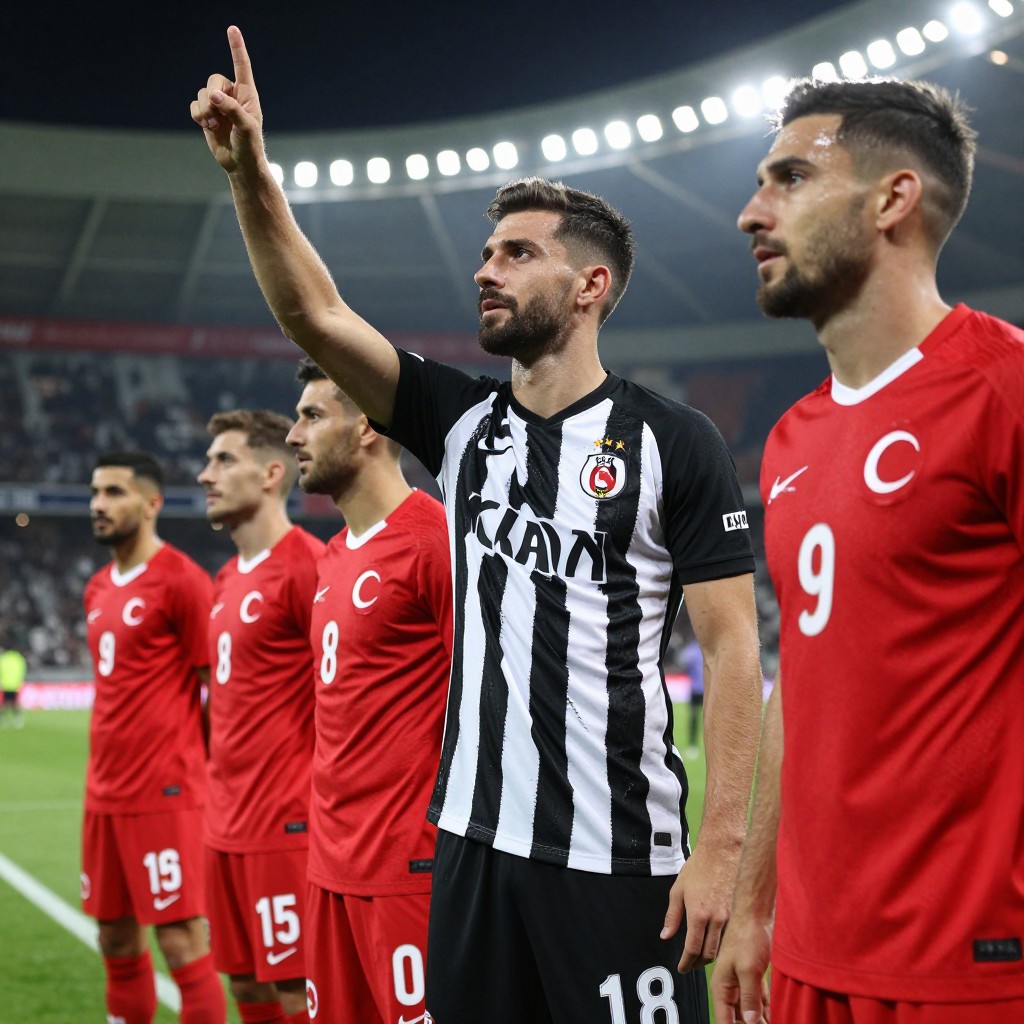
“They Don’t Like Beşiktaş Players in the National Team – Is Beşiktaş from Another Country?”
Former footballer Serhat Akın has questioned whether Beşiktaş players receive fair consideration when national-team selections are made. Speaking on his YouTube programme, he argued that a player’s current form should count more than his club affiliation and suggested that Beşiktaş representatives are too often overlooked or assigned to Turkey’s Under-21 side instead of the senior squad.
Akın focused particularly on İlhan Fakılı, whom he described as one of the most in-form Turkish wide players in the country. He asked why a footballer performing well for Beşiktaş had not been given a clearer opportunity with the A National Team. In his view, Fakılı’s displays merited serious consideration, and the uncertainty surrounding his call-up – including whether he had been selected and then returned to his club – only added to the frustration.
The former player also pointed to the treatment of Beşiktaş footballers in the Under-21 setup. He recalled that two players from the club had been sent to the youth team, naming Semih as one of them. Akın acknowledged that Semih’s situation had its own complications, including his subsequent move to playing in Italy, but argued that Fakılı’s form made his case different.
Akın then questioned the midfield selections. He suggested that Salih Özcan had been used because of circumstances and would likely have started on the bench had Hakan Çalhanoğlu been available. He also referred to İsmail in discussing the possible lineup. His broader point was that national-team decisions should be made transparently and consistently, rather than leaving the impression that players from one club face a higher bar.
The remarks have revived a familiar debate among Beşiktaş supporters: are their players judged by the same standards as footballers from other clubs? Some fans argue that players at rival teams are given more opportunities to establish themselves, even when their form is less convincing. Others say the national coach’s choices depend on tactical needs, competition for positions and the player’s role – not simply on which club he represents.
Supporters also recalled past Beşiktaş figures who, in their view, were not rewarded with enough international appearances despite substantial contributions at club level. Kadir Akbulut was cited in fan comments as an example of a player whose national-team opportunities did not reflect his domestic career. Such comparisons are difficult to assess without examining the circumstances of each period, but they help explain why questions of representation remain sensitive.
At the heart of the disagreement is a basic principle: selection should be based on performance, fitness, tactical suitability and consistency. Club identity should neither guarantee a place nor count against a player. If a footballer is in strong form, supporters expect the coaching staff to explain whether he is being considered, what role he might fill and why another option is preferred.
There is also a difference between being invited to a youth side and being ignored altogether. Under-21 football can be a valuable route to the senior team, particularly for younger players building experience. But if a player is repeatedly moved between squads without a clear plan, fans may interpret that process as a dismissal of his form rather than a step in his development.
A stronger selection process would help reduce suspicion. Publishing clear criteria, communicating with clubs and giving players meaningful opportunities in training and matches could make decisions easier to understand, even when a player is left out. Coaches are not obliged to select every in-form footballer, but consistent explanations can show that the same standards apply across the league.
The debate should not become a claim that the national team belongs to any club or its supporters. Turkey’s team represents the whole country, and its success depends on players from many clubs working together. At the same time, fans are entitled to ask whether talent is being assessed fairly. That question is best answered through open reasoning and consistent choices, not by dismissing criticism as club loyalty.
Akın’s comments reflect a wider concern that football decisions can appear opaque, particularly when a player is performing well yet receives limited chances. Whether Fakılı ultimately earns a senior call-up will depend on the coaching staff’s assessment and the team’s needs. But the issue raised by the discussion is larger than one selection: supporters want evidence that form matters, opportunities are applied evenly and no club’s players are treated as outsiders.