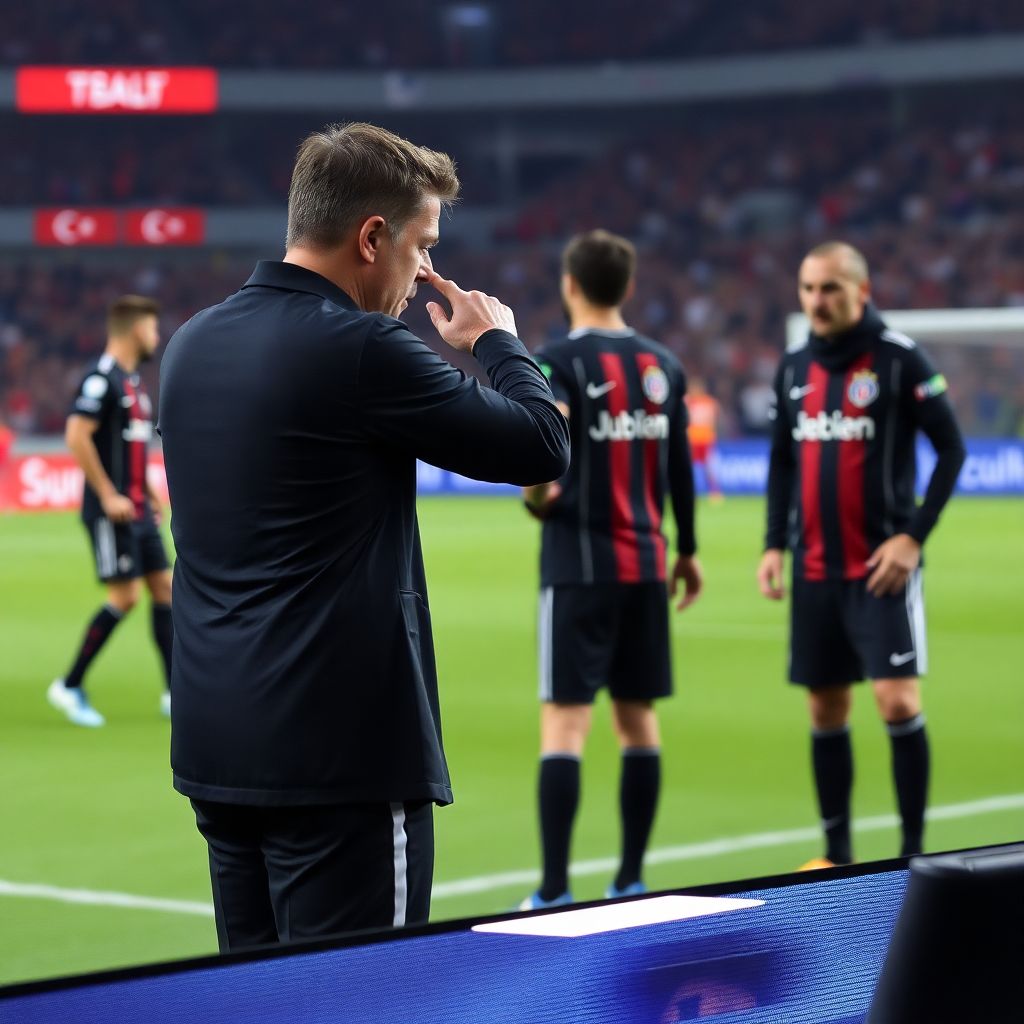
“VAR Has Become One of the Biggest Problems Turkish Football Has Faced”
Sports commentator Kaya Çilingiroğlu has sharply criticized the current use of VAR in Turkish football, arguing that the system has failed to eliminate controversial decisions and instead created even greater confusion. Speaking about Beşiktaş’s recent matches, he focused on disputed refereeing calls in the Alanyaspor game, the team’s attacking problems and its upcoming UEFA Europa League schedule.
Çilingiroğlu also called on MHK president Ferhat Gündoğdu to explain how similar incidents are being assessed. Referring to the incident involving a slap against Trossard in the Alanyaspor match, he said the action could certainly be debated, but insisted that previous decisions involving Beşiktaş should not be used to justify new mistakes.
According to the commentator, each incident must be judged according to its own characteristics. If an earlier Beşiktaş player was not shown a red card for a similar action, that should not mean another player must escape punishment in a comparable situation.
“Both incidents can be red cards,” Çilingiroğlu argued. “The fact that one decision was wrong in the past does not make another wrong decision correct. These arguments need to be left aside.”
Criticism over Beşiktaş’s disallowed goal
The most serious inconsistency, in his view, concerned Beşiktaş’s disallowed goal and two challenges involving Vlahovic inside the penalty area. Çilingiroğlu claimed that the goal was cancelled for pulling an opponent’s shirt, while a similar action against Vlahovic went unpunished.
He questioned why the referee had applied the shirt-pulling rule in one situation but ignored it in another during the same game.
“If the goal is cancelled because of a shirt pull, then the incident involving Vlahovic must also be a penalty,” he said. “It was the same referee and the same VAR team. This is not a comparison between two different matches or two different refereeing standards. Both decisions occurred in the same game.”
The commentator added that the Trossard incident, although important, should not overshadow the other controversial moments. In his assessment, the key issue was not simply whether the contact deserved a red card, but whether the officials had applied the same criteria throughout the match.
VAR has not solved the problem
Çilingiroğlu maintained that VAR has not delivered the consistency supporters were promised. On the contrary, he believes refereeing errors have become more visible because officials now have several opportunities to review incidents.
“VAR is one of the biggest problems Turkish football has faced,” he said. “I opposed it when it was first introduced, and I still oppose it. Officials watch the same images repeatedly on large screens, yet decisions that appear inconsistent continue to be made.”
His criticism is directed not only at the technology itself but also at the way referees use it. In his view, VAR should correct obvious mistakes, not provide a new platform for subjective interpretations that remain unexplained.
The system was introduced to reduce major errors in goals, penalties, red cards and mistaken identities. However, incidents such as shirt pulling, minor contact and challenges inside the box often remain open to interpretation. This creates a situation in which the existence of video evidence does not necessarily produce a clear or fair outcome.
Fenerbahçe-Konyaspor match cited as another example
To underline his argument, Çilingiroğlu referred to Fenerbahçe’s first goal in the team’s 4-2 victory over Konyaspor. He suggested that similar contact and shirt-pulling incidents had been treated differently in that match.
He claimed that players such as Cerny often remain in close contact with opponents, yet goals can still be allowed in comparable situations in European competitions. The commentator’s main demand was not for every challenge to be punished, but for the same interpretation to apply to every club.
“Do not distribute decisions differently,” he said. “Apply one standard to everyone. Nobody is asking for special treatment. The request is simply for equal treatment.”
This point reflects one of the most persistent complaints surrounding Turkish refereeing: clubs may accept an unpopular decision more easily when they believe the same criteria are used consistently. The real frustration emerges when an identical type of contact produces different results from one match to another.
Beşiktaş’s attacking weakness remains a concern
Alongside the refereeing debate, Çilingiroğlu also assessed Beşiktaş’s football. He identified the team’s biggest sporting problem as a lack of effectiveness in attack.
In his opinion, Beşiktaş has struggled to build reliable attacking patterns and create enough clear opportunities. The team may dominate possession or spend extended periods in the opponent’s half, but that pressure does not always turn into quality chances.
The commentator argued that discussions about Beşiktaş’s performance must also consider the impact of early dismissals. If an opponent receives a red card after being placed under sustained pressure, the circumstances of the match change significantly.
“Suppose Alanyaspor had played with ten men for ten minutes,” he said. “Would the match have ended in the same way? Would you still have assessed Beşiktaş’s performance in exactly the same manner?”
His argument is that numerical superiority can affect the entire tactical structure of a game. A team playing against ten men has more space, greater control and additional passing options. Therefore, judging its offensive performance without considering the referee’s decisions may provide an incomplete picture.
The need for transparent explanations
The discussion also highlights the importance of communication from the MHK. When controversial decisions occur, silence often allows speculation to grow. Çilingiroğlu called on Ferhat Gündoğdu to explain the reasoning behind such decisions, particularly when the same type of incident is interpreted differently.
Clear explanations would not eliminate every disagreement, but they could help supporters understand how the rules are being applied. Refereeing remains subjective in many situations, yet the principles behind decisions should be consistent and understandable.
A detailed assessment of controversial matches could also help identify recurring problems. If the same types of errors appear repeatedly, referee training and VAR protocols could be adjusted accordingly.
Consistency is the central issue
The most important message in Çilingiroğlu’s comments is that Turkish football does not merely need more technology. It needs a uniform interpretation of the rules.
VAR can show what happened, but it cannot by itself determine how every incident should be judged. That responsibility still belongs to referees and VAR officials. If one team’s goal is disallowed for a shirt pull while another similar action is ignored, supporters will naturally question the credibility of the system.
For Beşiktaş, the refereeing debate should not conceal the need to improve attacking efficiency. The club must develop stronger offensive combinations, create more chances and become more decisive in the final third. At the same time, the league authorities must address concerns about inconsistent officiating.
Without common standards, repeated reviews and multiple camera angles will not be enough to restore confidence. Turkish football needs transparent decisions, equal treatment for all clubs and a VAR system that corrects clear errors instead of becoming another source of controversy.