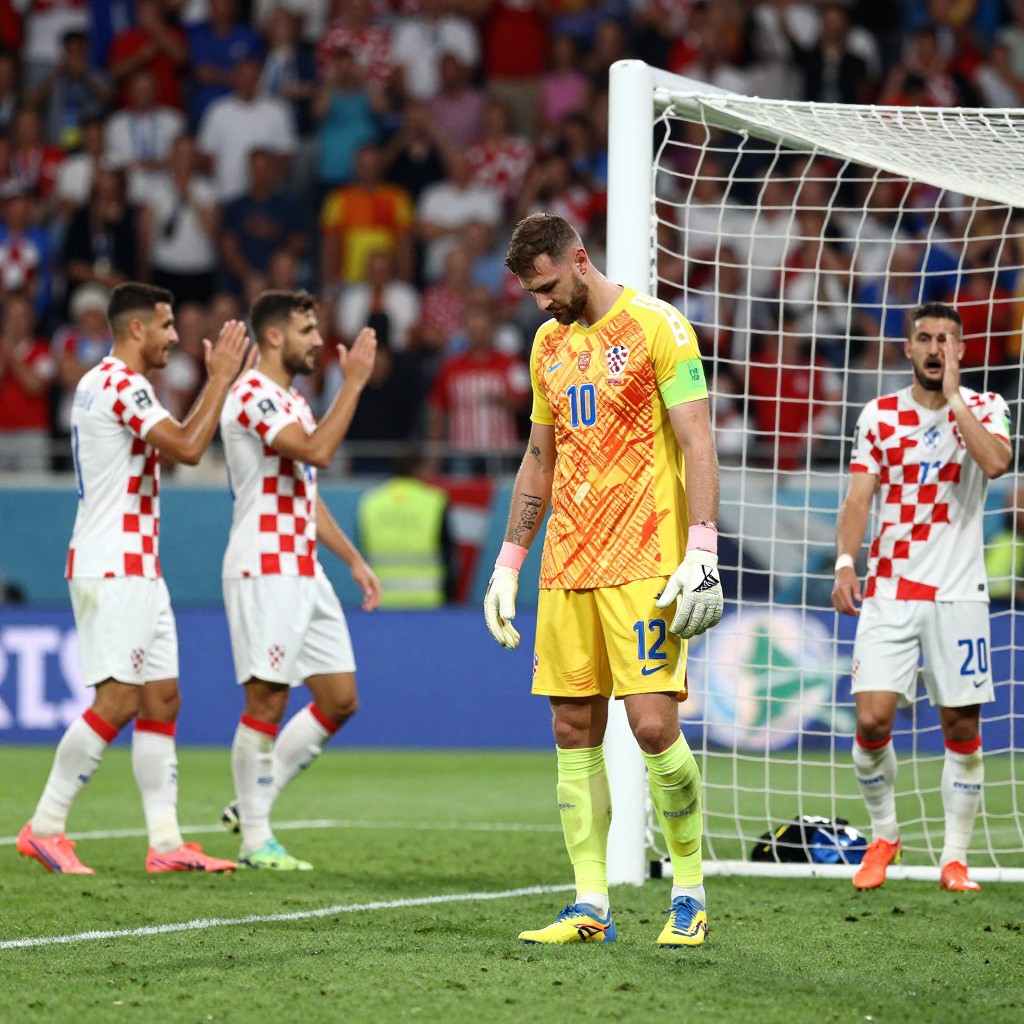
Dominik Livaković Concedes 11 Goals in Two Matches as Nightmare International Break Continues
Dominik Livaković endured a difficult spell with the Croatian national team, conceding 11 goals across two matches against England and Spain. The goalkeeper, who left Fenerbahçe for Barcelona, struggled as both sides repeatedly found a way past him.
The results made for a bruising international break. Livaković was left exposed on numerous occasions, and the number of goals conceded quickly became the defining statistic of his performances. Against opponents with attacking quality and the ability to create chances from different areas, Croatia’s defence could not provide enough protection.
A goalkeeper’s display cannot be judged by the final score alone. Defensive organisation, pressure on the ball and the quality of chances all shape what happens in front of goal. Even so, conceding 11 times in two games is a stark outcome, and it is likely to prompt questions about Croatia’s overall defensive performance as well as Livaković’s form.
For the goalkeeper, the immediate challenge is to put the results behind him. A demanding international schedule offers little time to dwell on setbacks, particularly when another important fixture is approaching. Croatia are due to travel to Italy, creating an opportunity for Livaković and his teammates to respond with a more composed display.
The scale of the defeats may also attract attention because Livaković has built his reputation through high-pressure performances. He has been valued for his reflexes and experience, and expectations around an established international goalkeeper are naturally high. Two difficult matches do not erase that record, but they do place his current form under scrutiny.
The matches against England and Spain also highlight how quickly top-level opponents can punish defensive mistakes. When a team loses possession in dangerous areas or leaves space between its lines, the goalkeeper may face a succession of high-quality chances. Limiting those situations is essential if Croatia are to make the next match more competitive.
For the coaching staff, the priority will be to identify where the breakdowns occurred. Adjustments could involve protecting the space in front of the defence, improving coordination between the back line and midfield, or reducing the number of clear opportunities conceded. A better collective structure would give Livaković a stronger platform to recover his confidence.
The goalkeeper, meanwhile, will need to focus on the next save rather than the previous goal. Confidence is important in the position, but it is often rebuilt through simple, decisive actions: controlling crosses, communicating clearly with defenders and dealing calmly with shots that can be stopped. A solid opening period against Italy could help reset the mood.
The wider significance of the two results will depend on how Croatia respond. A poor run can become more damaging if it continues, but a single organised performance can shift the conversation from the scoreline to the team’s reaction. Livaković will be central to that response, yet the responsibility cannot rest on him alone.
After conceding 11 goals in two appearances, the Croatian goalkeeper faces a difficult test of resilience. The Italy fixture offers a chance to show that the England and Spain matches were an exception rather than a sign of a lasting decline. For Croatia, the task is equally clear: defend more effectively, reduce the pressure on their goalkeeper and give him the chance to regain his composure.