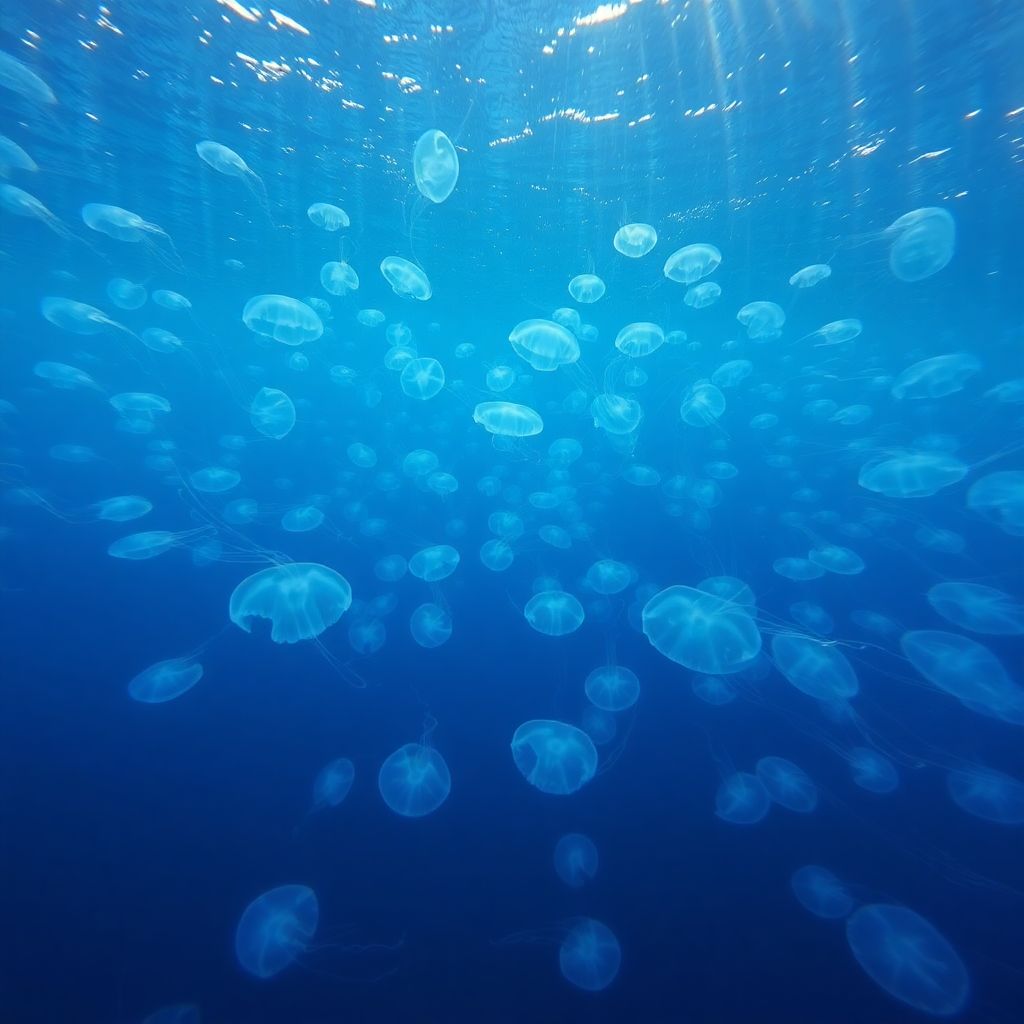
Blue Jellyfish Concentration Observed in the Dardanelles
A remarkable underwater scene was recorded in the Dardanelles after a large number of blue jellyfish were spotted between the Çanakkale Martyrs’ Memorial and the Soğandere area. The unusual concentration of marine life attracted attention when divers captured the animals moving through the strait on an underwater camera.
Çetin Ege Doğan, who has been practicing sport diving professionally for 21 years, went on a boat trip with a friend the previous day. While the boat was travelling through the Dardanelles, the two divers noticed an unusually high number of blue jellyfish near the surface and beneath the water.
They later used an underwater camera to document the scene. The footage shows numerous jellyfish drifting with the current, forming visible clusters in several parts of the strait. The images quickly drew public attention, particularly because residents and visitors are accustomed to seeing jellyfish occasionally rather than in such dense groups.
The appearance of the blue jellyfish has also caused concern among people who spend time in the coastal areas of Çanakkale. Swimmers, fishermen and boat passengers have been advised to avoid direct contact with unfamiliar jellyfish and to exercise caution when entering the water.
Why do jellyfish gather in large numbers?
Jellyfish concentrations can occur for several natural reasons. Sea currents may carry large groups into the same area, while wind direction and changes in water temperature can influence their movement. In addition, calm weather may allow jellyfish to remain in one location for longer periods instead of being dispersed across the sea.
The Dardanelles is a particularly dynamic waterway because it connects the Aegean Sea with the Sea of Marmara. Its currents can transport marine organisms over considerable distances. As a result, an increase in jellyfish in one section of the strait does not necessarily mean that the species has permanently settled there.
Seasonal factors may also play a role. Jellyfish populations often increase during periods when plankton, their primary food source, becomes more abundant. Warmer water and changes in nutrient levels can create favorable conditions for their reproduction and survival.
Are blue jellyfish dangerous?
The level of risk depends on the species. Some jellyfish cause only mild irritation, while others can produce more painful stings. The blue color alone is not enough to determine whether a jellyfish is dangerous. For this reason, it is safer not to touch live or stranded specimens.
Anyone who is stung should leave the water calmly and rinse the affected area with seawater rather than fresh water. Rubbing the skin may worsen the irritation by causing remaining stinging cells to release more venom. Medical assistance should be sought if severe pain, breathing difficulties, swelling or widespread skin reactions occur.
People with allergies, children and individuals who are unfamiliar with local marine life should be especially careful. Wearing protective swimwear can reduce the likelihood of direct contact during periods when jellyfish are abundant.
What should swimmers and fishermen do?
Before swimming, visitors should check the condition of the water and pay attention to warnings issued by local authorities or coastal facilities. Jellyfish are sometimes easier to see early in the morning or when the sea is calm, but they can also remain below the surface and be difficult to detect from shore.
Fishermen should avoid pulling jellyfish onto boats unnecessarily, as contact with their tentacles may still cause irritation even after the animals are no longer moving. Nets and equipment should be handled carefully, and exposed skin should be washed after contact.
The recently recorded images do not by themselves indicate an environmental emergency. However, regular observation is important if the concentration continues for an extended period or is accompanied by dead fish, unusual water discoloration or a strong odor.
Marine experts generally evaluate such events by examining water temperature, salinity, current patterns and plankton levels. These measurements help determine whether the increase is a temporary natural occurrence or part of a broader ecological change.
The underwater footage from the Çanakkale Strait highlights the richness and variability of marine life in the region. Although the sight of countless blue jellyfish may appear alarming, temporary gatherings are often linked to natural oceanographic conditions. Nevertheless, caution remains essential, and residents and tourists should avoid direct contact until the species and potential risks are clearly assessed.