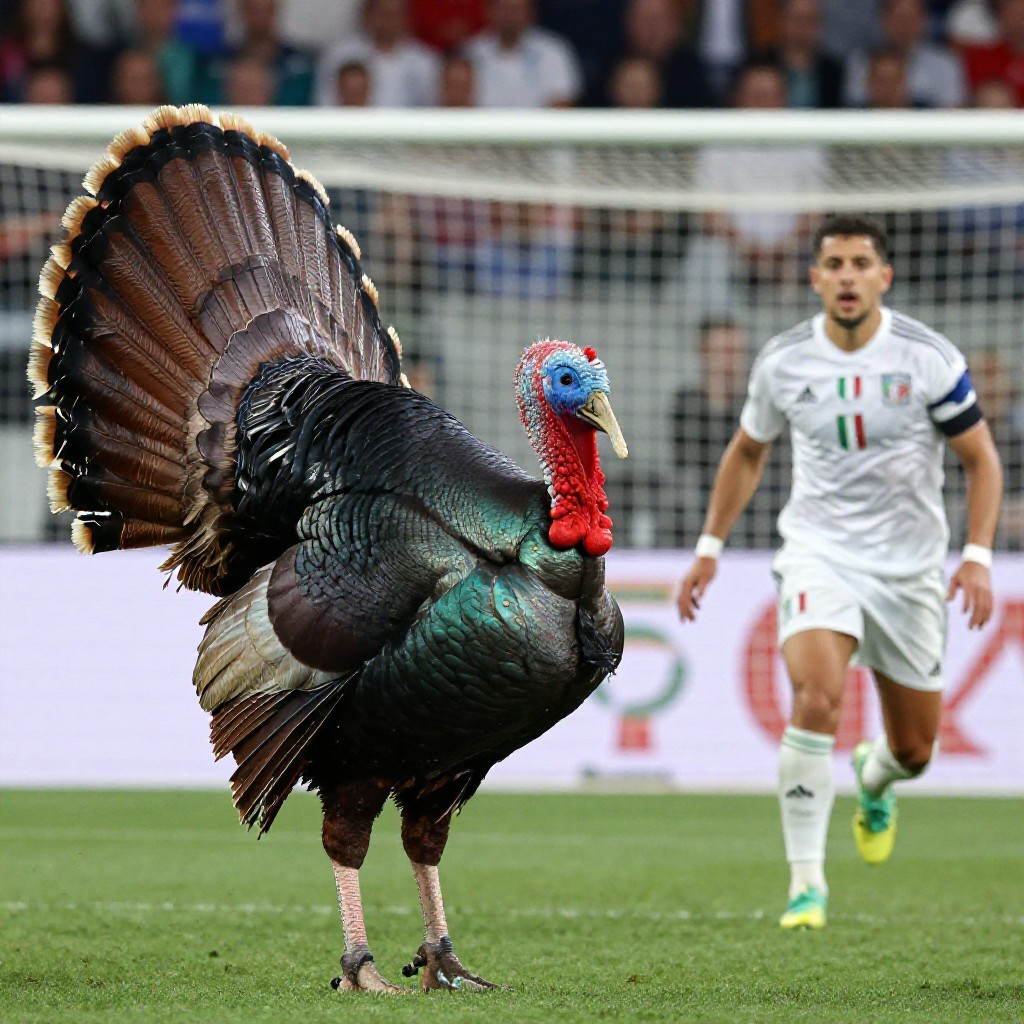
The A League and the schedule proved too much for us!
Turkey’s national team looked noticeably different in Bologna from the side that had appeared in Bursa a week earlier. Injuries and suspensions forced changes, but they also created openings for players who might otherwise have had to wait for their chance. Ozan Kabak started in central defence, Ferdi Kadıoğlu was deployed on the right, and Eren took up the left-sided role. The reshaped lineup brought greater energy and helped Turkey spend more time in the opposition half.
For a spell, the approach seemed to be working. Turkey won corners, pushed forward in waves and created a series of attacking situations. Italy were unable to press and dominate in the same way they had in Bursa. That was a meaningful improvement, even if it did not ultimately change the result.
The bigger problem was Turkey’s decision to operate without a recognised centre-forward for so long. Vincenzo Montella appeared to believe that İrfan Can, Yunus and Aral could unsettle the Italian defence through movement and quick combinations. But the passes intended for them often failed to arrive, leaving the attacking plan short of a reliable connection between midfield and the final third.
Aral was the exception. He found promising positions and scored, giving Turkey a genuine threat at moments when the rest of the forward line struggled to make an impact. Yet one player’s contribution could not compensate for the wider difficulty of turning possession and pressure into consistent chances.
Montella persisted with the setup for around 70 minutes, apparently expecting the plan to produce a breakthrough. His thinking was understandable: Italy’s defenders were tall and physically imposing, and a more mobile attacking trio might be able to exploit the space around them. To a degree, Turkey did manage to trouble the defence. But creating occasional openings is not enough when the team cannot sustain pressure or deliver the ball to its attackers regularly.
Italy, meanwhile, had a deeper supply of centre-forwards to call upon. Their coach could make changes and introduce another option when the first choice was withdrawn. Turkey did not have the same flexibility, making the lack of a conventional striker more conspicuous as the match wore on.
The defeat also raises questions about the team’s preparation and direction. The national side that had earned a place at the World Cup appeared to have lost much of its confidence and cohesion in only four months. Injuries and suspensions can explain some of the changes, but they cannot account for every weakness in the performance. A team needs clear alternatives when key players are unavailable, and Turkey did not look fully prepared to adapt.
The pressure is not limited to the players. The Turkish Football Federation continues to face a serious lack of public confidence, and simply holding firm is unlikely to restore trust. Support depends on credible decisions, clear communication and visible progress. Without those, frustration will deepen regardless of the team’s results.
Montella, too, has little goodwill left to draw on. The coach must now be judged on what the team delivers, not on explanations for what went wrong. His tactical choices, substitutions and ability to respond when a plan stalls will all come under greater scrutiny. The Bologna match showed that Turkey could generate energy and apply pressure, but also that the team still lacks a dependable way to turn those strengths into goals.
The schedule may have added to the strain, particularly with the squad disrupted by absences. But a demanding calendar is part of international football, and successful teams must be able to manage it. That means using the full squad, preparing more than one attacking structure and ensuring that players understand their roles before circumstances force changes.
Turkey’s promising spells in Bologna should not be dismissed. The team pressed higher, created more activity in the attacking third and looked more competitive than it had in Bursa. Those are foundations to build on, not reasons to overlook the problems. The next step is to make the improvement repeatable: find a more effective route to goal, provide better service to the forwards and react sooner when the original plan is not working.
There was no clear standout player of the match. Aral’s goal and attacking movements were among the few bright points, while the team’s overall performance remained too uneven to identify a decisive individual. Turkey showed signs of life, but not enough consistency to escape defeat-and the gap between promise and results is now the central issue.