Scientists Search for Clues to Mars in the Depths of Lake Van
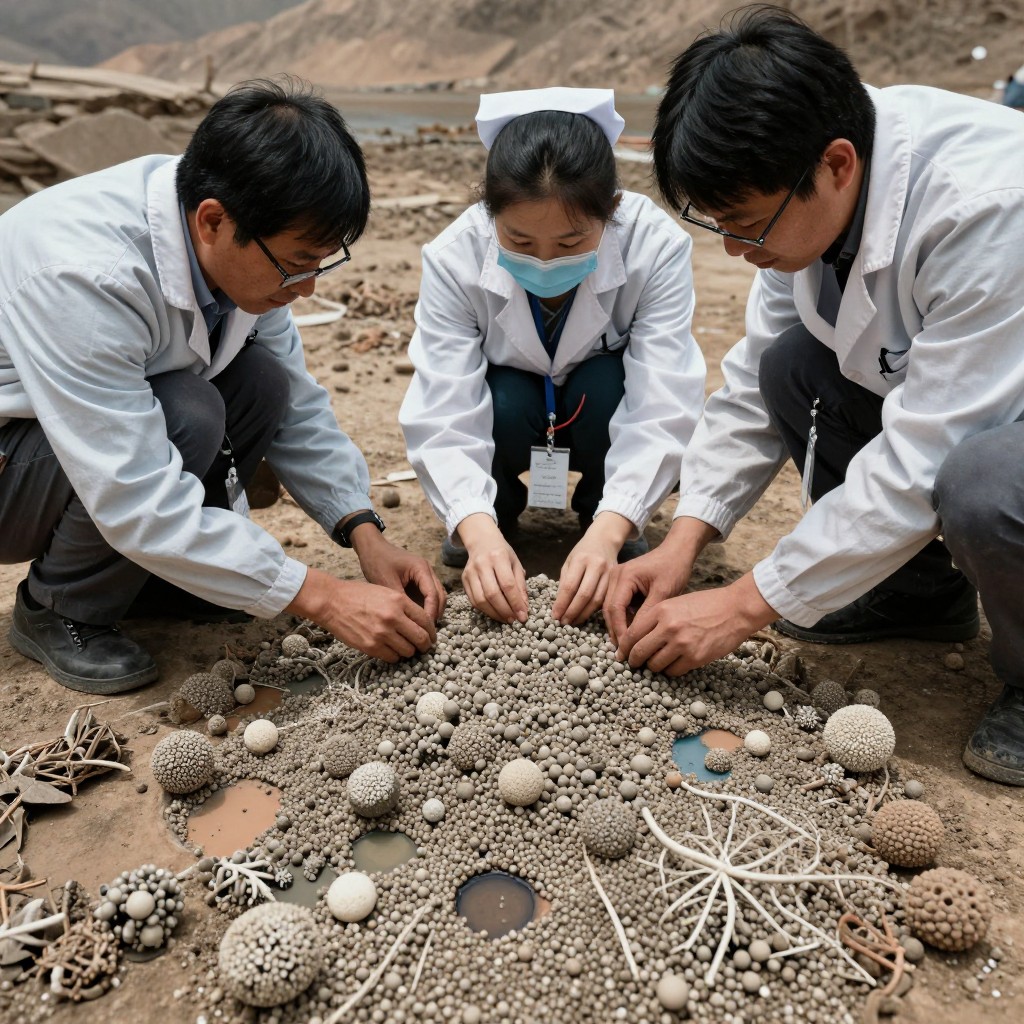
An international research team is investigating how tiny carbonate spheres form within microbial structures in Lake Van, eastern Türkiye. By studying these formations, researchers hope to better understand geological processes that may also have occurred on Mars.
Samples collected from the lake will first be examined in laboratories and compared with material from Türkiye’s Lake Salda. If samples returned from Mars become available as anticipated, the team plans to assess those as well. The comparison could help scientists distinguish similarities from differences between carbonate formations created in Earth’s lakes and those found in extraterrestrial environments.
The project, titled “Investigating the Origin of Carbonate Nanospheres in Biofilms Developing on Modern Microbialites in Lake Van,” brings together researchers from Van Yüzüncü Yıl University, Pamukkale University, the University of Warsaw in Poland, the University of Calabria in Italy and China University of Geosciences. Van Yüzüncü Yıl University’s Scientific Research Projects Coordination Unit is supporting the study.
Researchers recently carried out fieldwork near Altınsaç, a neighbourhood in the Gevaş district. They dived at several locations and gathered microbialite samples for analysis at laboratories in different countries. Lake Van is known for its submerged historical remains and microbialites-towering, pillar-like structures-as well as its wider underwater ecosystem.
Project leader Çetin Yeşilova, an associate professor in the geology engineering department at Van Yüzüncü Yıl University, said the team first selected sampling sites and then worked out the depths and frequency of collection. Samples were taken both from accessible shallows and from deeper areas reached by boat.
The material has been placed in Falcon tubes and preserved with glutaraldehyde under suitable conditions before being transported for laboratory work. Researchers plan to collect additional samples from other selected sites before beginning a broader analysis. Their central aim is to determine how the carbonate nanospheres originate and develop within microbialite biofilms.
Once the origin and formation process of the spheres are better understood, the findings can be compared with samples from Lake Salda. The team also hopes to include material from Jezero Crater on Mars, but those samples are not yet available. Their arrival is expected in 2029, so a direct comparison with Martian material would take place only after it reaches Earth. In the meantime, the researchers can begin by examining the Lake Van and Lake Salda samples.
Ezher Tagliasacchi, an associate professor in Pamukkale University’s geology engineering department, said the fieldwork focused on locating microbialite areas, collecting specimens and carrying out necessary measurements. Researchers recorded the lake water’s pH, temperature and dissolved oxygen levels, alongside the sample collection.
The project involves specialists with different areas of expertise, including biologists and biochemists from several countries. Combining field observations with laboratory analysis is intended to provide a fuller picture of how the structures form and what conditions influence their development.
Miroslaw Slowakiewicz, a professor at the University of Warsaw, said the fieldwork was an important step in the investigation. He noted that both Lake Van and Lake Salda have pH levels close to 10, making their waters highly alkaline. Such conditions are considered extreme and can make life difficult, although some microorganisms are adapted to survive in them.
That environmental similarity makes the two Turkish lakes valuable subjects for comparison. Studying how microbial communities function in alkaline water may help researchers interpret the mineral structures they leave behind. It may also help determine whether carbonate formations can serve as reliable indicators of biological activity-or whether similar features could arise through non-biological geological processes.
Microbialites form through interactions between microorganisms and minerals in water. As microbial communities grow, they can influence the precipitation and accumulation of minerals, gradually building structures that preserve evidence of environmental conditions. Their layered or clustered forms can therefore offer clues about the chemistry of the water and the processes operating when they developed.
The tiny scale of the carbonate spheres is one reason detailed laboratory work is essential. Field measurements establish the conditions at the collection sites, while microscopy and geochemical analysis can reveal the spheres’ composition, structure and relationship to surrounding biofilms. Comparing results across locations may show whether the formations share a common origin or reflect different local conditions.
Research on Earth-based analogues does not, by itself, prove that life existed on Mars. Instead, it helps scientists develop methods for interpreting Martian rocks and minerals and for identifying features that merit closer investigation. Understanding how carbonate structures form in environments such as Lake Van could make future analyses of Martian samples more precise.
The study is therefore intended to build its conclusions in stages: document the lake environment, analyse the collected material, compare it with Lake Salda, and, if Mars samples become available, extend the investigation beyond Earth. The current fieldwork provides the foundation for that longer-term effort.