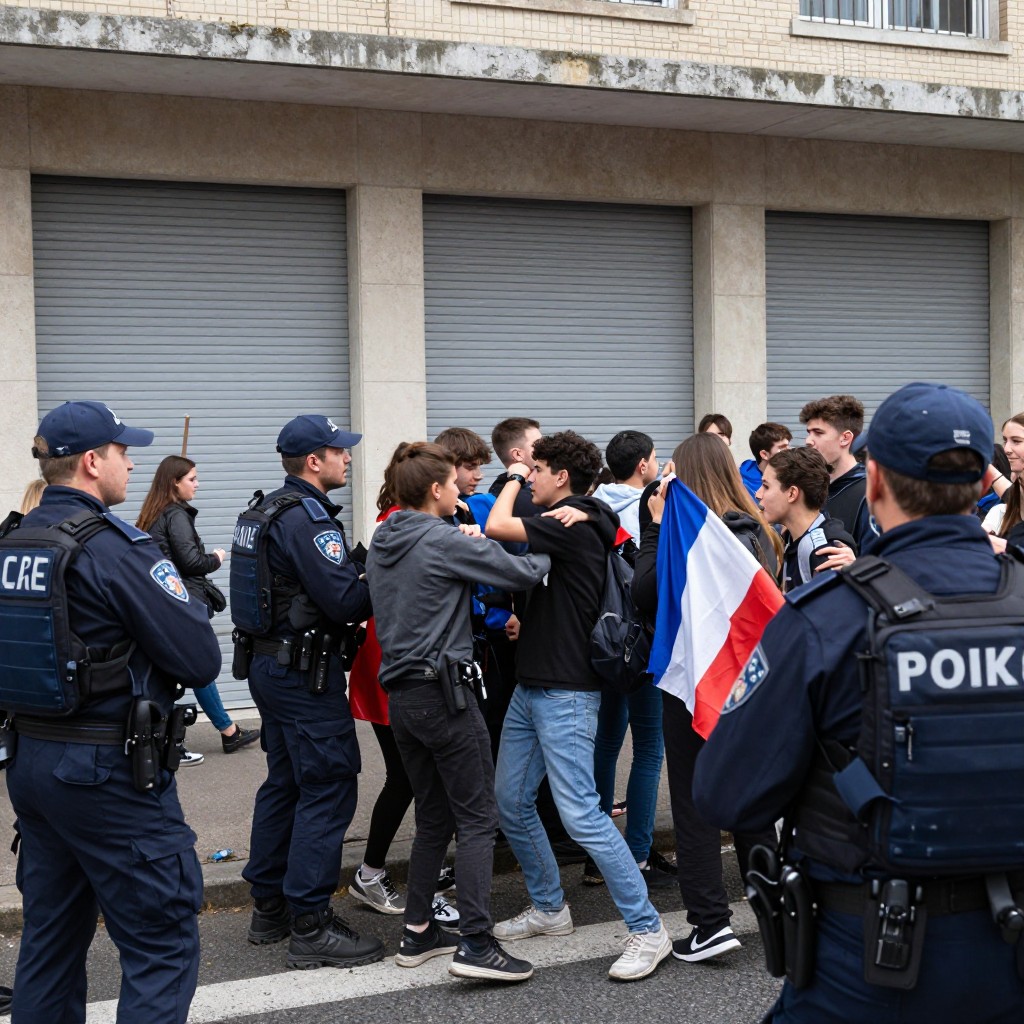
Student Protests in France Escalate into Clashes as Around 400 Schools Close
Student demonstrations over conditions in France’s schools have spread beyond Paris and, in several areas, turned violent. Around 400 schools suspended classes temporarily as authorities responded to unrest, while nearly 2,000 people-most of them students, according to the justice minister-were taken into custody after the protests began.
The demonstrations first emerged in the Paris region last month. Students were protesting a shortage of teachers and the poor condition of school buildings. As the movement expanded to other parts of the country, incidents grew more serious, and dozens of people were reported injured.
Justice Minister Gérald Darmanin said that a small but active group of participants had engaged in violence. He also questioned whether all those involved were actually high school students. Darmanin said approximately 2,000 people had been arrested since the start of the demonstrations.
The minister argued that some actions had moved beyond student protest and were disrupting public order. He cited reports of buses being targeted and schools set on fire, saying such incidents could no longer be treated as ordinary demonstrations.
A source close to Prime Minister Sébastien Lecornu said intelligence officials, during a crisis meeting, had alleged that left-wing politicians-including members of the left-wing party La France Insoumise, or LFI-helped set the protest movement in motion. LFI lawmaker Louis Boyard rejected the accusation in comments to French broadcasters.
Authorities said fires had been deliberately started at at least two high schools. In Marseille, in the south of France, petrol was accidentally spilled on teachers at another school. In Strasbourg, in the east, at least one vehicle was set alight. Clashes between riot police and young people were also reported in Toulouse in the southwest.
The unrest has extended beyond France. High school students in the Belgian city of Liège also began protesting, and local media reported that officials closed every school in the city for the day.
The temporary shutdowns underline how quickly demonstrations tied to education can affect daily life. When schools close, students lose classroom time, families may need to arrange childcare, and staff have to manage safety concerns alongside the disruption to lessons. The impact is likely to be greatest for pupils who already have limited access to support or stable learning conditions.
At the heart of the protests are problems that can have lasting consequences for education: too few teachers and buildings in need of maintenance. Staff shortages may mean larger classes, fewer available lessons or heavier workloads for existing teachers. Poorly maintained facilities can also make it harder to provide a safe and comfortable environment for students and employees.
The distinction between peaceful protest and violence has become central to the government’s response. Demonstrations over school conditions can draw attention to concerns that students believe are not being addressed, while arson, attacks on vehicles and confrontations with police create immediate risks and may weaken public support for the movement. Officials have emphasized the security situation; the accusations about political involvement, however, remain disputed.
For schools to resume normally, authorities will need to assess damage, confirm that buildings are safe and determine how missed classes can be addressed. A lasting resolution would also require attention to the concerns that prompted the demonstrations. Reopening campuses may restore the timetable, but it will not by itself resolve shortages of teachers or repair neglected facilities.
The events in France and Liège show that education-related protests can quickly cross local and national boundaries. Whether tensions ease will depend not only on public-order measures but also on whether students and school staff see practical progress on the issues behind their complaints.