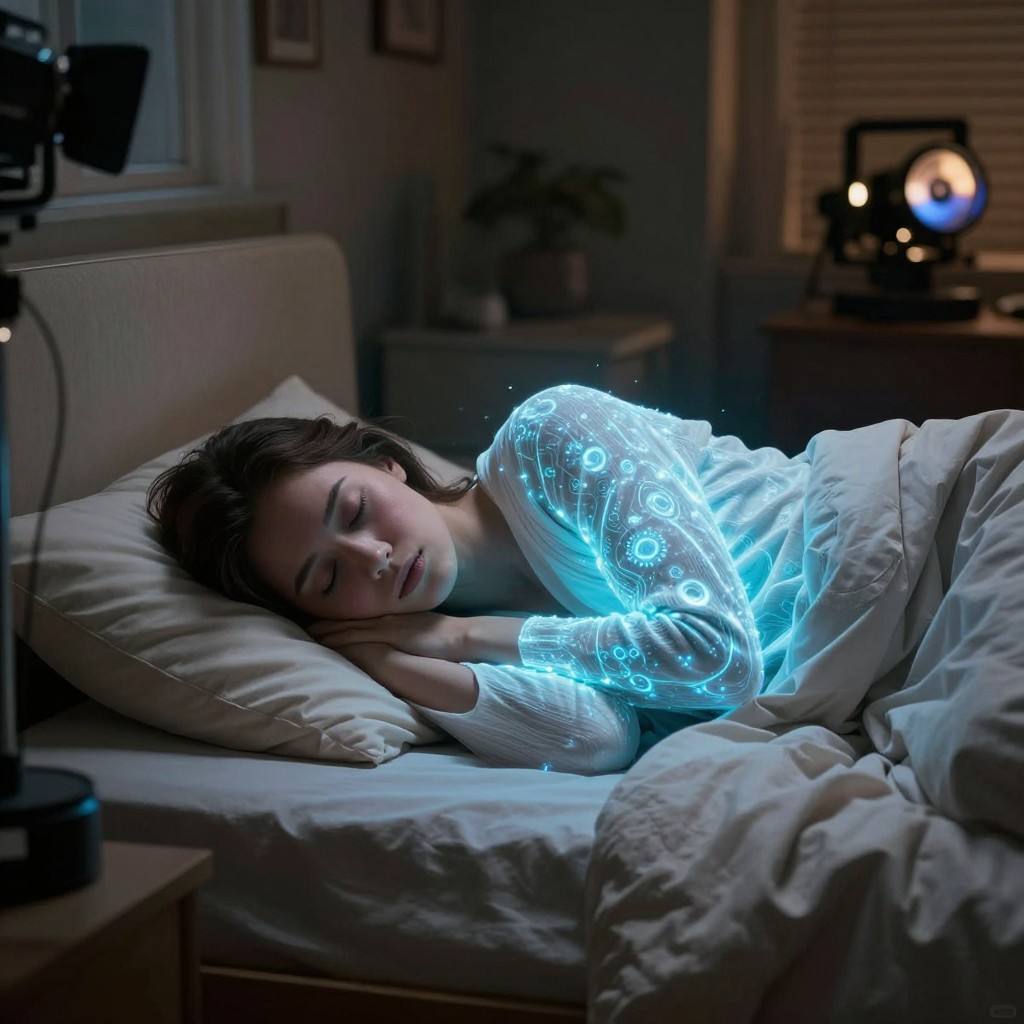
“The Sleeping Woman” Is Set to Spark a New Debate
Cinema has repeatedly reinvented itself as technology has changed the way films are made and watched. Now, artificial intelligence is pushing the industry toward another turning point. The Turkish production *The Sleeping Woman* has been selected for the main competition of Germany’s Cottbus Film Festival, drawing attention as the first AI-made feature to compete in the main program of a prestigious international festival.
The selection raises a question that reaches beyond one film: could artificial intelligence eventually replace traditional film crews and leave cinema professionals without work? The debate is no longer limited to distant predictions about technology. It is becoming a practical issue for filmmakers, performers and the many specialists who bring a production to life.
Cinema’s relationship with innovation stretches back to the Lumière brothers’ 1895 film *Arrival of a Train at La Ciotat Station*. Since then, new tools have repeatedly altered the medium’s possibilities. Yet the arrival of AI-generated feature films represents a more fundamental shift: software can now contribute not only to individual visual effects, but to the creation of an entire cinematic world.
*The Sleeping Woman* is a semi-autobiographical work by multidisciplinary artist Gizem Avcıoğlu, who is known internationally as Vikki Bardot. Inspired by a work by Georges Perec, the film took two years to develop and was assembled from a pool of more than 50,000 images. Its selection for Cottbus marks a move for AI cinema beyond experimental settings and into the international festival arena. The film is also expected to be shown in Turkey.
Founded in 1991, the Cottbus Film Festival is known for championing emerging talent in Central and Eastern European cinema. Its history includes early feature films by directors such as Andrey Zvyagintsev, Cristian Mungiu, György Pálfi and Danis Tanović.
Festival director Bernd Buder described *The Sleeping Woman* as a film about the dilemmas of a society that is surrounded by information yet increasingly disconnected. He praised its combination of analytical focus, personal perspective and control of narrative, as well as the striking visual language developed by Bardot and Avcıoğlu. In his view, the film uses innovative technical tools to deliver a critique of media and offers the kind of fresh perspective that has been missing for some time.
For Avcıoğlu, one of AI’s most significant contributions may be the creative freedom it can give independent filmmakers. Artists who would struggle to secure conventional financing could use these tools to realise personal, formally ambitious projects. By reducing reliance on large budgets and extensive production infrastructure, AI may allow small teams-and even individual filmmakers-to tell stories that would otherwise remain unrealised.
That possibility could also change the director’s role. Instead of producing every element through a large crew, a filmmaker may work by shaping, selecting and refining the many options generated by AI. In this model, the director becomes less a sole maker and more an artistic curator, responsible for deciding which images and ideas serve the story.
The potential savings are particularly relevant to Turkish cinema, where limited budgets can make ambitious productions difficult to mount. AI tools could help filmmakers test visual concepts, create complex environments or complete projects with fewer resources. They may also give emerging artists a way to develop distinctive work without depending entirely on traditional financing.
But lower production costs do not automatically mean that filmmaking becomes inexpensive or accessible to everyone. AI systems, computing power and skilled technical labour can all carry significant costs. A production still needs a coherent script, artistic direction, editing and sound design. The technology may lower some barriers while creating others, and it cannot guarantee that a film will be compelling simply because it can produce images quickly.
There are also serious questions about copyright and consent. AI models are trained on vast collections of material, and disputes may arise over whether the images, performances or styles used in that training were included with permission. If a system reproduces the work of artists without their agreement, the issue is not just technical: it concerns ownership, compensation and fairness across the industry.
Employment is another source of concern. If AI tools take on tasks traditionally performed by actors, camera operators, lighting technicians, sound professionals and other crew members, some jobs could be reduced or changed. At the same time, new work may emerge in areas such as AI-assisted production, image selection and digital workflow management. The challenge will be ensuring that innovation does not leave existing workers without protections or a meaningful role.
The practical future is likely to involve a mix of human and machine contributions rather than an immediate disappearance of conventional filmmaking. Directors, writers and performers may use AI to expand what they can create, while production teams establish rules for credit, consent and payment. How those rules are developed could determine whether the technology strengthens independent cinema or concentrates creative control in the hands of a few companies.
For Turkey, *The Sleeping Woman* provides an early example of how AI can be used to approach a feature-length story, but one film cannot settle the wider debate. Its festival journey will help test whether audiences and industry professionals are prepared to treat AI-assisted work as cinema in its own right. The central question is not only what machines can make, but who controls the tools, whose work they draw upon and who benefits from the results.
As AI-generated films move from experimentation toward festivals and theatrical releases, the industry will have to address both their creative promise and their costs. *The Sleeping Woman* brings that discussion into focus: technology may open new doors for filmmakers working with limited means, but it also makes questions of labour, authorship and artistic responsibility harder to ignore.