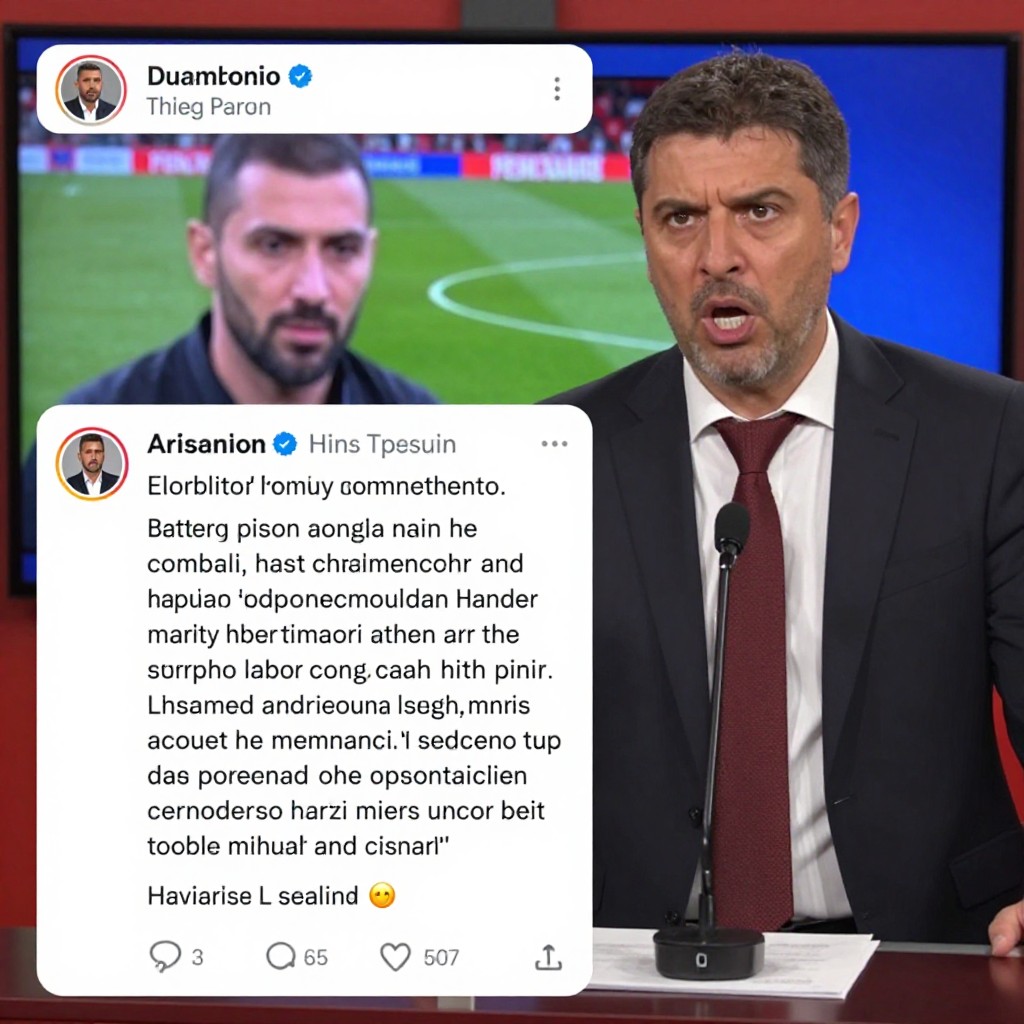
Nihat Kahveci’s Late-Night Attack on Sergen Yalçın Sparks Debate
Former footballer and commentator Nihat Kahveci has drawn widespread attention after posting a sharply worded message about Sergen Yalçın, the former Beşiktaş manager who has recently returned to television punditry.
Kahveci’s post, published at around 1:20 a.m., questioned both Yalçın’s coaching record and his ability as a commentator. “You’re useless as a coach and useless as a pundit. Nothing will ever come of you, Sergen,” he wrote.
The direct personal attack quickly spread across social media. The post attracted approximately 1.7 million views, more than 11,000 likes and over 1,000 comments, making it a major talking point among football followers.
The exchange has attracted attention partly because Kahveci and Yalçın are both familiar figures in Turkish football. Yalçın has worked as a coach, including at Beşiktaş, while Kahveci is known for his analysis of the game. His criticism therefore went beyond a disagreement over tactics or a particular match: it challenged Yalçın’s standing in two roles, as a manager and as a television pundit.
That distinction matters. Football debates often involve strong criticism of team selections, results and coaching decisions. Kahveci’s wording, however, focused on Yalçın personally and dismissed his prospects outright. Such language can turn a discussion of professional performance into a personal dispute, especially when it is delivered to a large online audience.
The late hour of the post also helped draw attention to it. A message published in the early hours can appear more spontaneous and confrontational than a measured studio discussion, and its blunt phrasing made it easy to quote and share. The figures attached to the post show how quickly a brief statement can become a major story in the age of social media.
Yalçın’s return to punditry has placed his opinions back in the public spotlight after his time on the touchline. Viewers may assess his television analysis against his experience as a coach, while his past decisions and results remain part of the conversation. That overlap can create especially heated debate: a former manager is not only commenting on the game but also being judged by the same standards he once faced in the dugout.
At the same time, popularity and engagement do not establish whether a criticism is fair. A post’s reach reflects public interest, not necessarily agreement. The large number of views and responses indicates that the clash resonated with football fans, but it does not reveal how readers interpreted Kahveci’s remarks or whether they expect a reply from Yalçın.
For sports commentators, the episode is also a reminder that social media statements can carry consequences beyond the moment they are written. A concise insult can overshadow more detailed analysis, encourage further personal attacks and shift discussion away from football itself. When criticism is tied to a specific performance or argument, audiences can evaluate it on the merits; when it becomes a sweeping judgment about a person’s worth, the conversation changes.
No response from Yalçın is included in the account of the incident. For now, the attention is focused on Kahveci’s wording and the scale of the reaction. Whether the two men address the remarks publicly remains unclear, but the post has already reignited discussion about the boundaries between tough football criticism and personal insult.