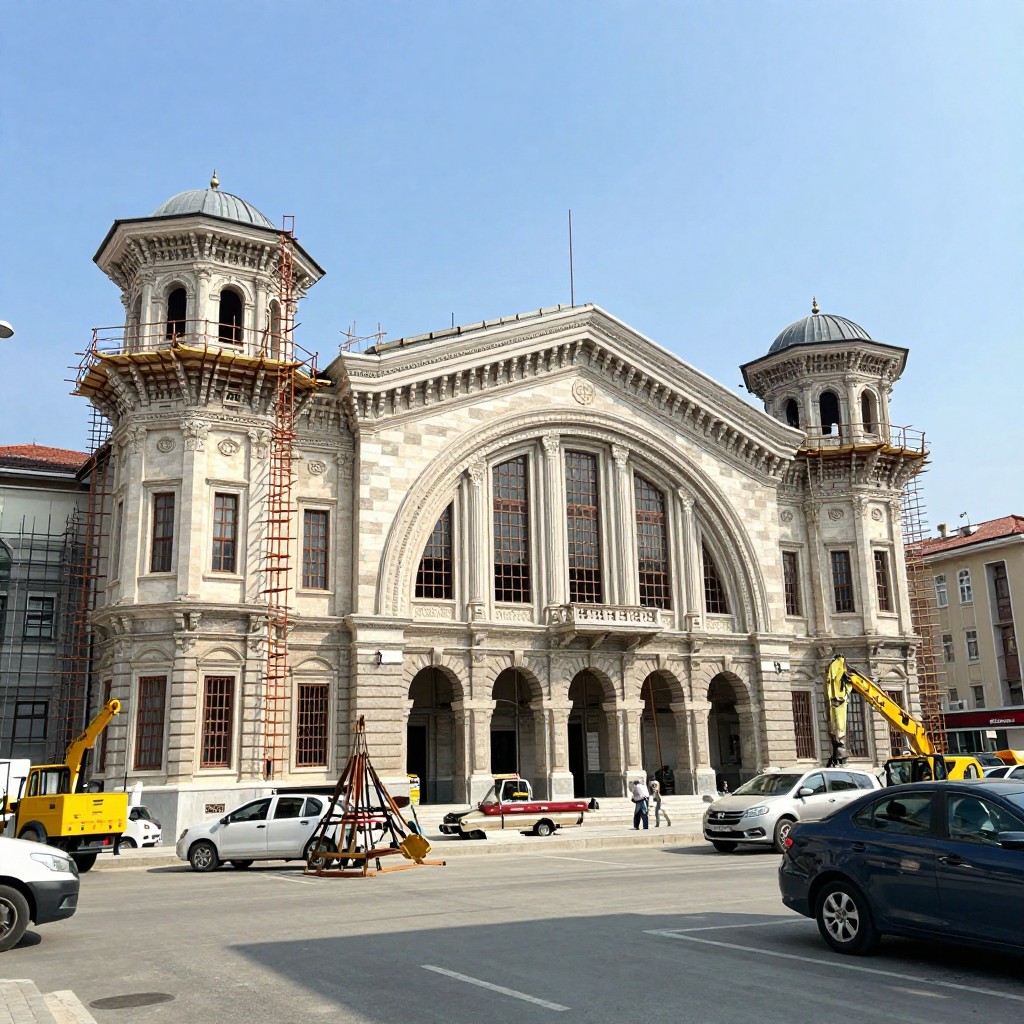
When Will the Restoration of Haydarpaşa Train Station Be Completed?
The restoration and structural reinforcement of Istanbul’s historic Haydarpaşa Train Station are continuing under a revised timetable. According to Culture and Tourism Minister Mehmet Nuri Ersoy, the first phase of the project is now expected to be completed during 2027.
The schedule was changed after detailed engineering studies revealed serious risks beneath the historic building. Researchers examined the station’s original construction plans and found that approximately 1,000 wooden piles had been placed beneath the foundations during the initial construction. These piles were between 8 and 21 meters long and measured roughly 50 to 90 centimeters in diameter.
Georadar investigations showed that only about 200 of the original piles could still be identified at the site. Technical assessments indicated that nearly 80 percent of the wooden supports had disappeared over time. This finding led experts to carry out a broader evaluation of the building’s foundation and the surrounding ground.
Major Ground Risks Identified
The investigations included drilling, field and laboratory tests, geophysical measurements and continuous instrumental monitoring. Specialists determined that the ground belongs to the ZF category and consists partly of heterogeneous fill and liquefiable sand.
Because the soil is loose and saturated with water, it carries a significant risk of liquefaction. In the event of an earthquake or another major ground movement, this could cause the soil to lose strength. The resulting effects might include settlement beneath the station and lateral spreading toward the surrounding areas.
Such risks are particularly important for Haydarpaşa because the building is a historic structure with considerable architectural and cultural value. Any intervention must therefore improve its resistance without damaging its original character.
Foundation and Soil Reinforcement
A soil improvement and structural reinforcement project was prepared by specialist engineers. The proposal was reviewed by academic experts and approved by the relevant advisory bodies before implementation.
As part of the work, bored piles were installed around the structure, while injection techniques were used to strengthen the ground. These applications aim to increase soil stability, reduce the risk of settlement and limit possible horizontal movement.
The building has also been monitored continuously with technical instruments. Specialists have observed its behavior throughout the construction process, allowing the teams to identify any unexpected movement and adjust the work accordingly. This controlled approach has been one of the main reasons why the restoration has required more time than initially anticipated.
Why Was the Opening Date Delayed?
The first phase had previously been associated with the beginning of the Istanbul Culture Route Festival. However, the sensitive reinforcement operations, additional scientific analyses and revisions to the construction plans resulted in a new timetable.
The discovery of new remains in the archaeological park area also required changes. Plans for underground infrastructure, visitor routes and the organization of the archaeological site were revised to ensure that the findings could be protected and displayed properly.
In addition, moving existing functions and preparing some areas for construction affected the order in which the works could begin. These logistical procedures created further delays, although they are considered necessary for the safe and sustainable completion of the project.
Haydarpaşa to Become a Cultural Destination
The restored Haydarpaşa complex is expected to serve more than its original function as a railway station. The site is planned to become a major cultural and artistic destination, combining the historic station building with exhibition, public and archaeological spaces.
The archaeological park will form an important part of the visitor experience. Newly identified remains may provide additional information about the history of the area, while redesigned walking routes are intended to allow visitors to see the discoveries without putting them at risk.
The project is also expected to strengthen the connection between the station, the waterfront and Kadıköy’s wider cultural landscape. Once completed, the area could host exhibitions, artistic events and educational programs alongside its historical functions.
What Is Known About the 2027 Target?
The 2027 date refers to the expected completion of the first phase rather than the end of every planned activity across the entire Haydarpaşa site. The scope and timing of later stages may depend on archaeological findings, technical evaluations and the progress of infrastructure works.
A phased opening would allow parts of the complex to become accessible while work continues in other sections. This approach could also help authorities test visitor routes, security arrangements and the operation of cultural facilities before the entire project is finalized.
The final completion date may therefore be influenced by additional discoveries, construction conditions and the need to preserve the historic structure. Officials have emphasized that safety and conservation take priority over completing the project according to an earlier calendar.
Preservation Takes Priority
Haydarpaşa Train Station is one of Istanbul’s most recognizable landmarks, and restoration work must balance modern safety requirements with the preservation of its historical identity. The problems found beneath the building demonstrate why detailed research was necessary before major interventions could proceed.
The discovery that most of the original wooden piles could no longer be located made it clear that the station required a carefully designed reinforcement strategy. Likewise, the liquefaction risk meant that simply repairing visible architectural elements would not have been sufficient.
For this reason, the restoration is being carried out as a combination of foundation reinforcement, soil improvement, architectural conservation and archaeological protection. The first phase is targeted for completion in 2027, while the broader transformation of the site will continue according to the results of technical and cultural studies.