“İnönü Stadium Is Truly the Poetry of Football”
Sports commentator Barış Yurduseven has offered a heartfelt assessment of Beşiktaş’s identity, highlighting the emotional bond between the club and its supporters. According to him, the essence of Beşiktaş cannot be understood solely through its players, results or trophies. The real story begins in the stands, where passion, loyalty and longing have shaped the club’s character for generations.
Speaking about the feelings experienced by Beşiktaş fans, Yurduseven referred to a line associated with poet Birhan Keskin: “I have nothing to celebrate without you.” He suggested that these words reflect the emotions of Beşiktaş supporters more accurately than any song traditionally heard in the stadium.
“The songs are only an excuse,” Yurduseven said. “Their lyrics are not really the point. Beşiktaş supporters are expressing that same feeling: ‘I have nothing to celebrate without you.'” His interpretation emphasizes how deeply the club is intertwined with the personal lives of its fans. For them, Beşiktaş is not merely a football team watched on match days; it is a constant presence that gives meaning to moments of joy, disappointment and hope.
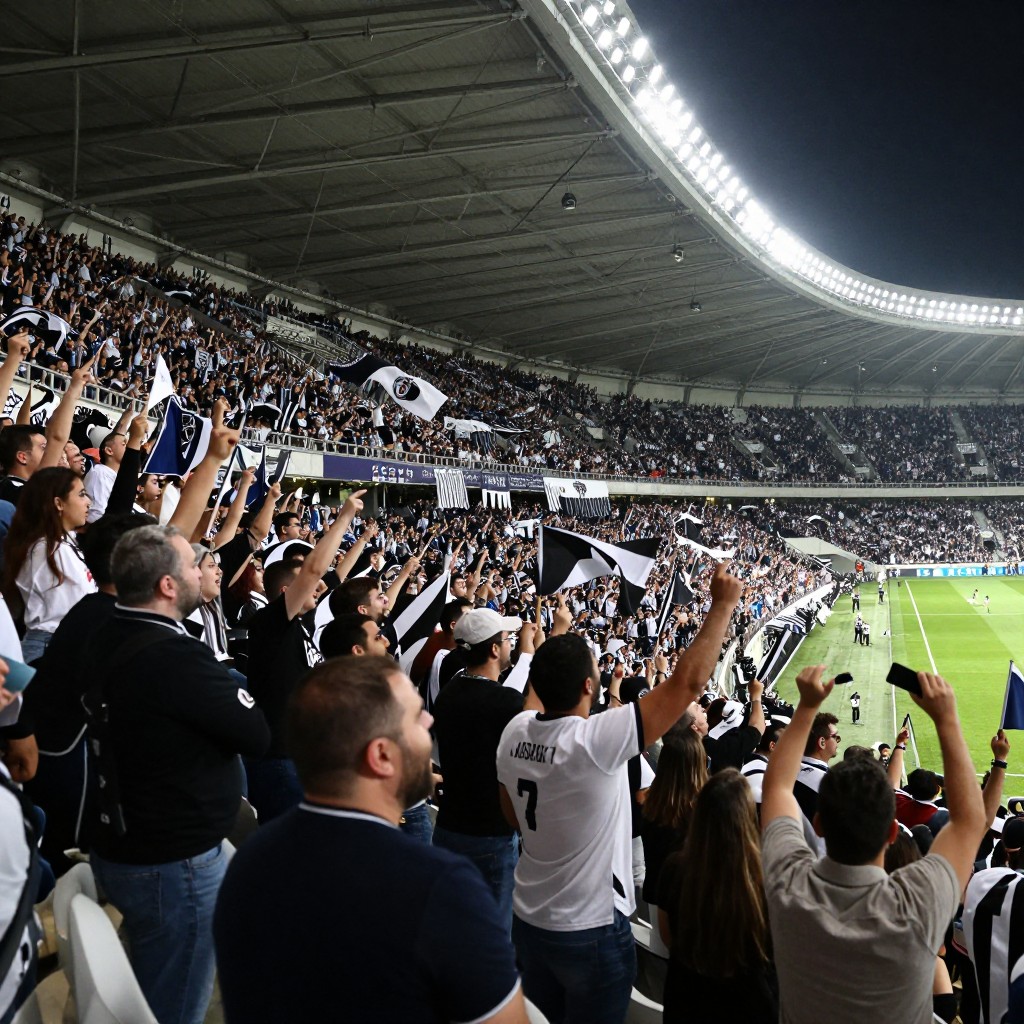
Yurduseven also underlined the special role of the supporters’ section in defining Beşiktaş. In his view, anyone asked to describe the club would naturally begin with the stands and eventually return to them.
“There is that longing and that passion,” he explained. “If someone asked you to tell the story of Beşiktaş, you would start with the stands and finish with the stands. Everything else comes and goes. You will always see the rest of it at some point.”
This perspective reflects one of the most enduring features of football culture: players and coaches may change, but the identity created by supporters remains. Strikers arrive, full-backs leave and new names take their places in the squad. Yet the atmosphere in the stands continues to carry the memory of the club and connect different generations of fans.
Yurduseven stressed that this loyalty belongs especially to İnönü Stadium. “Good strikers will come, right-backs will leave and left-backs will arrive,” he said. “But that stand is unique to İnönü. İnönü Stadium is truly the poetry of football.”
The reference to İnönü goes beyond the physical structure of a stadium. For Beşiktaş supporters, the venue represents a shared emotional archive. Important victories, painful defeats, dramatic comebacks and unforgettable chants have all become part of its mythology. Every match leaves behind memories that are passed from older fans to younger generations.
The atmosphere associated with the stadium has also helped distinguish Beşiktaş from many other clubs. Supporters do not simply react to what happens on the pitch; they often become an active part of the match. Their chanting, whistles and collective energy can influence the rhythm of a game and create pressure on opponents.
That relationship becomes especially powerful during difficult periods. When performances decline or results fail to meet expectations, the bond between the club and its fans is tested. Beşiktaş supporters may criticize the team, but their emotional attachment rarely disappears. In many cases, disappointment strengthens the sense of belonging rather than weakening it.
The contrast between temporary football figures and permanent supporter culture is central to Yurduseven’s message. A player may become a hero for a season and then move to another club. A coach may introduce a new tactical system before leaving months later. The stands, however, remain connected to the club’s historical identity.
This is why Beşiktaş’s story cannot be reduced to league positions or transfer campaigns. Statistics can describe a team’s performance, but they cannot fully explain why supporters continue to follow the club through uncertainty. The emotional language of football is built from memories, rituals and shared experiences, and Beşiktaş has an especially strong tradition in this regard.
The phrase “the poetry of football” captures the unusual combination of beauty and sadness associated with İnönü. Football is full of contradictions: celebration can coexist with heartbreak, hope with fear, and confidence with doubt. The stadium becomes the place where all these emotions are experienced collectively.
For Beşiktaş fans, attending a match is therefore more than watching ninety minutes of football. It is taking part in a tradition. The songs, flags, gestures and familiar rituals connect the present to the club’s past. Even supporters who have never witnessed certain historic matches can feel linked to them through stories repeated in the stands.
Yurduseven’s comments also point to the idea that a football club is sustained by its community. Players determine what happens on the pitch, but supporters preserve the club’s meaning beyond the final whistle. Their devotion gives Beşiktaş continuity, particularly when sporting success is not guaranteed.
The continuing passion of the fans demonstrates why Beşiktaş remains one of the most distinctive institutions in Turkish football. Its identity is shaped by history, but it is renewed every match day through the people who fill the stands. In this sense, İnönü is not only remembered as a stadium; it is experienced as a symbol of loyalty, emotion and collective memory.
For that reason, the most accurate way to describe Beşiktaş may indeed be to begin with its supporters. They embody the longing, passion and resilience that define the club. Players may change and seasons may end, but the voice of the stands continues to tell the same story: Beşiktaş is not merely a team to support, but a feeling to carry.