I Do Not Accept This Outdated Practice
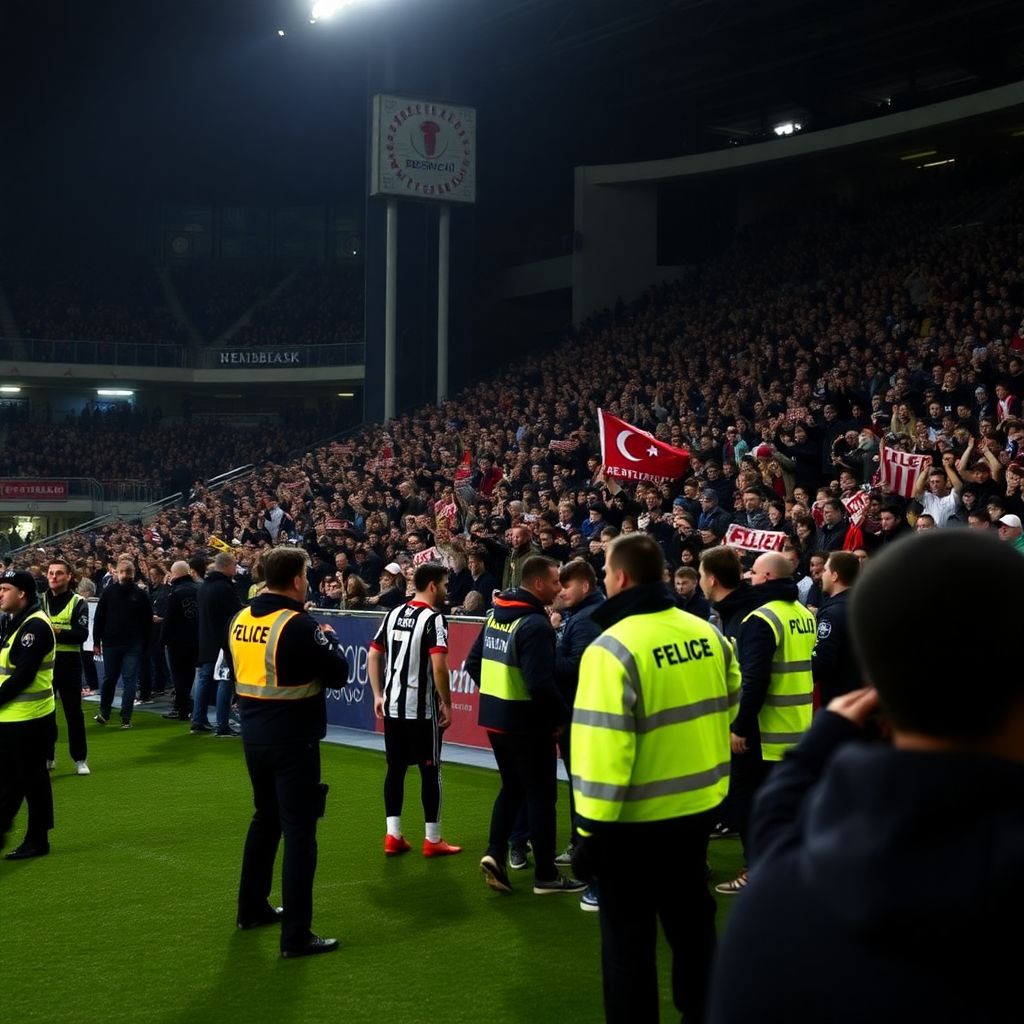
Beşiktaş and Fenerbahçe met on Saturday evening in a tense derby that brought together approximately 2,000 visiting supporters. They sang, argued, fought for their team and eventually celebrated the result. While Beşiktaş fans around the world moved on to enjoy the victory, those who had travelled to the stadium were kept inside for another 80 minutes under security measures.
Keeping away supporters in the stadium for a certain period after a high-risk match may be necessary. The purpose is to prevent clashes between rival groups and to ensure that the home crowd leaves the area safely. The problem is not the security precaution itself. The real issue is what happened during that waiting period.
For 80 minutes, the Fenerbahçe administration reportedly turned up the stadium sound system and played music loudly enough for the Beşiktaş supporters to hear continuously. This was not a short announcement or an occasional song intended to control the atmosphere. It became an extended and deliberate experience imposed on fans who were already being held inside the stadium.
That is unacceptable. Supporters who travel to an away match to encourage their club should not be subjected to such treatment after the final whistle. Rivalry belongs on the pitch and in the stands through chants, banners and sporting competition. It should not turn into an attempt to humiliate or provoke people who are unable to leave.
A similar problem had previously been discussed with Fenerbahçe executive Selahattin Baki during Ali Koç’s administration, and a solution was reached. The policy of using the stadium system against visiting supporters was abandoned, and that decision deserved recognition. However, after the changes in the club’s leadership, the same old approach appeared to return.
There may be no specific rule that clearly prohibits playing music for an extended period while away supporters are held in the stadium. Nevertheless, the absence of an explicit regulation does not make the practice acceptable. Football is governed not only by written rules but also by responsibility, restraint and respect for human dignity.
The answer should not be revenge. Beşiktaş should not respond with a theatrical promise to do exactly the same thing at the return fixture. Such an approach would merely reproduce the problem and deepen hostility between supporters. Instead, the Beşiktaş administration should be asked to ensure that no comparable action is taken after the next derby.
Justice begins with setting the right example. If one believes a practice is wrong, the correct response is not to repeat it against the other side. The first step is to behave properly and then demand the same standard from others. Protecting ordinary supporters, who are outside the direct conflict between organized fan groups, is the responsibility of every football community.
Derbies already contain enough tension. A provocative sound system, deliberately prolonged waiting or similar gestures can transform a manageable security procedure into a needless confrontation. Clubs should therefore establish clear post-match protocols: visiting fans must be informed about the waiting time, access to water and medical assistance must be guaranteed, and entertainment or announcements must not be used as a tool of provocation.
The same principle should apply to both sides. Supporters must be protected from violence, but they must also be protected from collective punishment and psychological pressure. Security measures are legitimate only when they serve safety rather than revenge.
The Skriniar-Vlahovic Incident
The confrontation between Milan Skriniar and Dusan Vlahovic was not simply a spontaneous quarrel that began in the second half. Its roots appeared much earlier. During the opening ten minutes, Skriniar challenged Vlahovic for a high ball and struck him with an elbow. The incident looked deliberate, yet referee Halil Umut Meler did not show a red card.
That decision created the conditions for the tension to grow. Vlahovic appeared to believe that he had been left to defend himself, and the situation worsened when Skriniar allegedly kicked him away from the ball after goalkeeper Ederson came out to collect a loose delivery.
Several minutes later, Vlahovic responded during another physical challenge, discreetly catching Skriniar with an elbow. From that moment, the exchange moved beyond ordinary football contact. Verbal arguments turned into pushing, aggressive gestures and head-to-head confrontation. Eventually, Skriniar appeared to put his hand around Vlahovic’s throat.
Even then, the referee did not produce a red card. Players and officials intervened to separate the two men, but the damage had already been done. A match official who fails to punish the first serious act of aggression risks allowing the situation to escalate.
The controversy continued after the incident. Skriniar made an offensive gesture toward Vlahovic, while Vlahovic answered with a hand sign that was interpreted differently by viewers and commentators. Post-match discussions focused heavily on Vlahovic and the possibility of a VAR review, while Skriniar’s gesture received considerably less attention.
That imbalance is difficult to justify. If an action is punishable, it must be assessed consistently, regardless of which player performs it or which club he represents. The referee’s evaluation cannot depend on public sympathy, media narratives or the reputation of the footballer involved.
The central question is not which player should be punished more severely. It is why the initial incidents were not handled firmly enough. A clear foul or violent action early in the match must be addressed immediately. Otherwise, players may conclude that they can settle the matter themselves.
VAR should not be used selectively after an incident has already become a media sensation. Its role is to help officials identify serious missed violations, not to amplify one visible gesture while ignoring another. Every relevant action in the sequence should be reviewed according to the same criteria.
Football authorities also need to clarify the disciplinary standards for gestures. Some signs carry a universal offensive meaning, while others may be interpreted differently depending on a player’s cultural background. That distinction should be considered, but it cannot replace a consistent disciplinary framework.
Ultimately, both incidents point to the same broader problem: football loses its authority when rules are applied unevenly. Supporters are asked to remain calm and respect the game, yet players and officials must demonstrate the same discipline. A derby can be passionate without becoming hostile, and competition can remain intense without turning into retaliation.
The message should be straightforward. Stadium restrictions must never become instruments of humiliation, and disciplinary decisions must not favor one side. Respect for supporters, equal treatment on the pitch and responsible leadership from the clubs are the only sustainable ways to preserve the spirit of football.