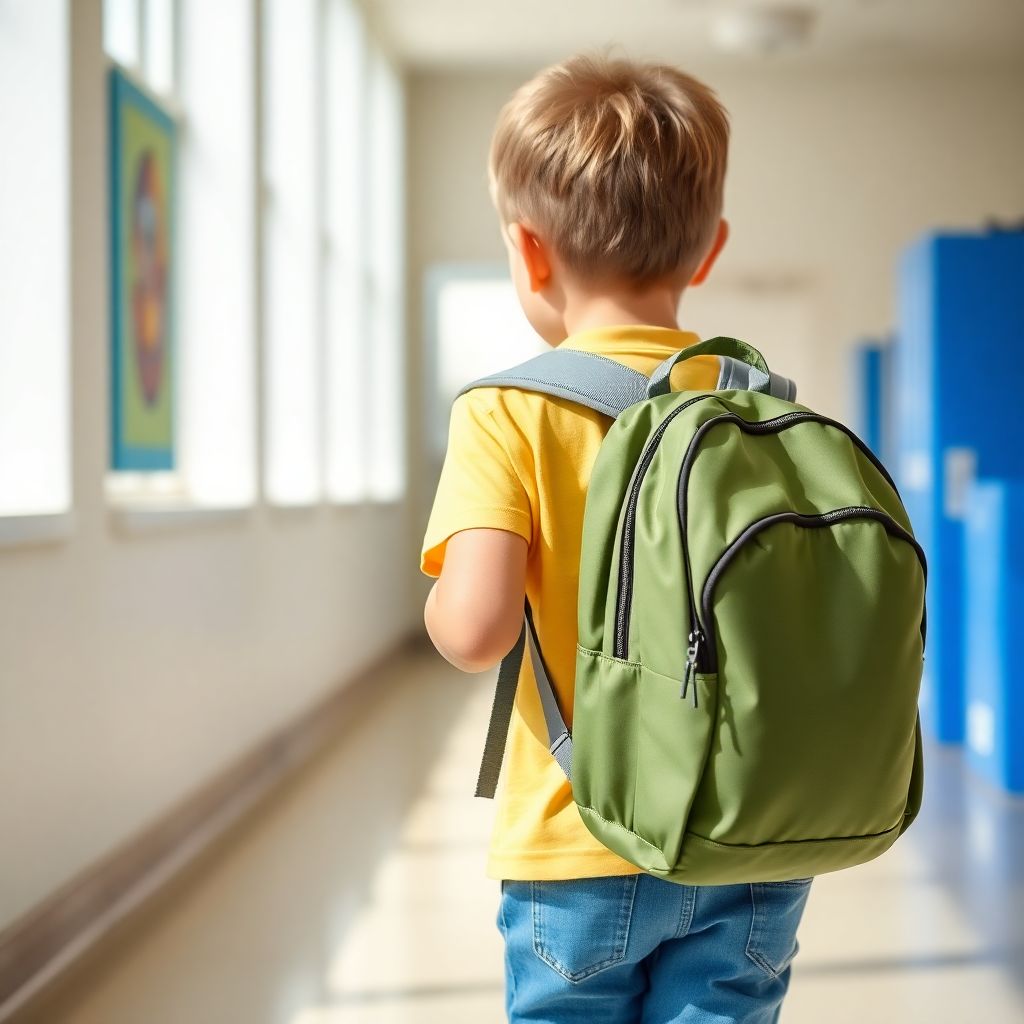
Parents Alert: The 10% Rule for Choosing a School Backpack
A school backpack may look like an ordinary item, but choosing the wrong one can affect a child’s posture, muscles and overall comfort. Orthopedic specialists warn that a backpack should not be treated simply as a container for books. Its weight, design and fit must be considered carefully, especially during the school years when children’s bodies are still developing.
The most important recommendation is straightforward: a fully loaded backpack should weigh no more than 10% of the child’s body weight. For example, if a student weighs 30 kilograms, the backpack should ideally be limited to approximately 3 kilograms. Carrying more than this on a regular basis can place excessive pressure on the shoulders, neck and spine.
Why excessive backpack weight is risky
When a child carries a heavy bag, the body often compensates by leaning forward or arching the back. This may temporarily help maintain balance, but repeated strain can lead to shoulder pain, lower-back discomfort, muscle tension and poor posture. In some cases, children may also experience numbness or tingling in their arms because of pressure on the shoulders.
The problem is not always noticeable immediately. A child may adapt to the weight and continue walking normally, while the strain gradually accumulates. Persistent discomfort, reluctance to carry the bag or visible changes in posture should therefore be taken seriously.
How to choose the right backpack
A suitable school bag should have two wide, padded and adjustable shoulder straps. Narrow straps can dig into the shoulders and concentrate the load in a small area. Padding helps distribute pressure more evenly and improves comfort during the journey to and from school.
The back section should also be firm but cushioned. A structured back panel helps the backpack remain close to the body and prevents books from pressing directly against the spine. A bag that collapses or hangs away from the back can make the load feel heavier than it actually is.
A waist or chest strap is another useful feature. These supports help stabilize the backpack and distribute part of its weight across the torso rather than leaving the shoulders to carry the entire burden.
Proper adjustment matters
Even a high-quality backpack can cause problems if it is worn incorrectly. The top of the bag should remain close to the child’s shoulders, while the bottom should sit around the waist or slightly above it. The backpack should not hang down toward the hips.
Both shoulder straps should be adjusted to the same length. Carrying the bag on one shoulder may look convenient, but doing so regularly can create an uneven load and encourage the child to tilt the body to one side. Children should be reminded to use both straps whenever possible.
Organizing books can reduce strain
The contents of the backpack are just as important as its design. Heavier books, notebooks or electronic devices should be placed close to the child’s back. Lighter objects can go into outer compartments. This arrangement keeps the center of gravity closer to the body and makes the load easier to manage.
Parents can also check the bag each evening and remove items that are not needed for the following day. Toys, unnecessary stationery, water bottles and old papers can add significant weight over time. A simple daily review may make the backpack considerably lighter.
Wheeled bags are not always the best solution
Backpacks with wheels can reduce the load on a child’s shoulders, but they are not suitable for every route. Stairs, uneven pavements and crowded corridors can make them difficult to use. Pulling a wheeled bag with one hand for long periods may also cause strain in the wrist, elbow or shoulder.
If a wheeled model is selected, it should have a stable handle, smooth wheels and an appropriate height. The child should not need to bend sideways or twist the body while pulling it.
Warning signs parents should monitor
Parents should watch for redness or marks on the shoulders, frequent complaints of back pain, changes in walking style and difficulty putting on or removing the bag. If a child regularly leans forward, lifts one shoulder or appears exhausted after carrying school materials, the backpack may be too heavy or poorly adjusted.
Pain that continues after the bag has been lightened should not be ignored. In such cases, consulting a healthcare professional can help determine whether the problem is related to the backpack or requires further evaluation.
Schools can help prevent the problem
Reducing backpack-related strain is not solely a family responsibility. Schools can support students by providing lockers, digital copies of certain materials or classroom storage for books that do not need to be carried home. Coordinating homework schedules may also prevent children from having to transport every textbook each day.
Teachers and school administrators can periodically remind students about correct backpack use. A short check of the bag’s weight and strap adjustment can be especially useful at the beginning of the academic year.
A practical checklist
Before purchasing or using a school backpack, parents should check whether:
– its loaded weight stays within 10% of the child’s body weight;
– the shoulder straps are wide, padded and adjustable;
– the back panel is supportive and comfortable;
– the bag sits close to the body;
– heavier items can be positioned near the back;
– a chest or waist strap is available;
– the child uses both shoulder straps;
– unnecessary items are removed regularly.
The 10% guideline is a useful starting point, not a reason to ignore discomfort. Every child’s physical development and daily route are different. A lightweight, properly fitted backpack, combined with sensible organization and regular monitoring, can help protect posture and make the school day more comfortable.