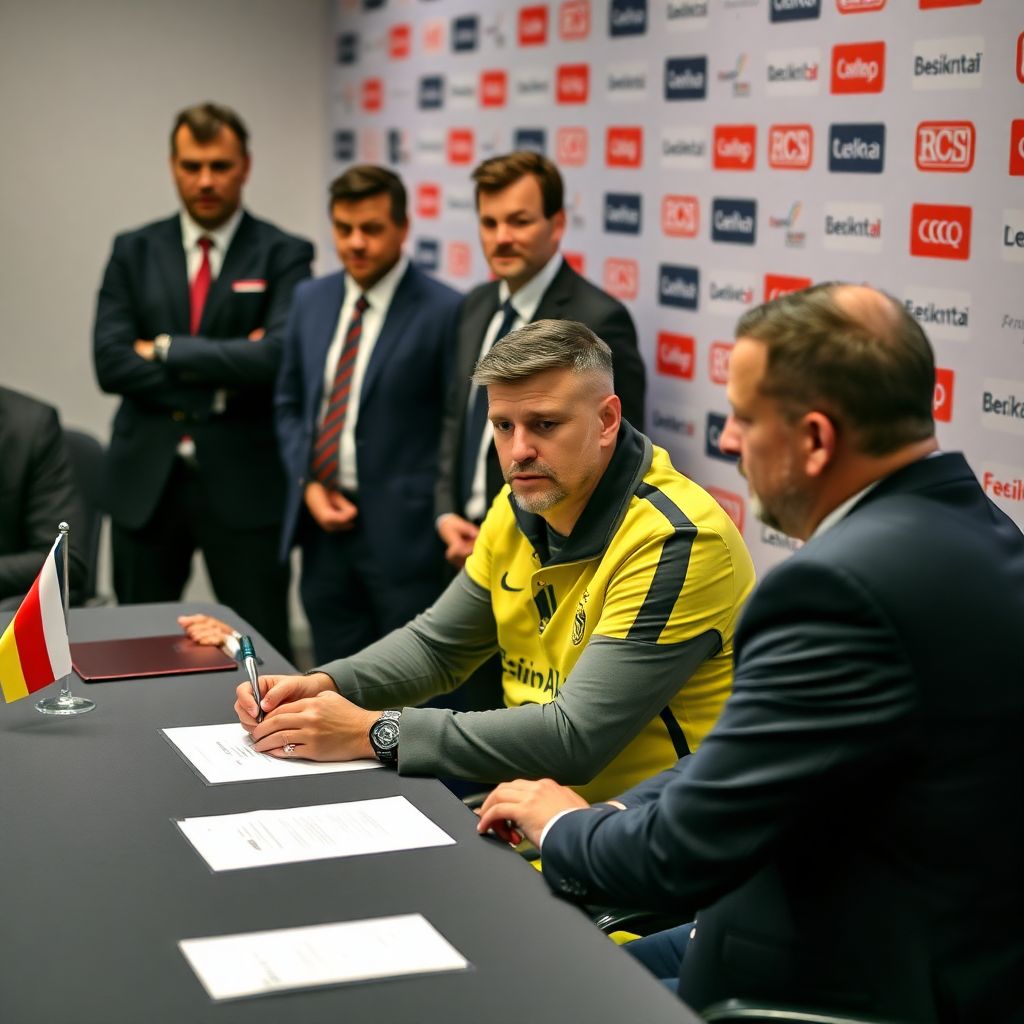
Face-to-face talks for Sörloth: Beşiktaş push hard as Fenerbahçe wait in the shadows
Both Beşiktaş and Fenerbahçe have turned their full attention to finding a new centre‑forward, and one name sits prominently on both shortlists: Alexander Sörloth. The Norwegian striker has once again become a hot topic in the Turkish market, and this time the race looks set to be more intense than ever.
Beşiktaş step up the chase
Beşiktaş have moved beyond preliminary interest and have already held direct, face‑to‑face talks for Sörloth. The Black Eagles see the towering striker as a core piece in their rebuilding process and have signalled that they are ready to take negotiations to the next stage.
Club executives are working to construct a package that would be convincing both for Sörloth and for his current club. The plan is to put a clear sporting project on the table: guaranteed playing time, a central role in the attacking setup, and a squad being built around a more dynamic, aggressive style of football. Within the club, there’s a belief that this deal is now more than a distant possibility and has moved into the “advanced interest” category.
Fenerbahçe are anything but passive
While Beşiktaş take the initiative, Fenerbahçe are far from indifferent. The Yellow‑Navy Blues are closely monitoring every development around Sörloth and are prepared to intervene if the conditions fall in their favour. The club’s transfer committee has not made an official move yet, but internal discussions have never really stopped.
Fenerbahçe view Sörloth as a profile that can adapt quickly to the league and deliver immediately. Management are fully aware that if they choose to enter the race, their financial muscle and Champions League ambitions could make them a very serious competitor. For now, they remain in the background, but no one at Beşiktaş doubts that Fenerbahçe are firmly “on alert”.
Why Sörloth is such a coveted target
Sörloth’s name keeps coming back to the Turkish agenda for several reasons. He has already proven he can dominate in this environment, combining physical presence with smart movement off the ball. His ability in the air, strong hold‑up play and instinct inside the box make him an ideal focal point for teams that like to cross, play direct, or attack with numbers.
Beyond goals, he contributes significantly to build‑up: dropping deep to link with midfielders, opening space for wingers, and dragging centre‑backs out of position. In a league where many matches are decided by small margins and set‑pieces, a striker with his frame and timing is a massive advantage.
Tactical fit at Beşiktaş
From Beşiktaş’s perspective, Sörloth is not simply “another striker”. He is seen as the type of centre‑forward who can make the entire attacking structure function better. With wide players who like to cut inside and full‑backs that push high, Beşiktaş need a reference point in the box who can both finish moves and create room for others.
The coaching staff consider him ideal for a system that alternates between fast transitions and established positional attacks. In transition, Sörloth’s speed over distance and ability to protect the ball can relieve pressure and start counters. In settled attacks, his aerial power and penalty‑area instincts give the team a clear end point to their passing sequences. Internally, the belief is that he could quickly become one of the leaders of a new‑look forward line.
How Sörloth would change Fenerbahçe
At Fenerbahçe, the thinking is similar but with a slightly different tactical flavour. The team often spends long periods attacking against deep defensive blocks. That puts a premium on strikers who can occupy two centre‑backs on their own, win duels, and punish the smallest lapse in concentration.
Sörloth fits that demand almost perfectly. With technically gifted midfielders behind him, he would constantly receive quality service. His presence would also free up creative players between the lines, as defenders would be forced to focus on his runs and physicality. For Fenerbahçe, he is seen as a striker who can deliver both in domestic competition and on European nights, where physical battles are even more intense.
Financial and contractual puzzle
The main obstacle for both clubs is not desire but feasibility. Sörloth’s current contract, wage level and potential transfer fee mean this is not a straightforward operation. Any club looking to sign him has to balance the cost of the transfer with long‑term wage commitments, as well as possible bonuses and performance clauses.
Beşiktaş are trying to structure an offer that protects the club financially while still being attractive enough to win the race. This could include performance‑based add‑ons or a contract layout that increases over time. Fenerbahçe, on the other hand, know they can compete strongly on salary and project, but must also manage their existing wage bill and squad depth. Neither side wants a deal that would unbalance their financial structure, especially with financial regulations tightening season by season.
Psychological and symbolic dimension of the transfer
Beyond tactics and numbers, Sörloth’s potential move has a psychological dimension. Capturing a proven striker of his calibre is not just about goals; it is also a message of intent. For Beşiktaş, winning this race would be presented as the cornerstone of a new era, signalling that the club can still attract top names even in competition with their biggest rivals.
For Fenerbahçe, stepping in and convincing Sörloth at the last moment would be interpreted as another show of strength in the transfer market. In a rivalry where every meeting, every statement and every signing is closely scrutinised, whichever side secures Sörloth would gain not only a striker but also a symbolic victory.
What could influence Sörloth’s decision
From the player’s side, several factors are likely to shape his choice. The first is sporting guarantees: where he will play, how central he will be in the project, and what style of football suits him best. Second is the club’s medium‑term vision – whether there is a realistic route to competing for the league title and performing in European competitions.
Lifestyle and environment also play a role. Sörloth already knows what it means to be at the centre of attention in a football‑mad country, and he will consider the pressure, expectations and daily environment of each option. Finally, the length and structure of the contract will be important, especially at this phase of his career, where stability and top‑level competition go hand in hand.
Scenario analysis: how the race could unfold
Several scenarios are being internally discussed at both clubs. One is that Beşiktaş, having taken the first concrete steps, manage to reach a full agreement before Fenerbahçe make a formal move. In that case, Fenerbahçe might look to alternative targets rather than be drawn into a bidding war.
Another scenario sees Fenerbahçe entering the negotiations mid‑way with a more lucrative financial offer, forcing Sörloth and his club to pause and reassess. This could stretch the process and push the decision closer to the end of the window, creating pressure on all involved. There is also always the possibility that a club from another league takes advantage of this tension and comes forward with an offer that outbids both Turkish giants, adding another twist to an already complex story.
What this means for the rest of the market
The outcome of the Sörloth chase will likely trigger a chain reaction. If Beşiktaş secure him, Fenerbahçe will quickly pivot to other strikers, possibly reigniting interest in previous targets. If Fenerbahçe win the race, Beşiktaş will be forced to reshape their attacking plans and perhaps look for a different type of forward entirely.
In either case, once Sörloth’s future is settled, other deals around both clubs are expected to speed up. Squad planning, youth integration, and the roles of existing forwards all depend heavily on whether such a high‑profile number nine arrives.
The bottom line
At this stage, Beşiktaş have clearly taken the initiative with face‑to‑face talks and a concrete sporting pitch. Fenerbahçe, meanwhile, stay in the background, fully informed and ready to strike if an opening appears. Sörloth stands at the centre of this tug‑of‑war, weighing up sporting ambition, financial security and career trajectory.
What is certain is that his name will continue to dominate the Turkish transfer agenda until a final decision is made – and whichever side he chooses, the impact on the balance of power in the league could be significant.