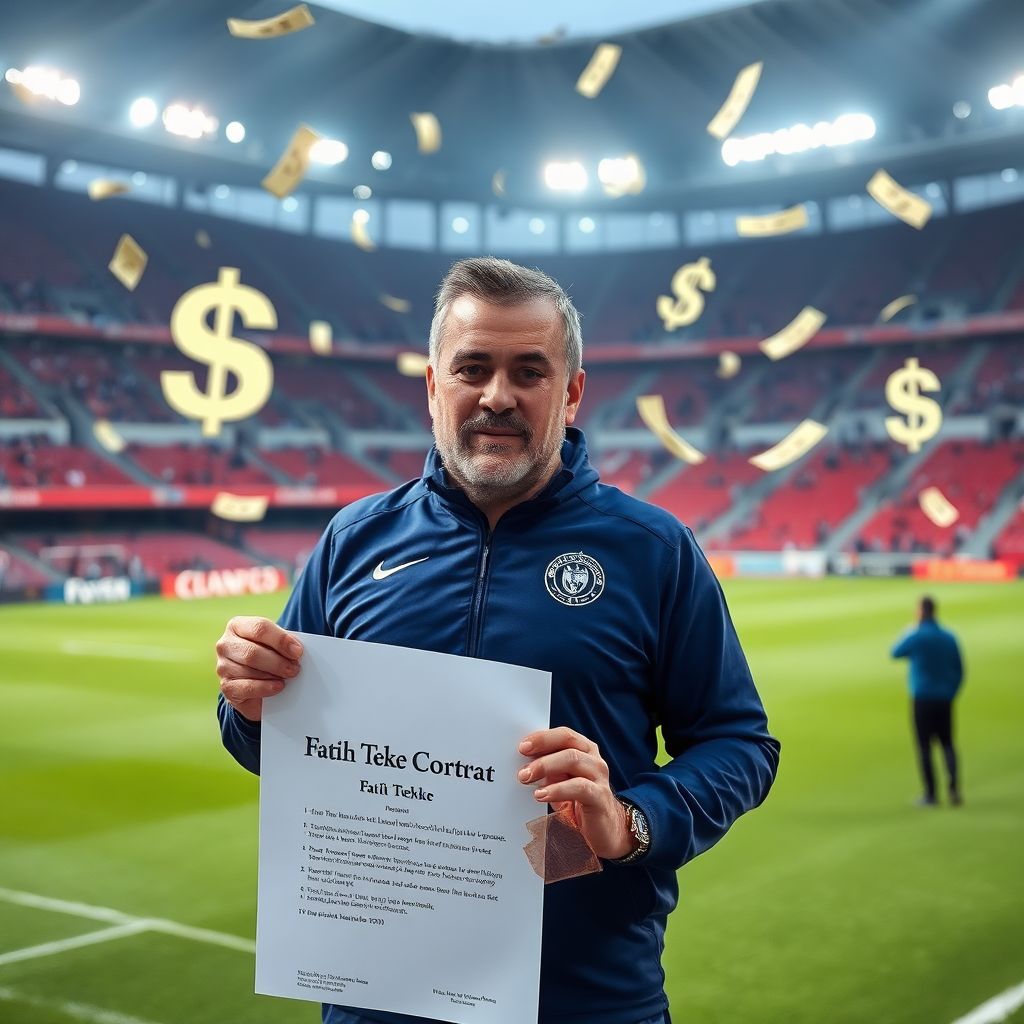
Shepherd of Trabzonspor, Not the Mountains: Fatih Tekke Set to Earn 150 Million TL
Trabzonspor have moved decisively to secure the future of their head coach Fatih Tekke, dramatically improving the financial terms of his contract. The club has revised Tekke’s annual salary from 90 million TL to 150 million TL, a raise that underlines both the trust placed in him and the ambition of the Black Sea side for the coming seasons.
Following the contract update, Tekke delivered striking remarks that quickly drew attention across Turkish football. Criticising the current transfer market frenzy, he underlined how distorted the game’s economic landscape has become. At the same time, he offered a glimpse into his own character with a memorable line: “If I hadn’t become a footballer, I would have wanted to be a shepherd in the mountains.”
Today, however, he is not herding flocks in the highlands but guiding Trabzonspor’s dressing room – effectively becoming the “shepherd” of the club, responsible for the direction, discipline and harmony of a squad under intense pressure to succeed.
A Raise That Signals Ambition
Increasing a coach’s annual wage from 90 to 150 million TL is not merely a symbolic gesture. It is a clear indication that Trabzonspor view Tekke as a long‑term project leader rather than a stopgap solution. In a climate where managerial changes are frequent and patience is scarce, committing such a sum sends a powerful message to players, fans and rivals alike: the club is all‑in on Tekke’s vision.
This financial leap also places Tekke among the highest‑earning managers in Turkish football. With clubs across the league engaging in aggressive spending, Trabzonspor’s move aligns them with the top spenders, but with a twist: they are investing heavily not just in players, but in the architect of the entire sporting project.
Tekke vs. the Transfer Madness
Tekke’s criticism of the transfer market resonates with a wider concern in modern football. Fees and wages for players continue to spiral, often with little regard for long‑term planning or youth development. While big‑money arrivals grab headlines, many clubs struggle with financial stability, squad imbalance and short‑term thinking.
By highlighting the “madness” of the market, Tekke positions himself as a coach who values structure over chaos. He appears keen to build a coherent, competitive team instead of simply chasing names. This approach suits a club like Trabzonspor, which traditionally relies not only on expensive signings but also on scouting, academy graduates and a strong local identity.
The Meaning Behind the “Shepherd” Metaphor
His statement, “If I hadn’t been a footballer, I would have wanted to be a shepherd in the mountains,” is more than romantic nostalgia. In Turkish culture, the figure of the shepherd evokes responsibility, resilience and a deep connection with the land. It’s an image of someone who must protect, guide and organise, often in harsh conditions and far from the spotlight.
Transposed to football, Tekke essentially describes the essence of his job:
– Protecting young players from external pressures.
– Guiding experienced stars towards a common tactical and mental framework.
– Keeping unity within a group that might otherwise fracture under expectations.
So while he jokes about mountain life, his reality is shepherding Trabzonspor through the unpredictable terrain of a long season, with all its injuries, suspensions, form dips and media storms.
Why Trabzonspor Needed This Stability
Recent seasons in Turkish football have been defined by volatility: rapid coaching changes, endless transfer rumours and fluctuating form. For Trabzonspor, consolidating around a single figure is crucial for several reasons:
1. Long‑term tactical identity – Tekke can now implement a playing style that evolves over multiple transfer windows rather than being reset every year.
2. Player confidence – Footballers perform better when they know the coach will still be there in six months. That sense of continuity encourages them to fully buy into his methods.
3. Youth integration – A stable manager is more likely to invest in academy players, track their development and gradually introduce them into the first team without fear of being sacked after two bad results.
The financial commitment to Tekke suggests the board are ready to endure the inevitable ups and downs that come with a genuine sporting project.
The Human Side of a 150 Million TL Deal
From the outside, 150 million TL per year is a staggering figure. Yet Tekke’s own words about being willing to live as a shepherd in the mountains hint at a personality not solely driven by money. His salary is a reflection of market realities and club priorities, but his attachment to simpler images and values suggests he sees football as more than just a cash‑rich industry.
This contrast – a “shepherd at heart” earning elite‑level wages – may actually strengthen his authority in the dressing room. Players often respond better to coaches who are perceived as authentic and grounded rather than detached stars. Tekke’s background and mentality can help bridge the growing gap between football’s astronomical finances and the more modest lives of ordinary supporters.
Pressure, Expectations and the Cost of Failure
Of course, such a contract comes with a price beyond the numbers: pressure. When a club invests 150 million TL a year in its coach, expectations skyrocket. League titles, strong cup runs and European qualification cease to be dreams; they become obligations.
Every tactical decision, every substitution, every transfer request will now be measured not only in terms of results but also against the weight of that salary. Tekke, however, seems aware of the scrutiny that accompanies modern football. His criticism of the market and his shepherd analogy indicate an understanding that staying grounded is essential if he is to survive under such conditions.
Fitting into a Hyper‑Competitive Landscape
While transfer headlines swirl around other clubs – from ambitious signings on the wings to high‑profile arrivals from European leagues – Trabzonspor’s main statement this time has come from the dugout. In a league where rivals are strengthening aggressively, securing the coach is a strategic response.
Rather than chasing every rumoured name or engaging in bidding wars, Trabzonspor are putting their faith in a defined philosophy. With Tekke leading the way, the club appears to be betting that a clear game model, disciplined scouting and consistent coaching can compete with more expensive but less coherent projects.
What This Means for the Squad
Inside the dressing room, players read these contractual moves as signals. A coach whose contract is constantly in question finds it harder to impose his ideas. A coach whose salary has been raised dramatically and whose position is reinforced by the board gains authority overnight.
For current squad members, it is a message: adapt to Tekke’s demands or risk being left behind. For potential new signings, it is assurance that they are joining a club with a defined leadership and a clear medium‑term plan. For academy talents, it is hope that they will be evaluated by a coach who will be there long enough to oversee their growth.
A Symbol of Modern Football’s Contradictions
Fatih Tekke’s contract revision captures many of the contradictions of the modern game. On one hand, there is the romantic image of a man who could happily have spent his life as a shepherd in the mountains, far from cameras and contracts. On the other, there is the reality of a coach earning 150 million TL a year in a football economy he himself criticises as crazy.
Between these two poles lies the true story: a former player turned manager, trying to stay true to his values while operating in a system that often pushes those values to the limit. Trabzonspor’s decision to place him at the centre of their project suggests that, at least for now, they believe his balance of realism and idealism is exactly what the club needs.
In the coming seasons, the success or failure of this bet will be measured not only in trophies and league positions but also in whether Trabzonspor can develop a sustainable, recognisable identity under their self‑proclaimed shepherd – the man of the mountains who chose instead to lead on the touchline.