CHP’s 38th Ordinary Congress Under Scrutiny: New Testimonies in Kurultay Investigation
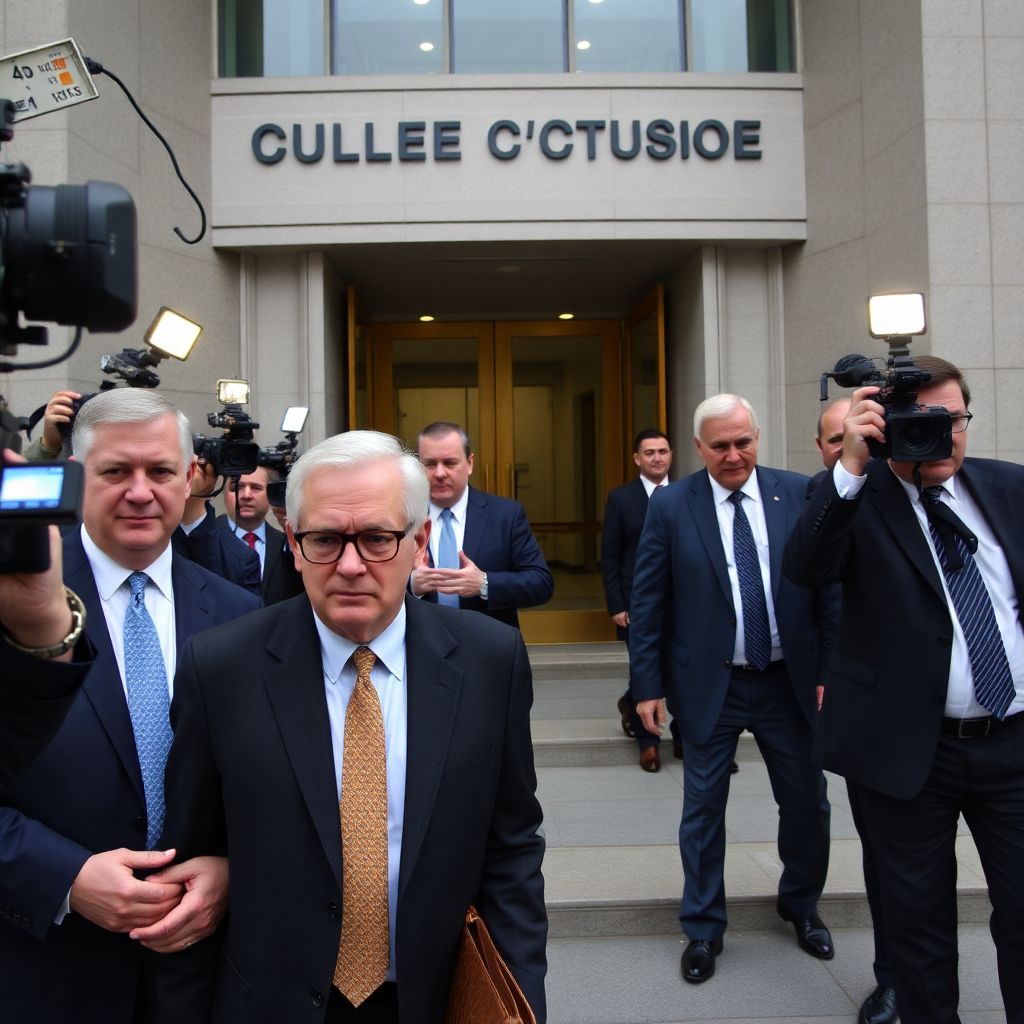
Detained CHP Uşak Mayor Özkan Yalım and businessman Turgut Koç, known for his close ties to CHP Chair Özgür Özel and deputy chair Veli Ağbaba, are scheduled to give new statements today at the Çağlayan Courthouse within the scope of the ongoing investigation into the Republican People’s Party’s (CHP) 38th Ordinary Congress. The judicial process surrounding the congress, already marked by serious allegations, is entering a new phase with these fresh testimonies.
The investigation was launched after claims emerged that some delegates’ votes at the party congress had been bought with money. These accusations cast a shadow over the internal party elections and raised questions about the legitimacy of the outcome. In the case related to the 38th Ordinary Congress, the court previously issued a “mutlak butlan” ruling, effectively declaring the contested process null and void in a way that cannot be remedied. This decision deepened the political and legal reverberations of the congress.
Following the congress, debates within and outside the party intensified. Allegations of vote buying not only triggered a criminal investigation but also sparked a broader discussion about intra-party democracy, transparency and the conduct of internal elections in major political organizations. Each new statement added to the investigation file has the potential to reshape the course of the case and the political narratives around it.
Mayor Özkan Yalım’s detention has been one of the most striking aspects of the process. As the elected mayor of Uşak from CHP, his legal situation is closely watched both by local constituents and by the national political arena. His appearance at the Çağlayan Courthouse to deliver a new statement is seen as a critical step that might clarify whether the accusations link directly to him, to his political environment or to broader mechanisms within the congress.
Businessman Turgut Koç’s role is equally significant for the investigation. Recognized for his proximity to CHP Chair Özgür Özel and senior party figure Veli Ağbaba, Koç is viewed as a key witness or suspect in clarifying the financial dimension of the allegations. Prosecutors are expected to focus on the flow of money, potential agreements with delegates, and any links between financial movements and the voting behavior observed during the 38th Ordinary Congress.
The judicial authorities will examine whether there is tangible evidence supporting the claim that delegates’ votes were influenced through financial incentives. Bank records, communication logs and witness statements form the backbone of the investigation. The new testimonies from Yalım and Koç may either reinforce the existing suspicions or open up completely new lines of inquiry involving other names or structures within the party.
From a broader perspective, the Kurultay investigation raises deeper concerns about political ethics in Turkey. Allegations of buying delegate votes undermine public trust not only in a single party but in the entire political system. Legal experts emphasize that if such practices are proven, they could set a precedent affecting the organization of future party congresses, internal elections and even candidate selection processes across the political spectrum.
For CHP, a party that often underscores principles of law, justice and democratic participation, the outcome of this investigation carries heavy symbolic weight. Party leaders face the dual challenge of cooperating with judicial authorities while at the same time protecting the legitimacy of their internal mechanisms. How they respond to the findings, whether by introducing stricter internal controls or by taking disciplinary measures, will be closely monitored.
Politically, the process could also reshape power balances within CHP. Claims that money played a role in delegate preferences inevitably fuel speculation about factions, alliances and patronage networks inside the party. Should the investigation confirm any of these allegations, it might prompt calls for structural reforms, changes in leadership or at least a revision of the rules governing party congresses and delegate selection.
Observers point out that the “mutlak butlan” decision already signals the seriousness with which the judiciary views the irregularities around the congress. Unlike procedural errors that can be corrected, such a ruling suggests a fundamental defect in the process. This makes the new testimonies at Çağlayan even more critical: they may help explain how and why the congress reached a point where its validity has been legally questioned at the most basic level.
While the political sphere is preoccupied with the Kurultay probe, another incident in Istanbul underscores different but equally pressing concerns about public safety and rule of law. In the Büyükçekmece district, an unlicensed driver plowed into a bus stop, leaving one person seriously injured. The shocking moment when the vehicle veered into the stop and struck a man was captured on camera, once again bringing to the fore the dangers posed by unlicensed and reckless driving.
The injured individual was rushed to hospital, where he remains under intensive medical care. In statements made after the incident, the victim’s son alleged that the driver’s father attempted to take the blame upon himself. According to the son, the father wanted to claim he had been behind the wheel instead of his unlicensed child, in an apparent effort to shield the true driver from heavier penalties. This claim adds a further layer of controversy to an already tragic accident.
In legal terms, driving without a license is itself a serious offense, which can be compounded when it results in bodily harm. If the allegation that the father tried to assume responsibility is confirmed, both individuals could face additional charges related to obstruction of justice or providing false testimony. Prosecutors are expected to examine camera footage, eyewitness accounts and other technical evidence to determine who was actually driving at the time of the crash.
Traffic safety experts warn that such incidents are rarely isolated. They highlight a pattern in which inadequate enforcement, social tolerance for risky behavior and attempts to “cover up” responsibility combine to create a culture of impunity on the roads. The Büyükçekmece case, precisely because it has been documented on camera, could become an important test for how consistently the law is applied in similar situations.
The public debate triggered by this accident intersects with the questions raised by the Kurultay investigation in one crucial respect: trust in institutions. Whether discussing internal party elections or everyday law enforcement, citizens look to the judiciary and administrative bodies to act impartially, resist pressure and uphold the rules without favoritism. Each high-profile case either reinforces or erodes that trust.
In the coming days, attention will remain focused on the Çağlayan Courthouse. The statements by Özkan Yalım and Turgut Koç will be meticulously analyzed by legal authorities, political actors and the public. Any new names, details or contradictions that emerge could redefine the contours of the Kurultay investigation and influence how both the judiciary and the party itself proceed.
Simultaneously, the investigation into the Büyükçekmece crash is expected to clarify the exact sequence of events and responsibilities. The seriousness of the victim’s condition and the possibility of attempts to manipulate the narrative place additional responsibility on law enforcement to move swiftly and transparently.
Taken together, these cases form part of a broader picture in which legal accountability, political ethics and everyday safety are tightly interwoven. As new information comes to light and judicial processes advance, the outcomes will not only determine individual fates but also shape public perceptions of justice, responsibility and democracy.